BCI not an ‘expert body’ to regulate legal education standards, says SC
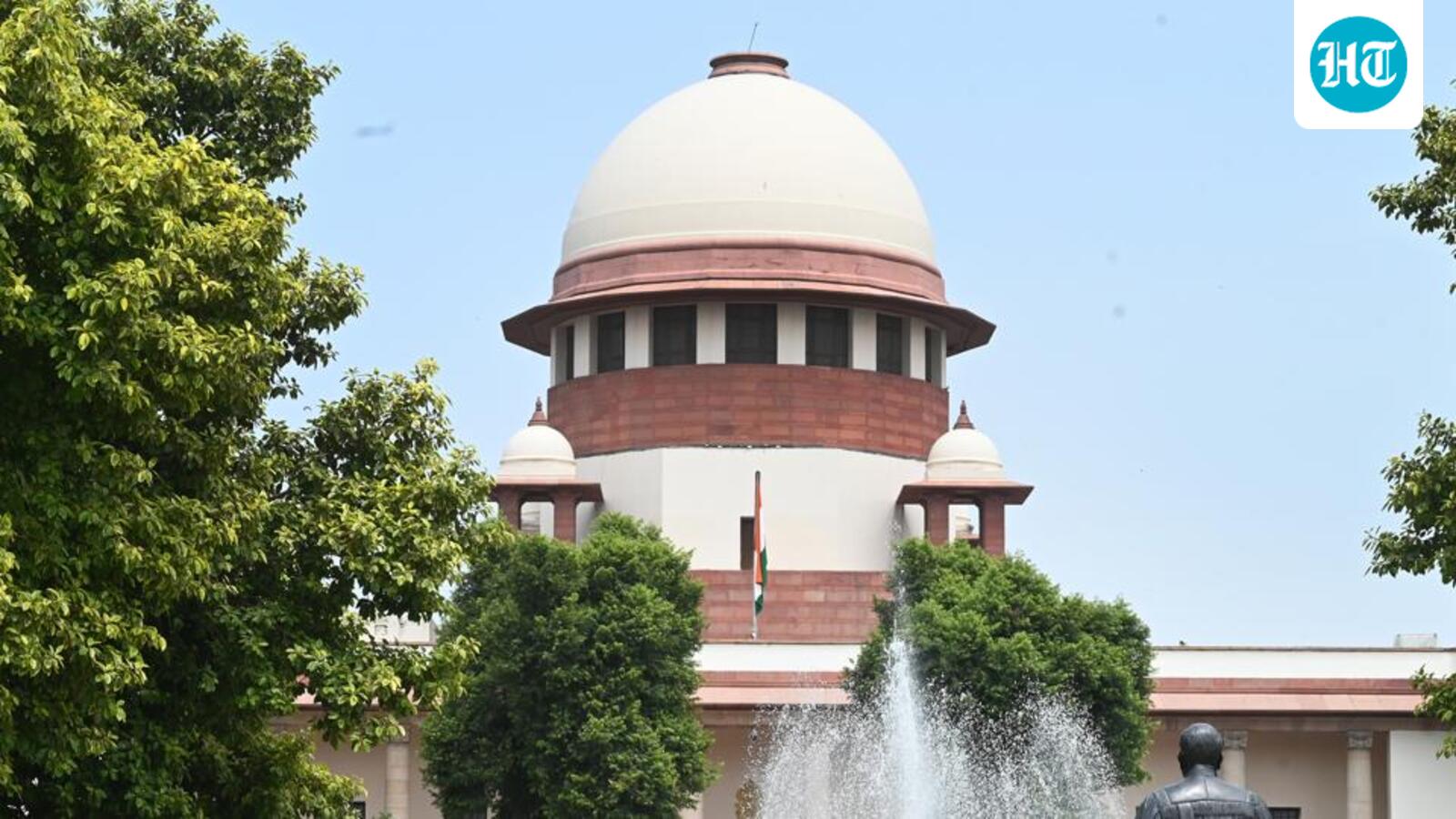
The Supreme Court on Wednesday said that the Bar Council of India’s (BCI) power to regulate legal education in the country deserves scrutiny, observing that, at best, it may lay down general guidelines with regard to law schools but it is not an “expert body” to determine standards of education.
The court’s sharp remark came amid recent episodes where the BCI chairperson Manan Kumar Mishra issued a resolution denying enrolment to the graduating batch at NALSAR Hyderabad that was withdrawn within an hour and for which Mishra got flak from the Supreme Court.
Hearing a batch of petitions seeking removal of Mishra and transparency in the decision-making process at BCI, a bench headed by Chief Justice of India (CJI) Surya Kant said, “The basic question is how is the BCI an expert body to regulate legal education. There are eminent scholars and academics for that purpose.”
The bench, also comprising justices Joymalya Bagchi and V Mohana, further observed, “The BCI may lay down general guidelines with regard to functioning of law colleges but you cannot control it.”
Advocate Prashant Bhushan, who appeared in one of the petitions, informed the court that BCI through the Bar Council of India Trust for Promotion of Education (Legal & Professional) and Reforms in Law and For Improvement of Research and Social Training (PEARL FIRST) has established the India International University of Legal Education and Research at Goa. He said that BCI regulates legal education under Section 7 of the Advocates Act, 1961 and operates law colleges simultaneously.
The court issued notice on Bhushan’s petition and sought the response of BCI along with the Union government on this issue. It told Bhushan, “We are separately examining the issue of how BCI can regulate law colleges as their jurisdiction comes only after a lawyer gets enrolled.” The court made the remark in the context of the NALSAR incident where it openly doubted the passing of a resolution against the denial of enrolment to law students after they expressed their disapproval for having CJI at their convocation event. Later BCI chairman Mishra had apologised to the students.
During the hearing on Wednesday, the court was informed by BCI counsels, senior advocates ANS Nadkarni and Guru Krishna Kumar, that pursuant to court’s directions, the State Bar Councils are in the process of nominating one member to the BCI. Earlier, the court had directed State Bar Councils to have 30% women representation with 20% coming by elections and 10% by way of nomination by the chief justice of the concerned high court.
An application was moved by advocate MG Yogmaya seeking extension of this rule to BCI too. Senior advocate Shobha Gupta who argued the application said that the change is visible as by nomination, several former women high court judges have now been nominated into the state bar councils. She said that this reformation will bear fruit only when the reality is reflected at BCI, being the apex body for legal professionals. She even urged the court to consider having a woman BCI chairperson on rotational basis along with office bearer posts earmarked for women in state bar councils.
The bench said, “We are looking forward to a resolution to come from them.”
KioskNews shows a cleaned-up reading view extracted from the publisher’s page — the original always lives on their site, not ours.