Hong Kong vies for role in robotics boom with launch of embodied AI hub
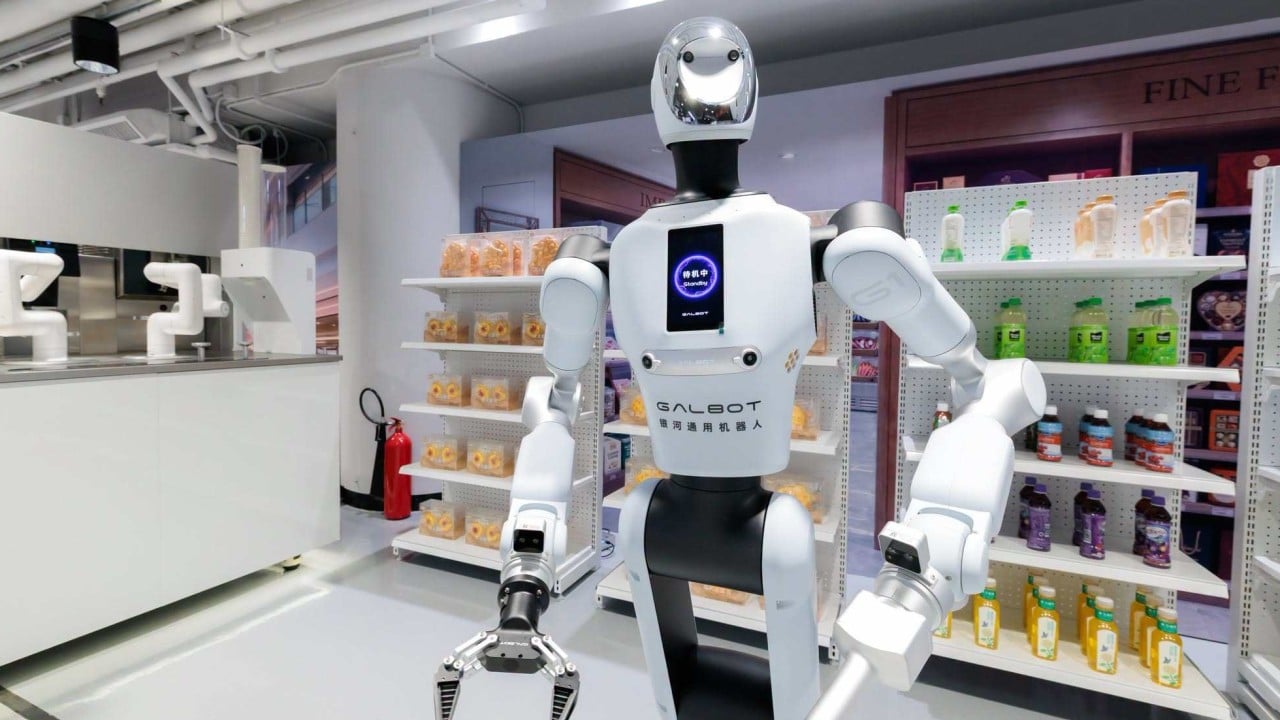
The Hong Kong Productivity Council (HKPC) opened the city’s first experimental hub for embodied artificial intelligence on Thursday with the participation of seven mainland and Hong Kong companies, including industry leaders Unitree Robotics and Galbot, as the city looks to carve out a role in the global robotics boom.
Located at the HKPC Building in Kowloon Tong, the Embodied AI International Applications Hub, housed under the HKPC’s industrial AI and robotics centre, features simulated real-world environments where the companies can test and optimise their latest robotic designs, ahead of potential global roll-outs.
“Hong Kong’s application scenarios have an international characteristic,” said Sunny Tan, HKPC chairman, at the opening ceremony. “For many mainland robot manufacturers, they can train their robots for international application scenarios without leaving the country here.”
Secretary for Innovation, Technology and Industry Sun Dong said that the hub marked a major milestone in Hong Kong’s efforts to align with national initiatives to advance in embodied AI and robotics, and pledged further government support to promote development in the field.
“Humanoid robotics and embodied AI are key frontiers of the next wave of technological innovation, with tremendous potential to transform industrial operations and foster new quality productive forces,” he said.
Hong Kong’s unique advantage lies in its international demand and its pool of global talent
The hub will initially feature a cohort of seven technology partners and eight “scenario partners” – government bodies and major enterprises that will deploy the latest robots in various application settings. These include Hong Kong’s Civil Engineering and Development Department and electronics company TCL.
Edmond Lai, HKPC’s chief digital officer, said that the partnerships would address one of the main bottlenecks for the robotics industry: a lack of real-world testing environments.
“Different regions are still at the stage of formulating standards for embodied AI, and this is a golden window period,” he said.
“Through this training hub, we hope to establish these practices so they can be pushed forward as potential industry standards.”
Following the ceremony, industry leaders and media were guided through live demonstrations from the seven robotics companies.
Tsinghua University-backed Robotera showcased its M7 humanoid robot, which has already been deployed in facilities of SF Express and China Post, while domestic humanoid robot leader Unitree showcased its R1 humanoid and A2 quadruped robots, which can be used for factory inspections.
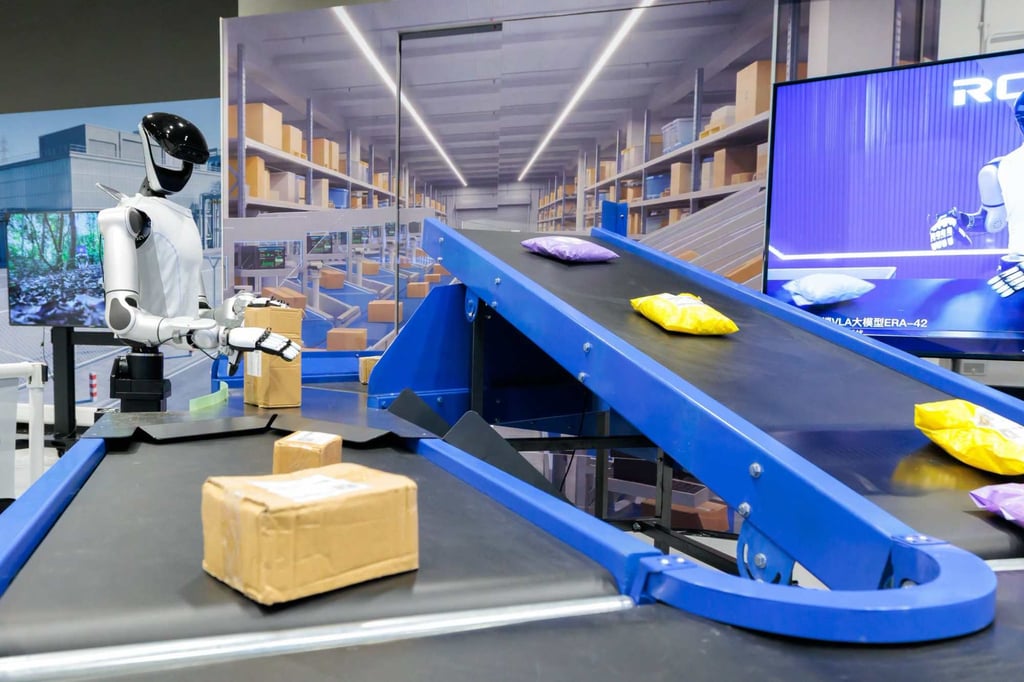
Meanwhile, Shenzhen’s AI Squared Robotics and Beijing’s Galbot both showcased use of their robots in retail settings, including the preparing and retrieving of beverages.
The sole local firm was Hong Kong start-up Rice Robotics, which showcased its NEX semi-humanoid robot, designed for smart libraries and educational environments.
Jason Chen, senior vice-president at Galbot, said that he hoped the partnership with HKPC, and his company’s recent opening of three fully autonomous robot-staffed retail stores in the city, would popularise robots among the public.
“Hong Kong’s unique advantage lies in its international demand and its pool of global talent,” he told the South China Morning Post.
KioskNews shows a cleaned-up reading view extracted from the publisher’s page — the original always lives on their site, not ours.