Brexit was like Battle of Hastings defeat – rejoining EU body will fix it, says George Osborne
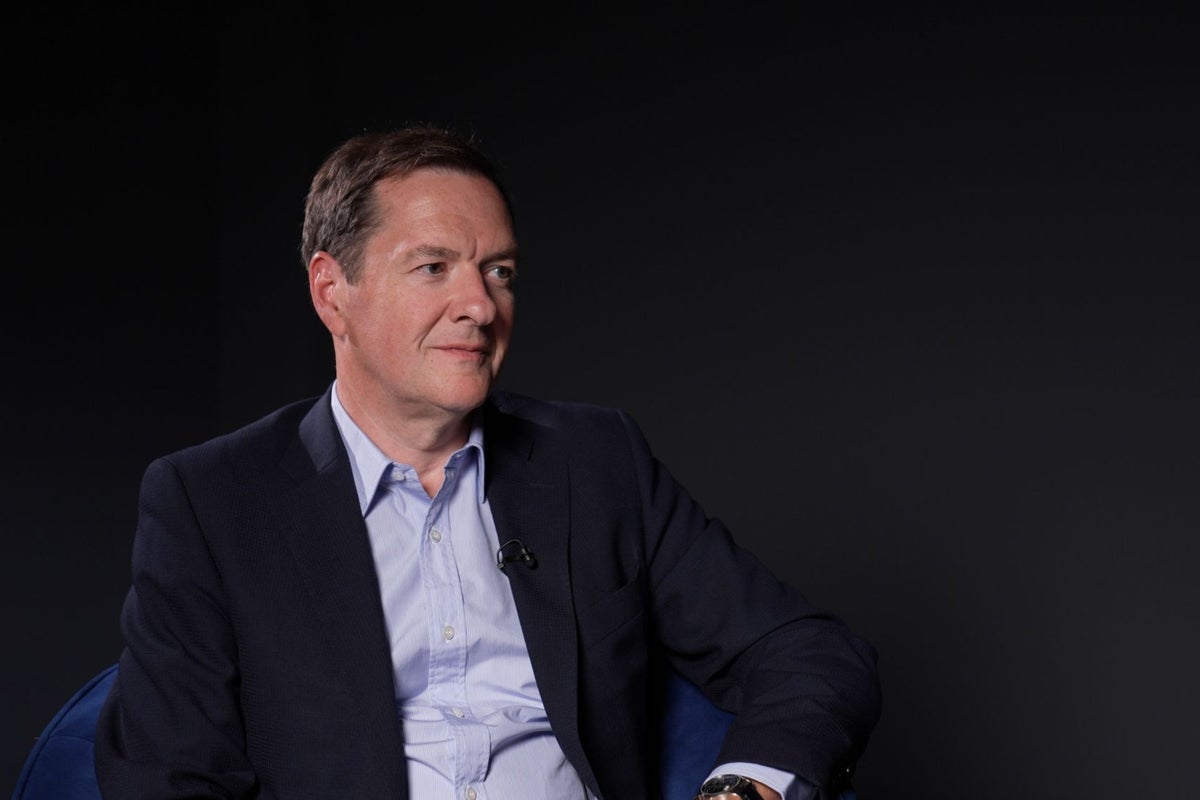
Britain’s economy has “fallen off a cliff” since Brexit and the only way to recover is by rejoining the Brussels-run Customs Union.
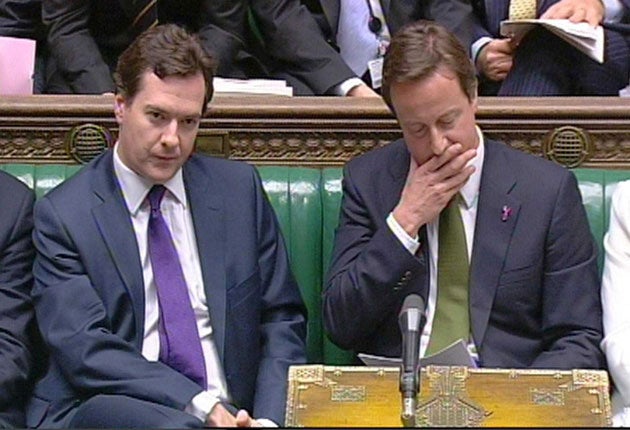
That is the view of former George Osborne, who was forced to resign as Tory chancellor a decade ago after being on the losing side with then-prime minister David Cameron in the Brexit referendum.
A “conspiracy of silence” by politicians and business and union leaders, is hindering vital moves to rebuild links to the EU, says Mr Osborne, who as British Museum chair is in charge of the Bayeux Tapestry exhibition in London.
In a wide ranging and candid interview with The Independent editor-in-chief Geordie Greig, Mr Osborne says that far from being ashamed of his so called “austerity” policies as chancellor from 2010-2015, he was proud.
People look back at the Tory-Lib Dem coalition government and say “wow!”, he claims – impressed by its stability compared to the “utter chaos” that followed.
Mr Osborne also throws down a series of challenges for Tory leader Kemi Badenoch. He dismisses her insistence that she would not agree an election pact with Nigel Farage, arguing she would do just that if it was the only way she could win power. And he accuses her of a futile attempt to “out-Reform Reform” with right wing policies.
By contrast he praises the “Tiggerish bounce” of new Labour prime minister Andy Burnham.
Ten years after the Brexit referendum saw his and Lord Cameron’s political careers end in humiliating defeat, Mr Osborne is adamant that subsequent events have proved they were right to campaign for the UK to stay in the EU.
“Brexit has been a mess. Britain has basically gone off a cliff. It has had a huge impact on the British economy. It is clearly poorer than it would otherwise be.”
But he does not believe all is lost, and draws on his success in helping to bring the Bayeux Tapestry to the UK for the first time to sustain his view that the damage caused by Brexit can be put right.
“A bit like the Bayeux Tapestry isn't the end of the story, Brexit's not the end of the story. Because there's a whole conversation of how to re-engage in the kind of issues that we're never going to solve unless we're working with our European neighbours. Like immigration, the economy, the regulation of new technologies.”
He says it “will be hard to rejoin the EU anytime soon” but maintains there is a relatively easy short term remedy that while falling short of that, would solve many problems.
“I would rejoin the Customs Union. It’s a quite simple thing to do. That was never part of the Brexit debate. No one knew we were leaving it and it has had a devastating impact on trade.
“The reason we weren't supposed to be in the Customs Union – according to the Brexiteers – was these great trade deals we were going to strike with America. That all looks pretty fanciful now.”
While Mr Burnham has previously said he wanted the UK to rejoin the EU, he has recommitted to honouring the Labour manifesto commitments not to rejoin the EU, the single market or customs union.
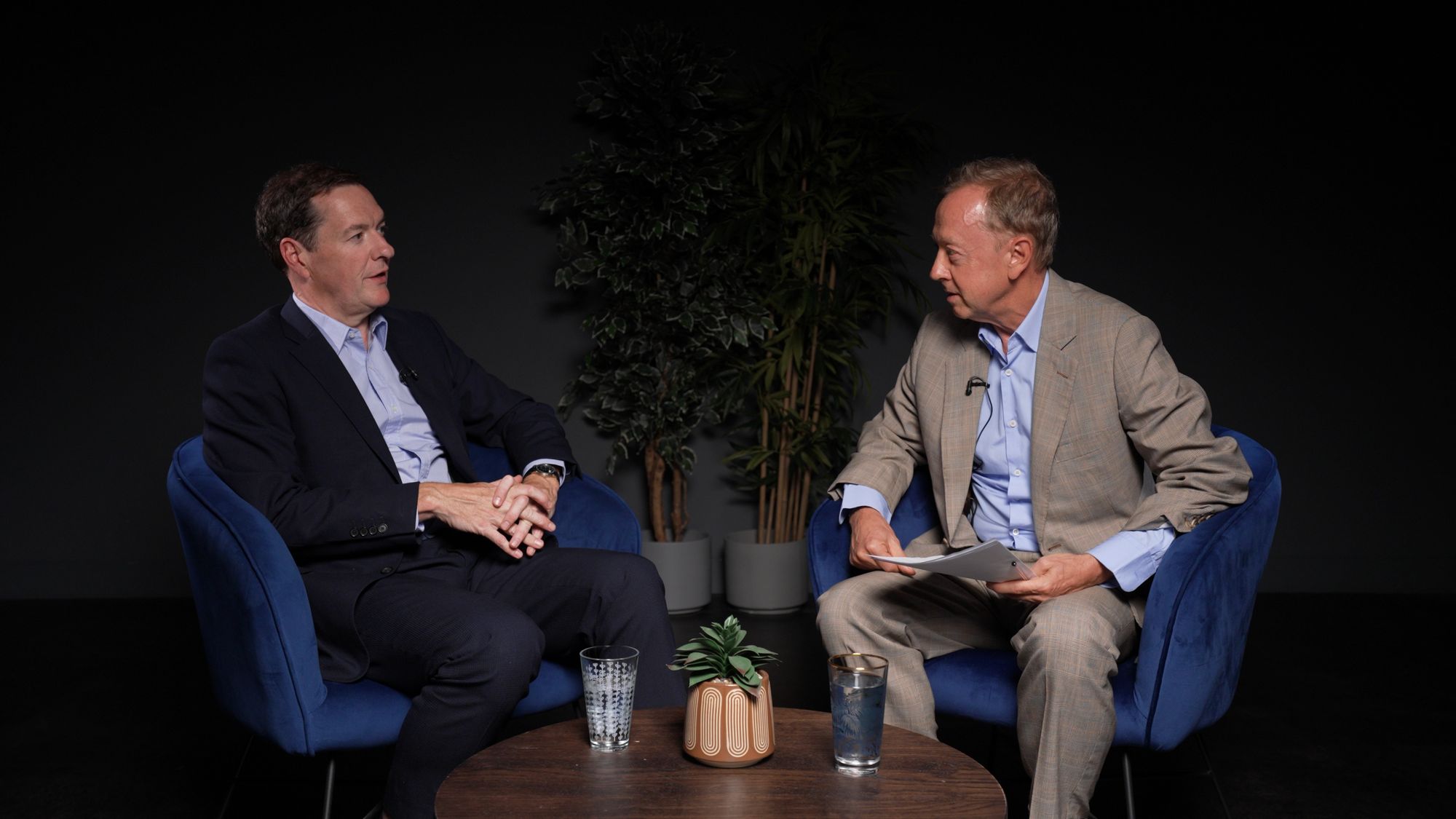
Mr Osborne says moves towards closer ties are being constrained because political, business and union leaders are “frightened” to re open the Brexit controversy.
“There’s been a kind of conspiracy of silence about it. People now realise you can't look at Britain's growth problem without beginning to think, ‘how can we revive trade with the continent, how can we get investment?’
“If I was Andy Burnham I don’t see why you wouldn’t rejoin the customs union. It’s a pretty straightforward decision because unlike (rejoining) the single market it does not require you to accept the free movement of people – which is a pretty complicated issue to sell to people in Britain at the moment.”
Defence was another example of the short-sightedness of Brexiteers, he says.
At the time of the 2016 referendum, they were deeply opposed to the idea of more co-operation on defence with other European nations, says Mr Osborne. That all changed after Russia’s attack on Ukraine.
It had made people realise the UK’s security was “intimately tied up with the continent, which it always was, as the Bayeux Tapestry reminds us”.
Mr Osborne’s name will forever be associated with the “austerity” policies to cut public spending he followed as chancellor.
It has made him a hate figure in the eyes of leftwingers. But he claims that compared with the “utter chaos” of Brexit and subsequent shorter administrations of Liz Truss and Sir Keir Starmer, his and Lord Cameron’s derided Tory-Lib Dem coalition is fondly remembered as a model of sound governance.
“I'm proud of being a partner to David Cameron forming a coalition government and offering Britain stable government for six years.
“People now look back on that six years of government now and say “wow”… compared to everything that has happened since.”
Mr Osborne says the Tories and Labour have “swapped their voters without realising” - partly as a result of Brexit.
He explains: “The Conservatives traded the middle class for the working class, and the Labour Party traded the working class for the middle class, and neither came to terms with it.’He is cautious about the Conservatives hopes of regaining power.
“Kemi is doing pretty well and developing quite a following as leader and public character… ahead of where the (Conservative) party is.
“The Tory Party itself was weak, but it was better to have a strong leader and weak party than the reverse.”
He adds: “I don't yet see an obvious path for them because I don't know whose voters they're going after. Are they trying to squeeze Reform or are they trying to win back Liberal Democrat voters or Labour voters?
“Think of all those seats around the M25 like Tunbridge Wells or Aldershot that now have Labour or Liberal Democrat MPs. What is the plan to win those back?
“When I was Conservative chancellor, one of the leading indicators of whether you were a Conservative voter was that you had a college degree.
“Right now, one of the leading indicators of whether you're a Conservative is you don't have a college degree.”
He was not against the Tories trying to woo non-college educated people, ‘but to give up on half of the population who went to university seems like a strange thing to want to do.
“Ultimately it is quite hard to out-Reform Reform. They (the Tory Party) have got a problem: they’ve got to try and squeeze Reform, but the best way to do that is to look like the most credible replacement to the Labour government.”
Badenoch could, in effect, say to the electorate ‘”well, you might not like us, but…”
In other words she should encourage people to vote Conservative as a more acceptable alternative to Labour than Reform.
Europe: The Way Back
We’re campaigning to rebuild Britain’s future in Europe
As recently as last month Badenoch dismissed the notion of a Tory-Reform election pact as “monstrous”.
However, Mr Osborne says some kind of pact is inevitable if the next election produces no outright winner, while the Conservatives and Reform could achieve the Commons majority needed to rule by uniting.
“Before an election there is no prospect (of a pact). After an election, if Conservative and Reform MPs put together would form a majority… realistically most people know they would in some way form a government.
“When asked who, in such a scenario would be prime minister, Badenoch or Farage, Mr Osborne raises the prospect many Conservatives will find deeply alarming: that of Farage in No 10 with de facto Tory backing.
“It depends who wins most seats,” he replies clinically.
He says he’s impressed by Mr Burnham’s style since entering Downing Street.
“One thing I like about Andy Burnham a lot is he loves being prime minister. He enjoys it. He's got a Tigger-ish bounce in him. He wakes up every day and says, ‘It's great, I'm the prime minister.’
“The last few prime ministers… have not demonstrated ‘I really am enjoying this.’ They're like, ‘oh woe unto me’.”
He offers sympathy to disgraced peer Peter Mandelson, who was fined for urinating outside Mr Osborne’s London home after having dinner there last year.
“I actually felt very sorry for Peter… He'd left. I won't go into the whole story, but he didn't want to come back and knock on the door.”
Mr Osborne, while pointing out himself that one of his jobs since quitting politics was editor of the London Evening Standard, and moreover that he had an aggressive style as a politician, says he has doubts about the way Lord Mandelson was treated by the media over the incident.
“I don’t like it when the newspapers - which do lots of amazing jobs giving people platforms – the British establishment, I can’t think of a better word for it – is in full blood cry like a pack of hounds chasing the fox: when they’re down you kick them again.
“I have been part of the pack of hounds as a politician and newspaper editor, so I have been guilty of this. But it’s quite unpleasant when it is in full (cry). It can be completely crushing to be subject to that kind of media firestorm.”
The recent death of Cambridge professor Jason Arday after intense media criticism over a plagiarism controversy is further testimony to this, he says.
But he is almost as gushing about his current professional pride and joy, the Bayeux Tapestry. “When you see it, even if you have seen it before in France, you go, ‘Oh my God, that's the Bayeux Tapestry’.
Like Mr Osborne did in the Brexit referendum, King Harold lost. But there the similarity ends: “I didn't get an arrow in my eye!” he laughs.
What you will get by joining:
- A dedicated community: We are fully committed to the long haul, consistently campaigning to secure the absolute best deal for Britain within Europe.
- Free weekly newsletter: Every Wednesday, political editor David Maddox and political correspondent Millie Cooke will be in your inbox with exclusive reporting, analysis and insight on the biggest developments shaping relations between Britain and Europe. Each week, they will explain what’s happened, what it means, and what the key political figures, experts and decision-makers are saying about it.
- Essential continental updates: Stay informed with regular briefings on the biggest developments in European politics and the specific policies that could pave the way for closer EU relations.
There are even more benefits if you subscribe for just £1 for seven months:
- Exclusive content: Get the highest quality analysis, opinion and debate from political experts across the UK and Europe by subscribing to our premium service.
- The Brexit Effect: You'll get exclusive access to extracts from Anthony Seldon’s major new book, The Brexit Effect, offering an unparalleled analysis of the 10 years since the referendum.
- Inform the debate: Receive exclusive invitations to live events, webinars, expert Q&As and podcast recordings.
KioskNews shows a cleaned-up reading view extracted from the publisher’s page — the original always lives on their site, not ours.