83,000 New Zealanders live with dementia. Here’s how simple design changes can help
A dark doormat that looks like a hole in the floor. A patterned carpet that appears uneven. A chair that becomes difficult to recognise or move around.
These are just some of the ways dementia can change how people experience their surroundings, even within homes they’ve lived in for decades.
As the condition affects how the brain processes visual information, judging depth and distance – and recognising everyday objects – becomes increasingly difficult and hazardous.
Today, an estimated 83,000 New Zealanders live with dementia – a figure projected to nearly double by 2050 – with the vast majority remaining in their own homes.
Despite growing awareness and gradual improvements in building retrofit programmes, most New Zealand homes aren’t designed for their needs.
In making homes safer, our research at the University of Auckland’s Centre for Co-Created Ageing Research suggests that basic design choices can make a meaningful difference.
Our new practical guidance includes changes as simple as choosing the right flooring and colour contrasts, and giving more prominence to taps and light switches.
When home no longer feels safe
For a person with dementia, features that once seemed ordinary or helpful can become confusing or difficult to recognise.
Dementia-friendly design aims to reduce that confusion by making these spaces easier to understand – from where to walk and sit to finding the bathroom or using familiar fittings.
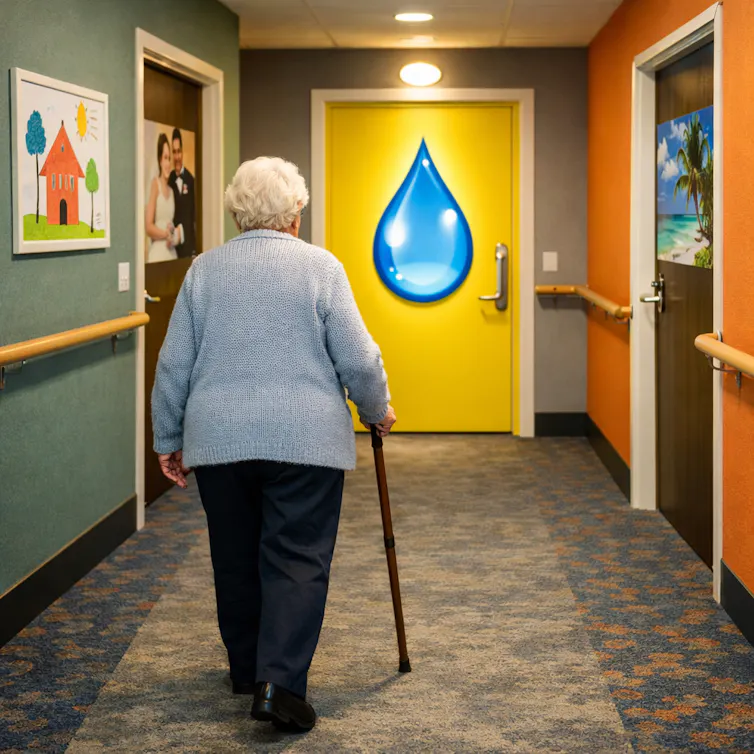
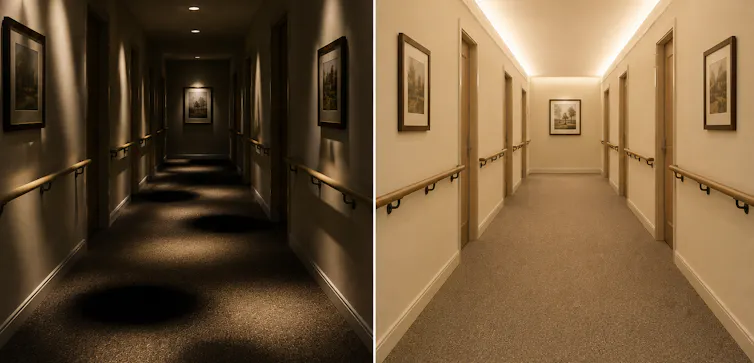
Consider flooring. Colour and contrast can both help and hinder, depending on how they’re used. Consistent colours and tones tend to work best, as patterns or sudden changes in colour can be mistaken for obstacles or changes in depth.
In other cases, contrast can make things easier to see. This might include using different colours for walls and floors to show where a room ends, or making chairs stand out clearly against the floor. In bathrooms, a simple picture can help identify the toilet door.
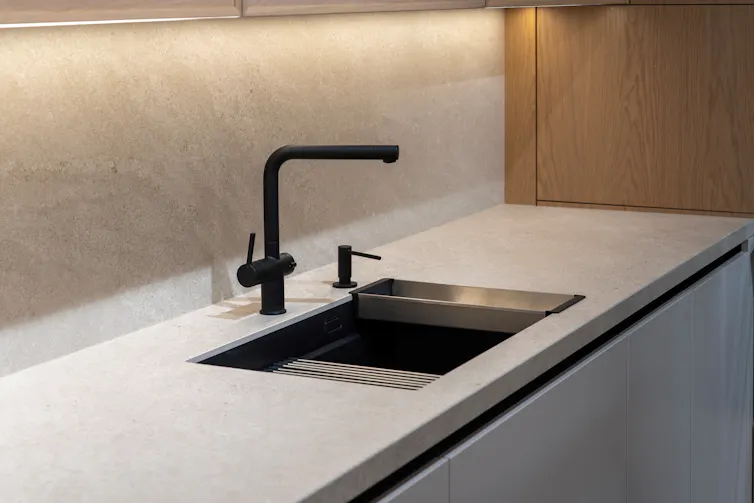
A black tap, for instance, can appear more clearly against a white basin than a silver one. The same goes for light switches, which are easier to find when they contrast with the wall around them.
Other safety changes can be as basic as clearing objects below knee height from pathways to reduce the risk of trips and falls, or removing or covering mirrors that might cause confusion or distress.
Importantly for budgets, newer doesn’t always mean better. Traditional knobs and controls on appliances and fittings can be much simpler to understand than modern touchscreens.
Designing for people and place
In the new programme, we worked with Alzheimer’s New Zealand, The Village Architect, aged-care professionals and people living with dementia to turn these ideas into practical guidance.
This includes new courses for people with dementia and their whānau and caregivers, as well as aged-care workers, architects, designers and others involved in creating or adapting homes.
Our introductory course includes a checklist to help identify features that could pose problems.
Our new guidance incorporates a Kaupapa Māori Framework that informs these approaches to designing for people with mate wareware (dementia).
These recognise principles including wairuatanga (spirituality), whanaungatanga (relationships), māramatanga (understanding) and manaakitanga (care and hospitality), as well as mauri ora o te whare (the living essence of the building) and mauri ora o te whenua (the living essence of the land).
For people with dementia who may lose their sense of time, changes in daylight, weather and the seasons can provide useful cues about the passing of time. Views of and access to nature can help create a calmer, more comfortable living environment. We encourage people to consider how a home connects with the natural environment.
Ultimately, dementia-friendly design doesn’t have to mean expensive renovations or building a new home.
Steps as simple as taking away a confusing mat, using stronger colour contrasts or making an important fixture easier to see can help make a home safer and easier to navigate.
As the number of New Zealanders living with dementia grows, so too will the need for homes that can adapt with them.
KioskNews shows a cleaned-up reading view extracted from the publisher’s page — the original always lives on their site, not ours.