Country diary: I’m virtually living in the woods now. Wildlife is everywhere | Kate Bradbury
I have made the woods my home, moving from Brighton to the outskirts of Lewes, where the garden backs on to the remains of an old oak wood. Here there’s a riot of wildlife: a badger that makes snuffle holes in the lawn, a family of tawny owls in the trees and a cauldron of bats in the chimney.
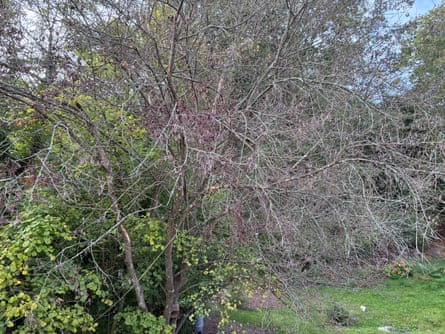
I have plans to let the wood expand into the garden, but in the meantime there’s a mystery tree whose branches almost reach my bedroom window. It’s nearly dead, stressed from too many droughts, perhaps, or coming to a natural end. Some have suggested it’s a willow, but I suspect it’s a cultivated species I’m not familiar with.
Without leaves, flowers or fruit there’s not much to help with identification, but there’s fresh growth in the canopy that might make the job easier soon. The exposed branches lay bare a world of birds that I wouldn’t otherwise see – tits, robins, blackbirds, thrushes, woodpeckers and nuthatches.
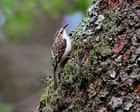
My favourite, though, is the treecreeper. It stops by in the morning, moving around the tree as if climbing an imaginary curved staircase. It will be searching for insects and spiders, using its long bill to probe beneath the bark, its curved toes to cling to the trunk and its stiff tail feathers for balance.
I spot its white bib first, then reach for my binoculars and admire its intricate brown and gold plumage, which helps it blend in with the bark.
Resident in Britain, treecreepers leave their breeding territories in autumn and move to a winter habitat in a nearby woodland or park, sometimes joining a roving group of tits. So my morning visitor may soon be gone. But I hope it returns in spring to build a nest of spiders’ webs, grass, moss and feathers, and to scale my mystery tree once more.
Standing dead wood is a rare garden habitat, and I admit to worrying about winter storms and the tree’s proximity to my house. But dead wood is full of life, as the treecreeper and its friends attest. I am watering the roots, hoping a moist soil will yield more growth, and that there’s life in the old tree yet.
KioskNews shows a cleaned-up reading view extracted from the publisher’s page — the original always lives on their site, not ours.