Warning as rare deadly pufferfish washes up on Dorset beach
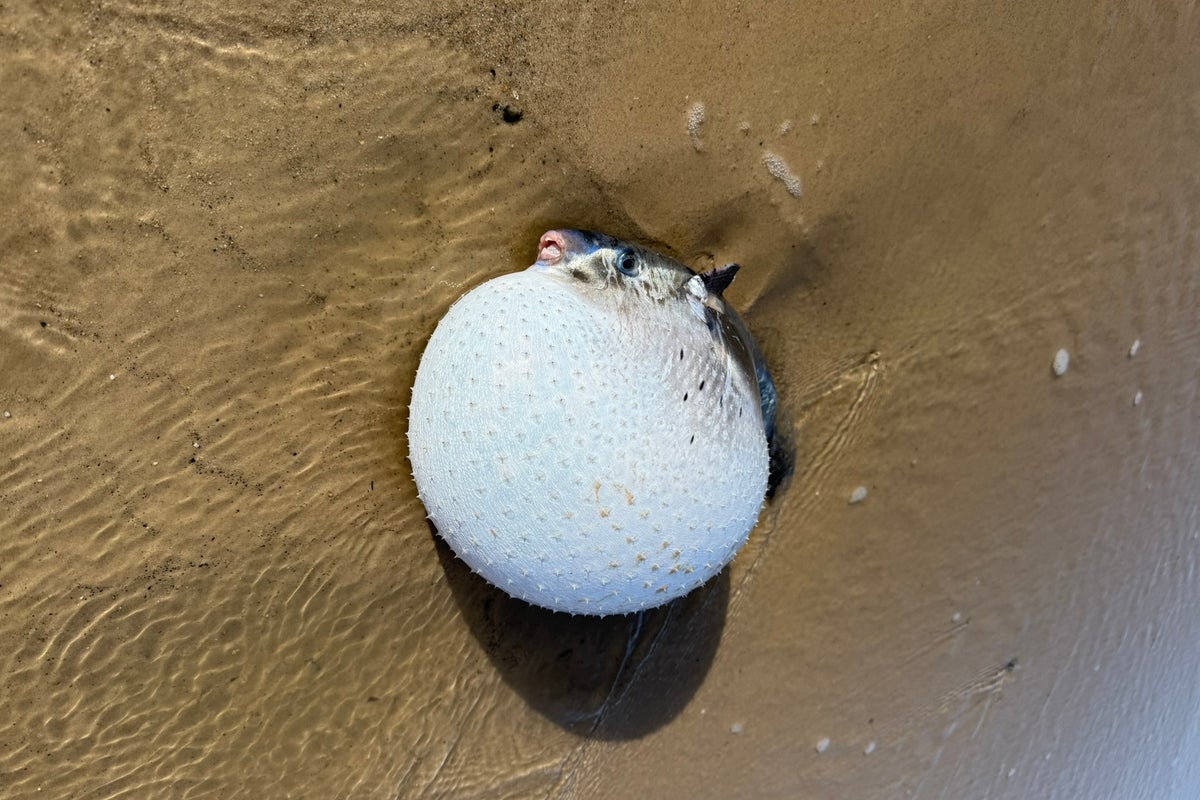
A deadly pufferfish has been found washed up on a south coast beach after being blown hundreds of miles off course.
The extremely poisonous exotic fish was discovered by a shocked diver on the sand at Knoll Beach, Studland, Dorset.
At first Owen Booty thought it was a small marker buoy until he got closer and realised the balloon shape was a fully inflated pufferfish that was about 17ins long.
Even though it was dead pufferfish are still very dangerous because their natural toxins, which are 1,000 times more lethal than cyanide, remain in their organs and skin for a long time.
They are more commonly found in tropical and subtropical waters of the Indian, Pacific and Atlantic Oceans.
It is thought the one found in Dorset was blown here as a result of Storms Austen and Boalo.
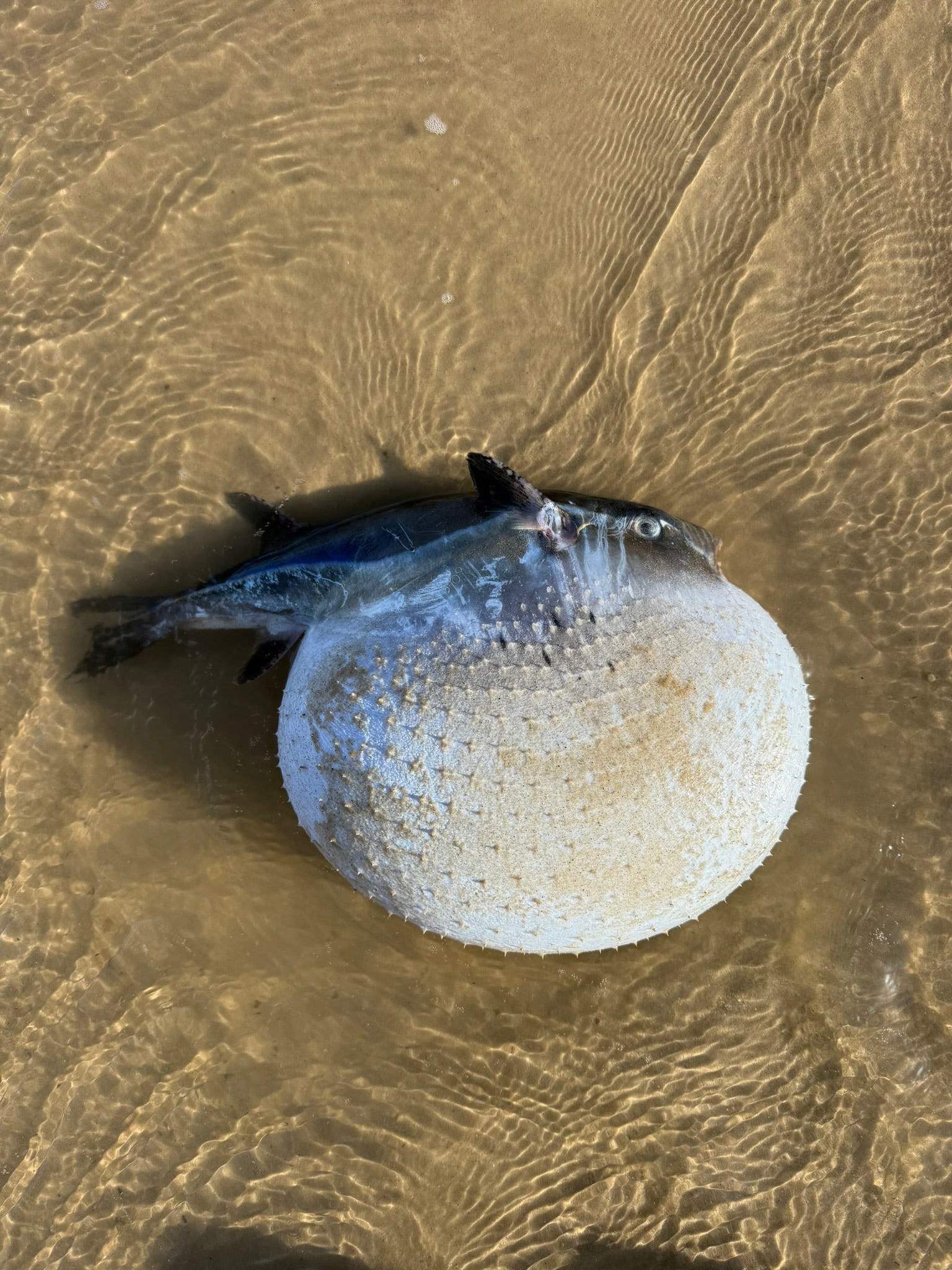
They get their name due to their bizarre defensive mechanism of inflating into a balloon shape, making them difficult for larger predators to swallow,
But due to their toxins they are incredibly dangerous to humans and death can occur if their sharp, hidden spines pierce the skin and the toxin enters the bloodstream.
Another common way to be poisoned by one is eating pufferfish that has been poorly prepared. The toxins are found in the fish's organs which can bleed into the edible flesh if accidentally cut by a chef.
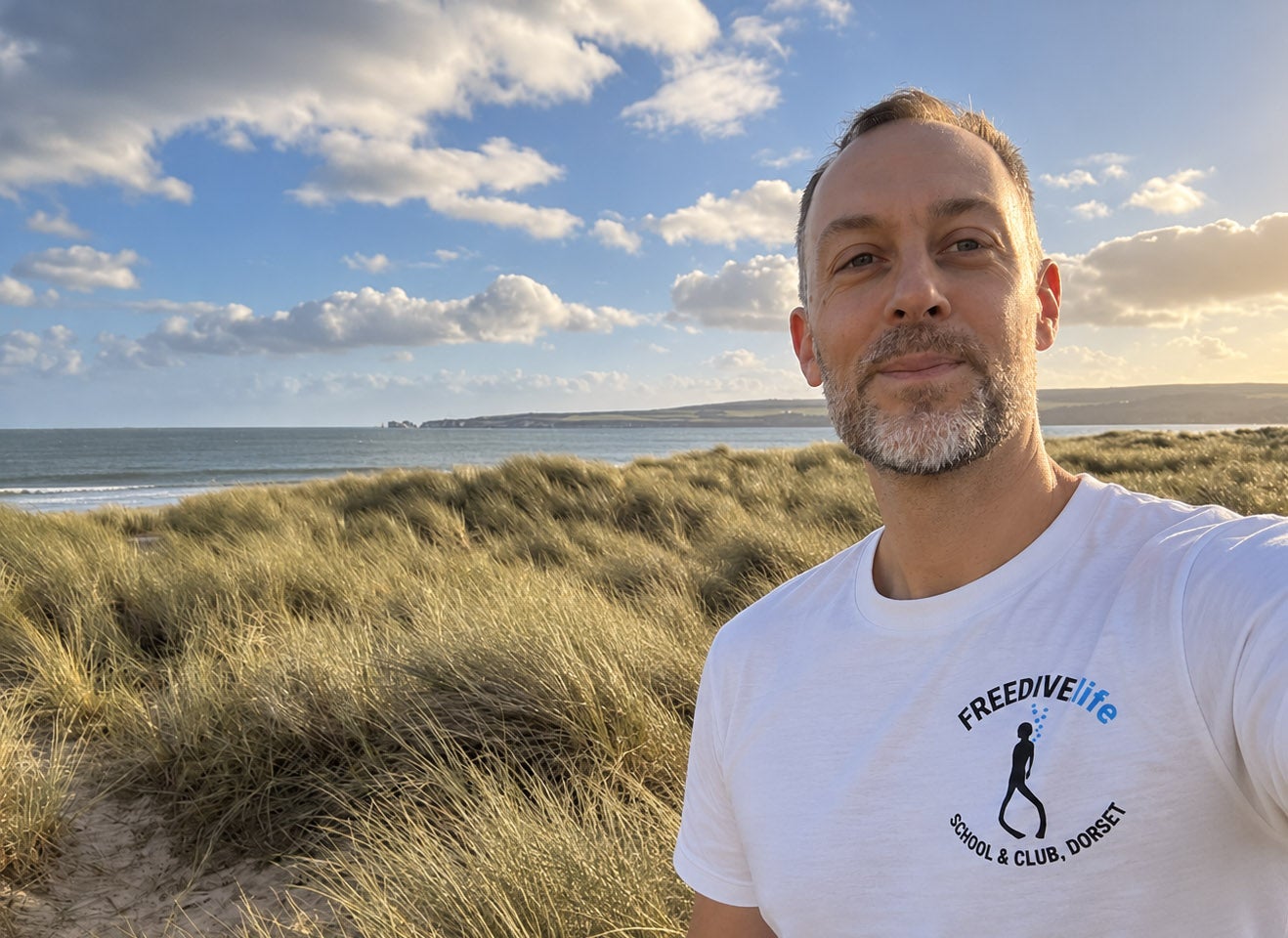
Owen, of the company Freedive Life, said: "I was out walking along Knoll Beach as the sea was a little too rough to get in the water, when I spotted what initially looked like a buoy or plastic bag washed up on the shore.
"I walked over to investigate and realised it was actually a dead fish. Having encountered pufferfish while diving abroad, I had a good idea what it was, but sent the photographs to Dorset Wildlife Trust and a friend who's a marine biologist for confirmation.
"I spend a lot of time in the water exploring Dorset's coastline. We're fortunate to have some fantastic marine life right on our doorstep. But despite all the time I've spent diving locally, I certainly wasn't expecting to find a pufferfish washed up on the beach."
A spokesperson for the Dorset Wildlife Trust said: "Usually found in open water in the warmer parts of the Atlantic as well as the Indian and Pacific oceans, these fish are a rare sight in the UK, but they do turn up occasionally.
They advised people not to handle any pufferfish they find and has asked anyone who spots one to report it to the charity.
The National Trust, which owns Studland Beach, said the fish hasn't been reported to them.
KioskNews shows a cleaned-up reading view extracted from the publisher’s page — the original always lives on their site, not ours.