LOCAL ELECTIONS 2026: KZN coalition dilemma: Will election losers find their way back to power?
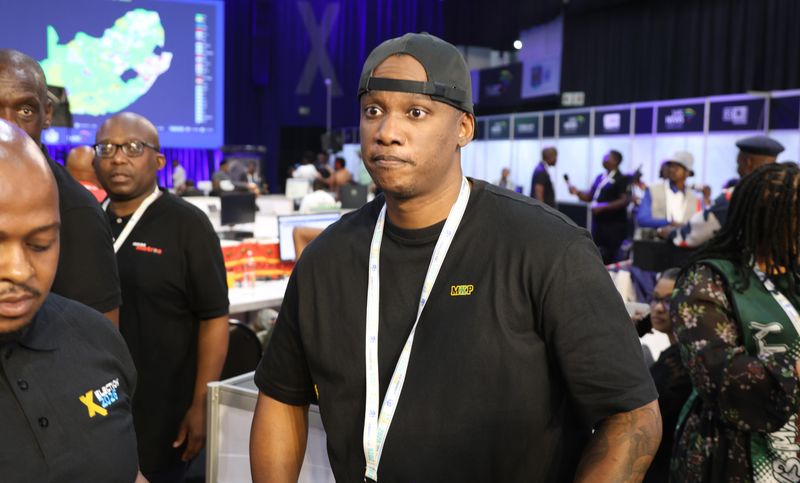
KwaZulu-Natal’s election results have left political parties with difficult choices to make, including whether to form coalitions that could return their rivals to power or remain on the opposition benches despite having an opportunity to govern.
This is a challenge facing all parties as the province now prepares for coalition negotiations in 32 of its 44 municipalities, where no party has been able to secure an outright majority.
Among the municipalities heading for coalition negotiations are eThekwini, Msunduzi, Newcastle, uMhlathuze, KwaDukuza and Ray Nkonyeni, all where the uMkhonto Wesizwe (MK) party has emerged as the largest party, but has not secured the outright majorities needed to govern alone.
The situation is the same where the IFP is leading its municipalities, including Alfred Duma, AbaQulusi and Jozini, while the ANC has fallen short of an outright majority in uMzimkhulu.
The MK party, which has emerged as the biggest party in the province in its first local government elections, winning more than 2.1 million votes, 34% of the vote, has already signalled that it will not enter into coalition agreements simply for the sake of governing.
The IFP and ANC followed with about 20% each (1.2 million votes each), while the DA remained in fourth place at 10%. However, the picture looks different at the municipal level, where the IFP was leading in 19 municipalities, MK in 17, the ANC in five and the DA in three, according to provisional results.
This means that although MK has secured the largest share of the provincial vote, it may not necessarily govern the most municipalities, depending on how coalition negotiations unfold.
Its first deputy president, Duduzane Zuma, has warned against coalition arrangements that could resurrect parties that had been rejected by voters.
“We won’t enter into coalition just for the sake of it. We are not here to rescue people that have messed up. We don’t want a situation where we are resurrecting parties that people have rejected,” he told Daily Maverick.
The party’s position comes as it prepares to negotiate with some of the political parties it has taken support from, particularly the ANC and IFP, which will still play an important role in determining who governs municipalities where no party has secured a majority.
A familiar dilemma
In the 2024 provincial elections, MK secured 45.35% of the vote in KwaZulu-Natal, giving it 37 of the 80 seats in the provincial legislature, but it was unable to form a government after the IFP, ANC, DA and NFP entered into a coalition agreement.
Two years later, the party is involved in another round of negotiations, this time across several municipalities where it has emerged as the largest party, but will need support from other parties to secure control of councils.
In Msunduzi, for instance, which includes Pietermaritzburg, MK secured 31 of the 81 council seats, leaving it 10 seats short of the 41 needed for an outright majority, while the ANC and DA each secured 17 seats.
In Newcastle, MK secured 23 of the 71 council seats, followed by the IFP with 15, the ANC with 10 and the DA with seven, meaning the party will need another 13 seats to secure an outright majority.
The situation is similar in uMhlathuze, which includes Richards Bay, where MK secured 27 of the 71 seats, followed by the IFP with 18, the ANC with 12 and the DA with nine, leaving MK nine seats short of the majority needed to govern.
In uMshwathi, MK secured 13 of the 27 council seats, leaving it just one seat short of an outright majority, while in Richmond the party secured 10 of the 17 seats, giving it outright control of a municipality previously governed by the ANC.
The IFP will also need coalition partners in municipalities where it has emerged as the largest party, including AbaQulusi, where it secured 20 of the 47 seats, and Alfred Duma, where it won 24 of the 73 seats.
The ANC faces a similar situation in uMzimkhulu, where it secured 21 of the 43 seats, leaving it one seat short of an outright majority.
Coalition positions
On Saturday, MK announced a seven-member team to lead its coalition negotiations, headed by Duduzane Zuma and including Tony Yengeni, Dali Mpofu, Willies Mchunu, Mxolisi Phakathi, Lindi Mtshali and Dr Thanti Mthanti.
The party said coalition arrangements were an important instrument for advancing its political programme and transforming local government, but insisted that such agreements should be guided by its political programme rather than the pursuit of political positions or short-term political interests.
Mpofu also indicated that while MK wanted to govern, it was prepared to remain in opposition if it could not reach agreements consistent with its principles.
“If the political situation asks that the party must sit on the opposition benches, it will do so.”
The ANC has also indicated that it is not rushing into coalition negotiations, with its secretary-general, Fikile Mbalula, telling journalists at the National Results Centre on Saturday that the party had not yet begun formal negotiations despite losing ground in several municipalities.
“For now, we haven’t started any coalition negotiations. What we are having now are talks about talks,” Mbalula said, adding that the ANC was prepared to remain in opposition if necessary.
The IFP, meanwhile, has established a negotiating team and intends to initiate discussions in municipalities where it failed to secure outright majorities, with its president, Velenkosini Hlabisa, saying the party wanted councils to be constituted as soon as possible.
“Where we did not get 50+1%, we will be initiating the discussions to ensure that councils are constituted as soon as possible,” Hlabisa said at the National Results Operations Centre at the weekend.
Coalition agreements and the provincial government
The talks are taking place against the backdrop of the provincial coalition government formed by the ANC, IFP, DA and NFP after the 2024 elections, with the parties now facing the possibility of entering into different political arrangements at the various municipalities.
This could see parties that currently govern together at provincial level competing against one another for control of municipalities, while some may consider agreements with MK, which remains outside the provincial government.
DA provincial leader Dean Macpherson has warned parties against working with MK, arguing that decisions taken during municipal coalition negotiations could have consequences beyond councils and may spill over nationally.
“I think that political parties need to take a long-term view and a wider view than just a narrow municipality, a narrow provincial government, because, as we all know, there’s a consequence and a reaction for every action. So, what a party may choose to do here could have other consequences in other provinces nationally, and so on,” Macpherson said.
Responding to this, MK’s provincial spokesperson Willies Mchunu said, “There is a party that doesn’t want to talk to us. They hate us, so we are not going to work with them. In fact, they have made us hate them as well. We will talk to those parties with whom we share the same constituency, the same problems.” DM
KioskNews shows a cleaned-up reading view extracted from the publisher’s page — the original always lives on their site, not ours.