Samsung Electronics reportedly ending home appliance sales in Hong Kong
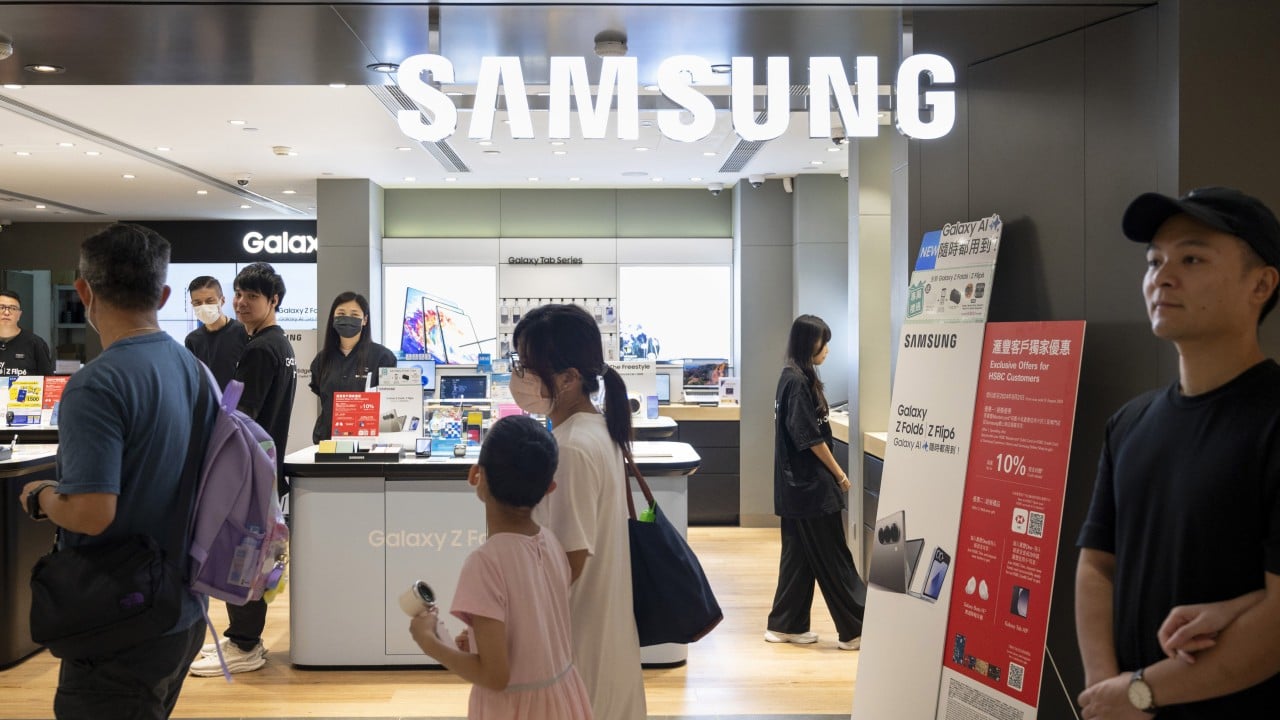
Samsung Electronics is reportedly ending home appliance sales in Hong Kong, months after withdrawing from the mainland Chinese market.
Samsung’s Hong Kong office told the South China Morning Post on Thursday that it would focus on televisions, monitors, audio products, business-to-business display solutions and mobile devices in the city. It did not explicitly confirm that it was ending sales of major home appliances.
However, a check by the SCMP on Thursday morning found that major home appliances, including refrigerators, washing machines and vacuum cleaners were listed as sold out on the company’s official Hong Kong online shop.
South Korean broadcaster Korea Economic TV reported on Tuesday that Samsung would stop selling home appliances in Hong Kong.
The report cited an unnamed electronics industry source as saying the company’s Hong Kong subsidiary had begun preparing to withdraw from the market one or two months earlier.
The broadcaster estimated Hong Kong’s home appliance market at 2.7 trillion won (US$2 billion). It said Samsung ranked third in refrigerator sales in the city last year, with a 15 per cent market share, behind Japan’s Hitachi and US brand Whirlpool.
But Samsung was losing ground across the market, with Japanese and American products capturing the premium segment and Chinese products gaining ground in the mid-range and lower-end segments, the report said.
The broadcaster reported that the Hong Kong withdrawal was part of Samsung’s plan to stop selling home appliances in China, which the company officially announced in May.
Samsung Electronics Hong Kong told the SCMP it was continually reviewing and adjusting its product portfolio in response to changing market conditions and consumer preferences.
“As part of this strategic adjustment, we are focusing our resources on televisions, monitors, audio products, business-to-business display solutions and mobile devices,” it said.
“Our professional after-sales services, warranty fulfilment and maintenance support for all sold products remain fully active and completely uninterrupted.”
In May, the tech giant decided to end its home appliance business on the mainland as it increased its focus on its far more profitable semiconductor business.
According to its financial report, Samsung’s third-quarter revenue surged 127 per cent year on year to 195.3 trillion won, with its semiconductor division accounting for 75.3 per cent of total sales.
Its consumer division, which covers smartphones, televisions and home appliances, posted an operating loss of 0.8 trillion won.
KioskNews shows a cleaned-up reading view extracted from the publisher’s page — the original always lives on their site, not ours.