NIA opens 6 solar-powered irrigation sites in Leyte amid El Niño
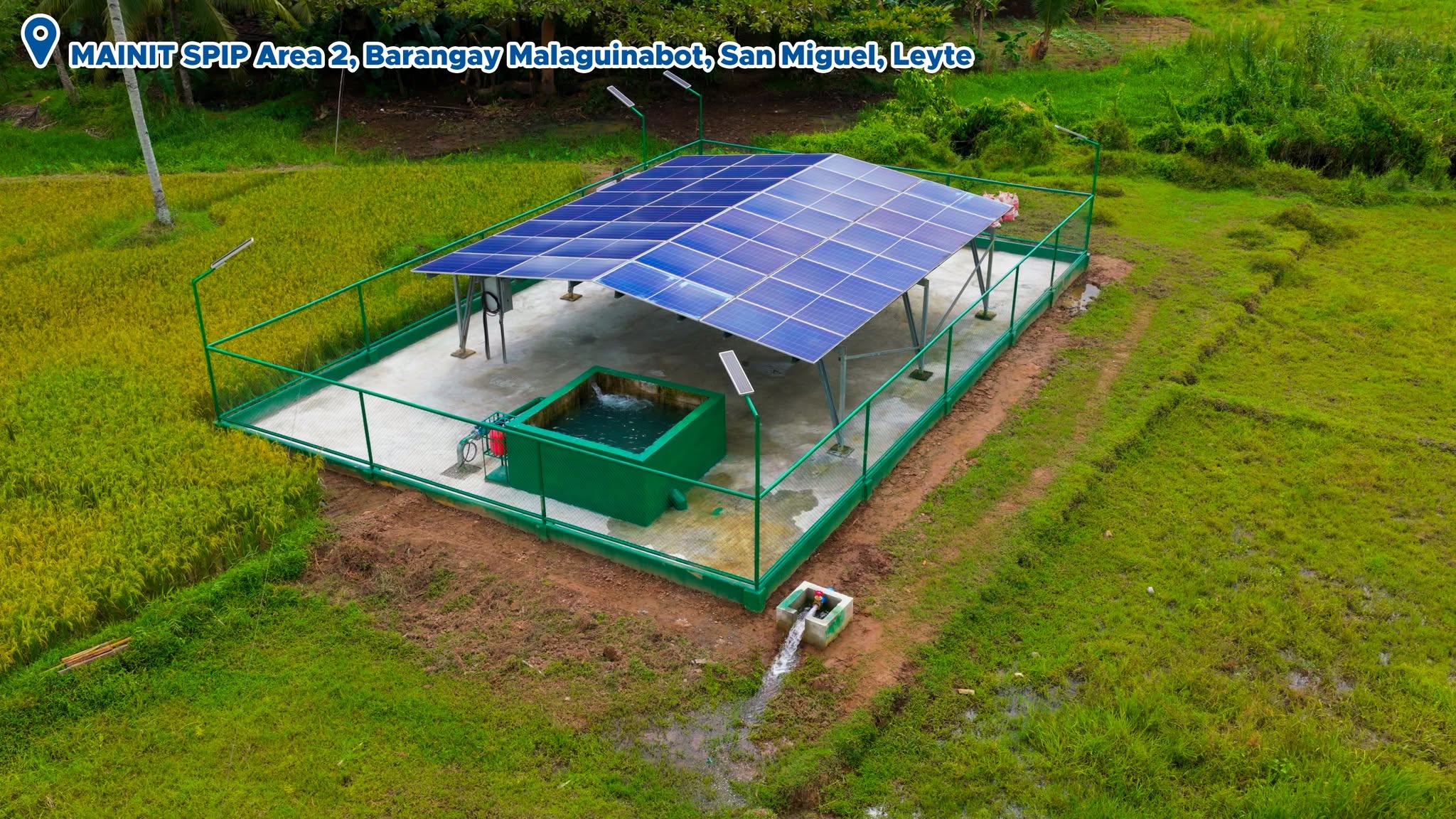

TACLOBAN CITY — The National Irrigation Administration (NIA) in Eastern Visayas has inaugurated six solar-powered irrigation facilities in Leyte to strengthen water supply to farmlands and help farmers prepare for the possible effects of the looming Super El Niño.
NIA Region 8, led by Regional Manager Jaime de Jesus, formally opened the Opong Solar Pump Irrigation Project (SPIP) in Barangay Opong, Tolosa, Leyte, and five sites of the Mainit Solar Pump Irrigation Project under the Mainit River Irrigation System on Oct. 28.
The six solar-powered facilities are designed to augment water supplies in existing irrigation systems, particularly in downstream and tail-end areas where farmers frequently experience inadequate or irregular water flow.
Article continues after this advertisement
READ: Marcos inaugurates P91-million solar irrigation system in Leyte
FEATURED STORIES
NEWSINFO
NEWSINFO
NEWSINFO
The additional facilities are expected to improve water distribution and provide a more reliable supply to farmlands that need irrigation.
The Opong SPIP will serve 15 hectares of farmland and benefit 16 farmer-members of the Integrated Barangays of Tolosa Leyte Irrigators Association Inc. (IBTLIA).
The project is expected to help stabilize water supply for their farms, particularly in preparation for the 2027 first cropping season, which is scheduled to begin this November.
Meanwhile, the five Mainit SPIP sites will provide additional irrigation water to 69.7893 hectares of rice fields in the municipalities of San Miguel and Alangalang, Leyte.
Article continues after this advertisement
The facilities will benefit 57 farmer-members of the Alangalang Lateral B West Irrigators Association (ALBW IA), BIGAA Irrigators Association, and SANMAGBA Irrigators Association.
In total, the six solar-powered irrigation sites will serve 84.7893 hectares of agricultural land and benefit 73 farmers belonging to various irrigators’ associations.
Article continues after this advertisement
The projects are the government’s efforts to strengthen agricultural production, ensure food security, and improve the livelihoods of Filipino farmers amid changing climate conditions.
Eastern Visayas is among the regions vulnerable to El Niño, which can bring prolonged dry conditions, reduced water availability, and possible crop losses, particularly in rain-dependent farming communities.
Using solar-powered irrigation systems would help reduce farmers’ vulnerability to water shortages while providing a more sustainable, climate-resilient source for irrigation.
Your subscription could not be saved. Please try again.
Your subscription has been successful.
NIA Region 8 said it would continue implementing modern irrigation projects to improve water distribution, strengthen rice production and protect farmers’ livelihoods against climate-related challenges./coa
KioskNews shows a cleaned-up reading view extracted from the publisher’s page — the original always lives on their site, not ours.