Yemen escalation displaces more than 57,000 children: UNICEF
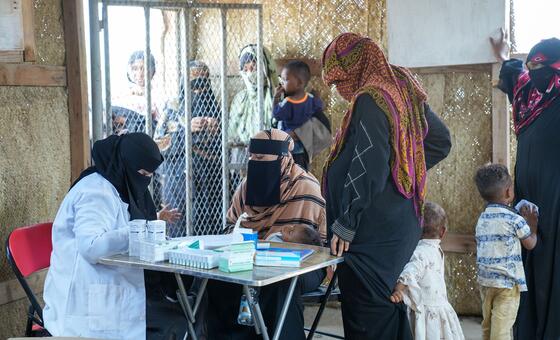
The warning comes from the UN Children’s Fund (UNICEF) which said that more than 57,000 children have been displaced in just the past two weeks while others have been killed, injured or reported missing.
“Children in Yemen were already living through one of the world’s most grave humanitarian crises, and many have known little but conflict and displacement,” said Edouard Beigbeder, UNICEF Regional Director for the Middle East and North Africa.
“For children who have already endured years of hunger, displacement and disrupted schooling, this latest violence is eroding what little stability they had left.”
Children killed and injured
Yemeni Government forces, supported by a Saudi-led coalition, and Iran-backed Houthi militia have been at war since 2014, but the country had experienced relative calm following a UN-backed truce in 2022.
The new escalation has forced tens of thousands of families to flee their homes, triggering widespread displacement across several governorates, including Taiz, Hudaydah and Marib.
Since 3 September, at least nine children have been reported killed and 12 injured while three others are missing following an attack on the road from Yemen’s western coast to Aden.
Healthcare and education disrupted
The fighting has also cut children’s access to healthcare and education. UNICEF said services at 26 health facilities that it supports have been disrupted, while 243 schools have closed or suspended classes, affecting more than 137,000 students.
The agency is expanding its emergency response to reach up to 231,000 people. Teams have supported health facilities and distributed hygiene kits and water tanks in Taiz, while providing additional water and hygiene supplies in Marib.
Nine health and nutrition mobile teams have been redeployed to displacement sites and affected communities in Aden, Marib and Taiz. Emergency water and sanitation teams also aim to reach more than 200,000 people with safe water and hygiene supplies and carry out urgent repairs to damaged systems.
Meanwhile, child protection teams are providing psychosocial care and case management, including for unaccompanied and separated children. They are also helping make communities aware of the dangers posed by unexploded ordnance.
Supporting arrivals in Djibouti
UNICEF is also working with authorities in Djibouti to support Yemeni families who have fled there after making the dangerous journey across the Bab el-Mandeb Strait. More than 2,000 people, including many children, have now arrived in the country.
The UN agency recalled that even before this latest escalation, roughly 12.2 million children in Yemen needed humanitarian assistance. More than 2.2 million under-fives are acutely malnourished, including over 515,000 suffering severe acute malnutrition.
Across Yemen, around 17.8 million people lack adequate access to healthcare, water and sanitation services, and only 60 per cent of health facilities are fully functional. Some 3.2 million school-age children are out of school.
UNICEF echoed the UN Secretary-General’s call for all parties to protect civilians, including children, respect international humanitarian law, and facilitate safe and unimpeded humanitarian access to communities in need.
KioskNews shows a cleaned-up reading view extracted from the publisher’s page — the original always lives on their site, not ours.