India’s proposed social media ban for under-18s wins parents’ backing
Digangana Mukherjee, a mother of a six-year-old girl and a 10-year-old boy, has banned television at her home in the Indian city of Mysore because she does not want her children to become addicted to watching content on screen.
A year ago, when her son’s school started using a smart classroom board that streamed online content, she and her husband decided to enrol him in a school where teachers used chalk on a slate board, and the pace of lessons was slower.
Now, she is happy that the Indian government is reportedly planning to prevent children below 18 years from opening social media accounts under a new law, in line with a Supreme Court ruling that such accounts signed up by minors should be considered void.
“I approve of it as a parent. My son is 10 and knows how to browse YouTube. It is already becoming scary for me. I don’t know what content is visible to him,” Mukherjee said.
While parents may welcome India’s proposed safeguards, enforcement could prove complicated in one of the world’s largest online markets.
Legal experts warn that policing underage accounts and preventing users from getting around restrictions and privacy rights would be the main stumbling blocks, while a blanket ban would deprive young people of valuable educational resources.
Other countries in the Asia-Pacific region have enacted such laws, with Australia setting the ball rolling last December when it banned social media access for children under 16 under its Online Safety Amendment Act.
Mukherjee, who runs a library at her home filled with old books and conducts storytelling sessions for children, said she could distinguish between those who have unrestricted access to online screens and those with limited exposure.
“I see a lot of children come in and out of my space. There is a stark difference between these children. The attention span is much less for those who have abundant access to screens. They are restless and are not able to sit still for long,” she said.
Children with unlimited screen access have many entertainment options, and they are not keen on books, according to Mukherjee.
“If there were fewer screens, people would read more books. Growing up, we had Sunday afternoons only to watch TV. The rest of the time, when I was really bored, I had to pick up a book,” she said.
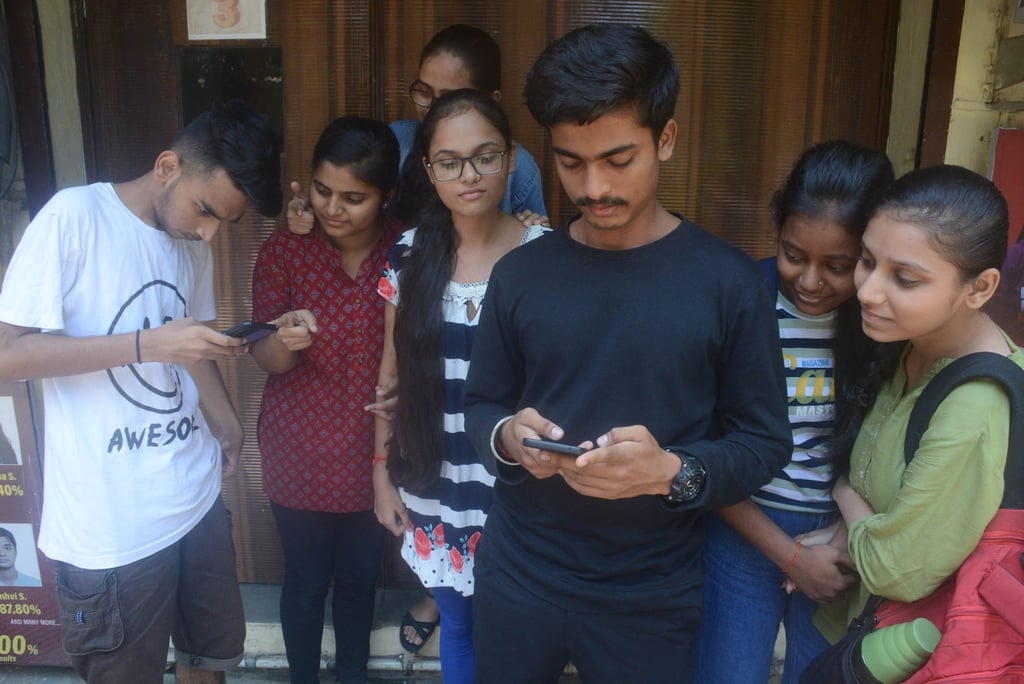
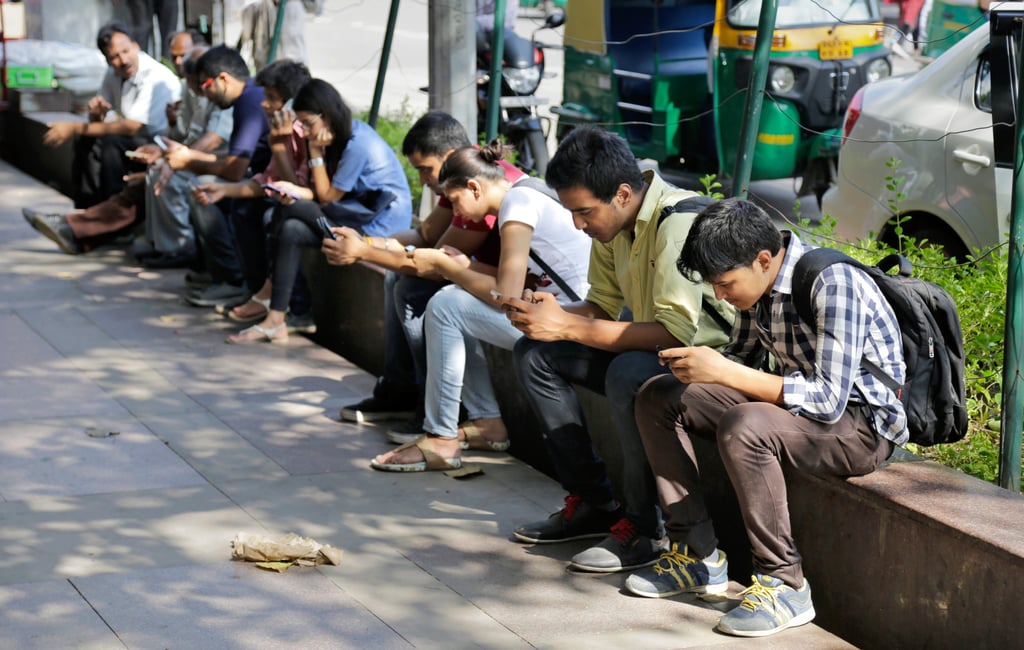
Many social media users younger than 18 in India do not face online curbs.
Last month, India’s solicitor general Tushar Mehta concurred with the position of the Supreme Court, in response to a petition by the “Just Rights For Children Alliance” NGO, that social media accounts opened by minors should be voided. He said the federal government should step in to make such a ban mandatory.
Australia deactivated 4.7 million social media accounts opened by those below 16 in the first month of its ban. India’s Goa state has been considering an Australia-like social media ban for children, amid growing concerns over the impact of excessive use on their mental health.
Lawyers, however, warn that the proposed regulation to curb access for children in India is bound to face legal challenges.
“I understand the Supreme Court’s request to bring in safeguards and the government’s stance to bring in stronger regulation to combat the risks posed. What remains to be seen is the extent and severity of restrictions that ultimately take form,” said Ashima Chalia, founder and senior partner at Bengaluru-based Ayaam Legal.
The mother of a two-year-old baby said that she wished for such a legal curb to protect children from online risks such as sexual exploitation, cyberbullying and harmful content.
“As a parent, I would also wish to baby-proof the whole world against anything that may harm my kid,” Chalia said.
“No doubt there is a need for stricter legislation or rules, but the Indian government has a herculean task of balancing children’s access to education and beneficial digital resources,” she said.
These rules would have to address a user’s rights regarding personal information collection and storage as well as age-verification processes, she added.
While Chalia conceded that Indian regulators would face challenges from children in India lying about their age when opening social media accounts, she added: “An uphill battle surely, but absolutely attainable.”
Striking a balance
Ambareen Ali Shah, a New Delhi-based mother of a 14½-year-old boy, said she worried about how easy access to social media would affect children’s time management as they had to do online and offline school assignments.
“Once you have access to – say Instagram – the content is so interesting that it causes distraction,” she said.
Shah recalled that when she was a young girl, the only screen she had access to was the television, restricted to a few hours of viewing.
“We need to curb the time a child spends navigating the internet. On the other hand, social media is making kids smarter because they get access to a lot of information,” she said.
02:11
Indian leaders want nation to power the AI age, but some residents are pushing back
Amitraj Kaushal, a lawyer at the Supreme Court of India, said that there was a strong case for a statutory framework protecting children from risks associated with social media use.
Citing the need to limit their exposure to age-inappropriate material, Kaushal said: “Legislation can provide clarity by placing the primary compliance responsibility on platforms rather than criminalising children or their parents.”
Australia’s experience could be useful for India as its law requires social media platforms to take “reasonable steps” to prevent those below 16 years old from opening accounts, while children and parents are not penalised for non-compliance, according to Kaushal.
Debasree Basu, an adviser at G.M. International School in Mumbai, said, however, that a sweeping social media ban would be counter-productive.
“Restrictions do not work. We have already exposed today’s generation to so many things that to ban them now will only make them more rebellious,” she said.
“The message should be that we want to protect you, so please help us to do that. Then their whole attitude will change.”
KioskNews shows a cleaned-up reading view extracted from the publisher’s page — the original always lives on their site, not ours.