Sungrow Calls for Scenario-based and integrated systems to Accelerate the Next Phase of the Renewable Energy Transition
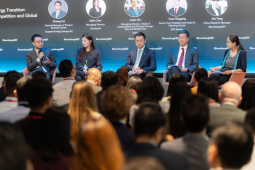
Hong Kong (ANTARA/PRNewswire)- As the global energy transition enters a new phase, flexibility, system integration and lifecycle value will become increasingly critical to building resilient and efficient energy systems, according to Dr. Zhuang Cai, General Manager of the Product Business Center at Sungrow Energy Storage BU.
Speaking at a panel hosted by BloombergNEF during Hong Kong Green Tech Leadership Dialogue 2026, Dr. Cai joined senior executives from Stonepeak, EVE Energy and HSBC to discuss how manufacturers, energy companies and financial institutions can continue to shape evolving energy markets amid accelerating technological innovation, expanding clean energy deployment and increasing geopolitical complexity.
From Equipment to Scenario-Based Solutions
Dr. Cai highlighted that future power systems will require flexibility across multiple timescales: from seconds and minutes to hours, days and even seasons. No single technology can cover every timescale or application.
Dr. Cai also pointed to a fundamental shift in the energy industry: from supplying individual pieces of equipment toward developing integrated, scenario-based energy solutions. Rather than optimizing technologies in isolated devices, future energy systems will increasingly combine different resources according to specific application scenarios. This could include the integration of photovoltaic and energy storage, or the coordinated deployment of wind power, hydrogen and other emerging energy technologies.
For equipment manufacturers, this evolution requires a broader technology perspective. Different storage technologies—including lithium-ion batteries, flow batteries, compressed air and hydrogen—can serve different technical and economic requirements. The ability to match technologies with specific scenarios will therefore become increasingly important.
At the system level, Dr. Cai emphasized the importance of modularity and platformization. Future energy storage systems should not be locked into a single technology pathway. Instead, they should function more like building blocks, allowing power, energy and control modules to be configured and combined according to different application requirements.
The Fusion of Software and Hardware
As energy systems become increasingly complex, system integration will also extend beyond hardware. Dr. Cai noted that the next generation of energy infrastructure will require deeper integration between software and hardware. Software will serve as the "skeleton and blood" of the system, enabling different assets to communicate, coordinate and operate intelligently as one integrated platform.
This means software capabilities will need to become increasingly diverse and scenario-specific, supporting the coordinated operation of complex energy assets and helping optimize system performance under changing operating conditions.
Going Global: Localization as a Strategic Imperative
Dr. Cai emphasized that going global is increasingly important for Chinese companies to enter overseas markets, strengthen supply chain resilience and diversify geopolitical risks. However, localization not only requires establishing local production or R&D facilities. It also includes hiring local talents, complying with local regulations and ESG requirements, and integrating into local communities and cultures. In a complex environment, transparent compliance is equally critical to addressing concerns around issues such as data security and technology. By demonstrating strong local compliance and operational transparency, companies can build trust with clients and partners and demonstrate a stronger foundation for long-term growth overseas.
KioskNews shows a cleaned-up reading view extracted from the publisher’s page — the original always lives on their site, not ours.