SAF revamps active infantry battalions with drone suite, real-time battle map
ROCKHAMPTON – The Singapore Armed Forces has reorganised its ground forces into Next Generation Infantry Battalions (NGIBs), which are more versatile and resilient in the field with the help of a suite of drones.
Unveiled on Oct 26 at the ongoing Exercise Wallaby, the transformation means that each NGIB rifle company will consist of more but smaller squads, which gives commanders greater flexibility to organise forces and undertake simultaneous missions.
In addition, each company will have two dedicated Steel Net sections dedicated to drone operations. They will each be equipped with an Artos strike drone, which can home in on an enemy and explode with the firepower of a grenade.
The change to infantry operations embodies the military saying “bots before boots”, which is the strategy of first sending robotic systems into dangerous environments ahead of human soldiers, said the Defence Science and Technology Agency’s director for army technology Dominic Li.
At Exercise Wallaby, soldiers from the Singapore Infantry Regiment’s 5th battalion (5SIR) validated their updated tech during urban operations missions.
The soldiers used a Vesper drone to scope out the presence of hostile forces in a second-storey room from some distance away. This drone is capable of longer-range surveillance of up to 8km, and can fly for close to an hour.
After the drone’s camera system confirmed the presence of enemies, an Artos drone was flown through the open window to neutralise the threat, before soldiers then entered the building to mop up.
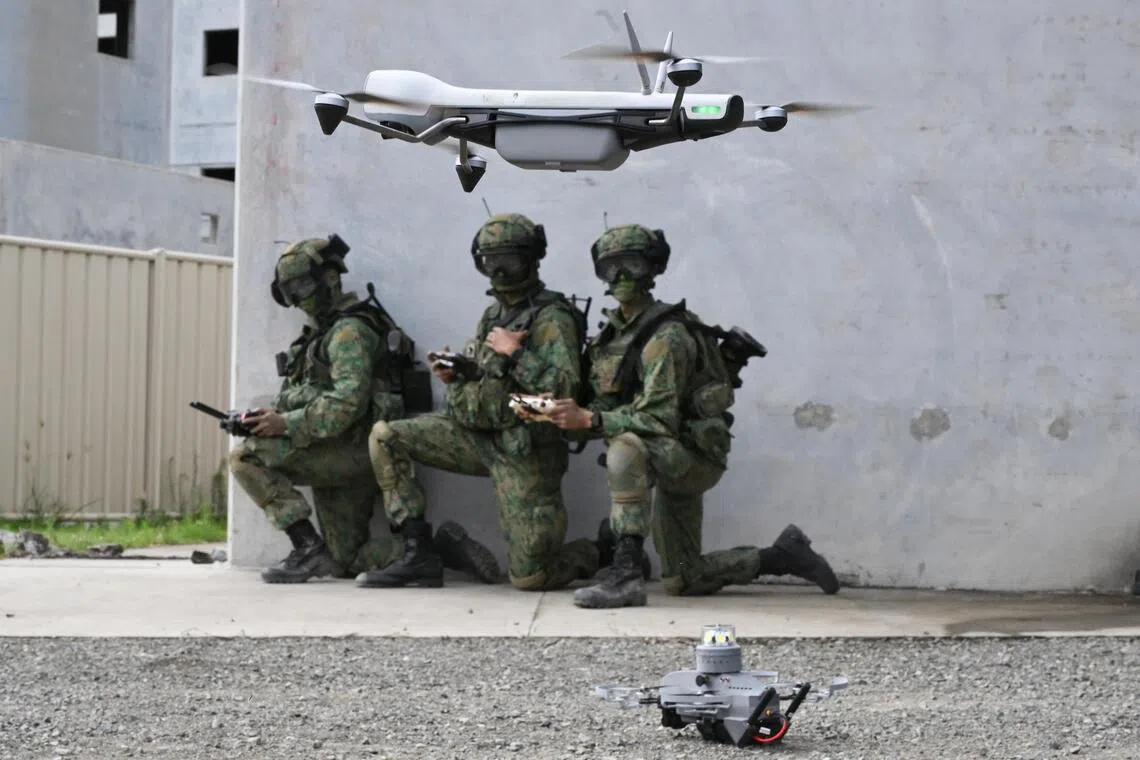
Soldiers from the Singapore Infantry Regiment’s 5th battalion have already begun incorporating the tech into their urban operations at Exercise Wallaby.
ST PHOTO: LIM YAOHUI
Each of the ten sections in an NGIB rifle company are equipped with a pocket-sized Ares drone, which is geared towards short-range surveillance in urban or confined spaces. There is also the M6F quadcopter, which can be flown both indoors and outdoors and is suitable for medium-range reconnaissance.
Despite there being four different unmanned systems, soldiers are able to control them using a single universal controller which can pair with each of the drones. This also means soldiers do not have to relearn how to fly each drone separately.
NGIB soldiers also have greater battlefield awareness through a new Battlefield Management System (BMS)(Soldier), a device which connects users to a shared digital picture of their environment.
About the size of a smartphone, the digital map can be updated in real-time with information that soldiers gather on the ground.
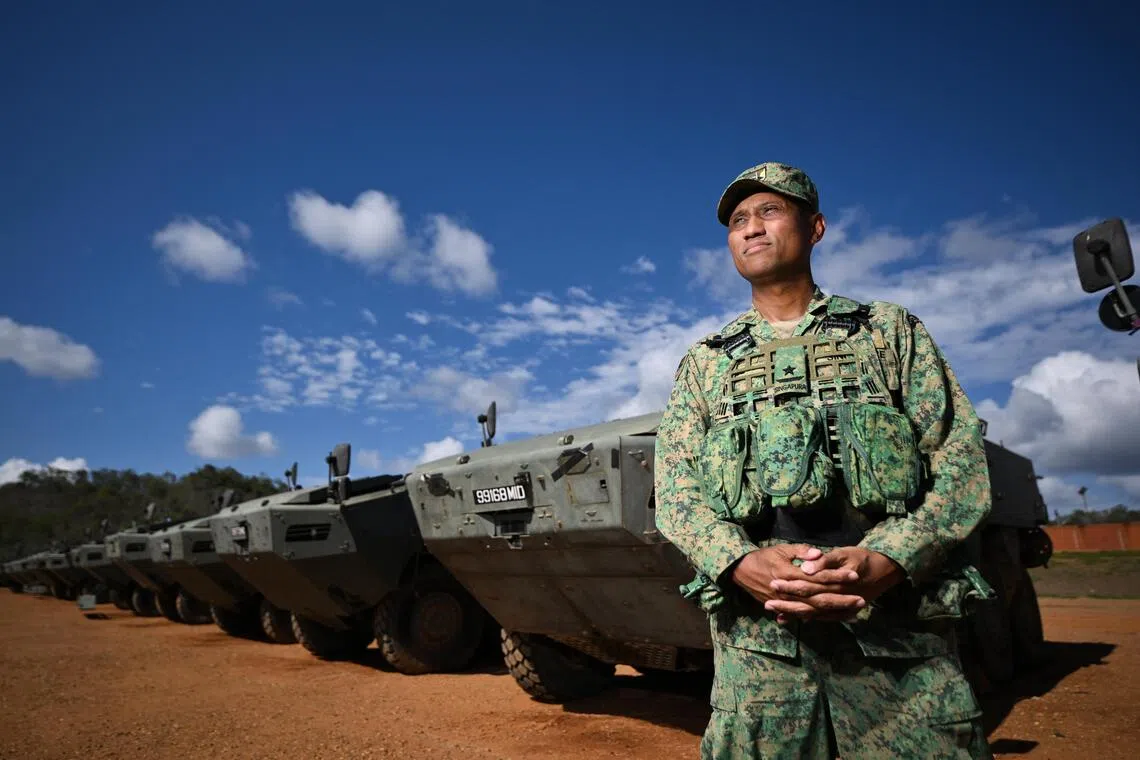
Chief Infantry Officer Fairoz Hassan said the NGIB limits the risks soldiers face during high-risk operations.
ST PHOTO: LIM YAOHUI
Chief Infantry Officer Brigadier-General Fairoz Hassan said the BMS (Soldier) enables soldiers to fight better on distributed fronts by providing a common platform where information on threats, objects and boundaries can be shared.
“We don’t need to subject our people to the dangers and the risks that they previously had to take,” he said. “Now, we are able to have a larger and longer reach and that helps the survivability of our soldiers.”
The introduction of drone training at the Basic Military Training Centre in 2025 has raised the baseline for the whole army to be familiar with drone operations, he noted.
All active SAF infantry battalions have been converted into NGIBs. The Singapore Army has six active infantry battalions, including 5SIR.
Even with the added tech, the SAF’s enhanced infantry battalions will still emphasise soldiering fundamentals, such as marksmanship, individual fieldcraft and fitness for its men, said Fairoz.
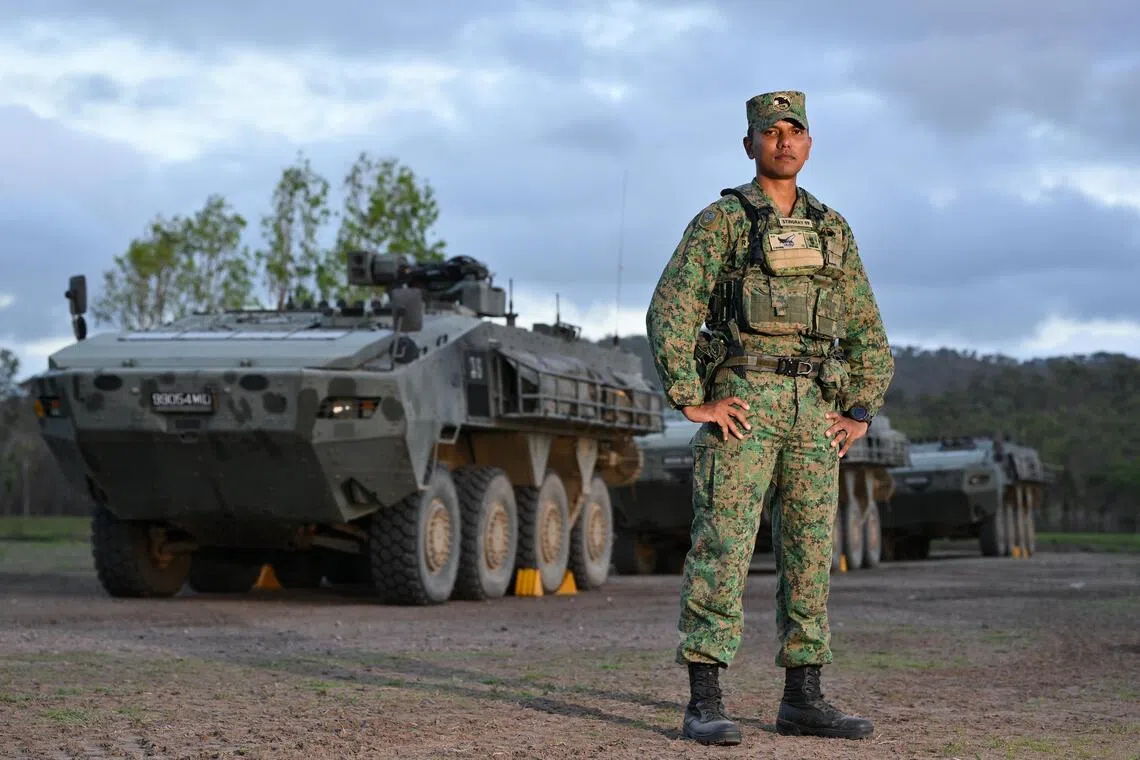
5SIR commanding officer Shahreel Rajaratnam said the BMS (Soldier) allows him and commanders to make tactical decisions quicker.
ST PHOTO: LIM YAOHUI
For 5SIR commanding officer Lieutenant-Colonel Shahreel Rajaratnam, the BMS (Soldier) has helped him to make quicker tactical decisions by showing him the frontline through his soldiers’ eyes.
“We can sense-make and pull video feeds from our drones straight into it, giving our commanders that immediate intel turn-around,” he said, adding that this is an improvement from the old method of using voice communications to convey information.
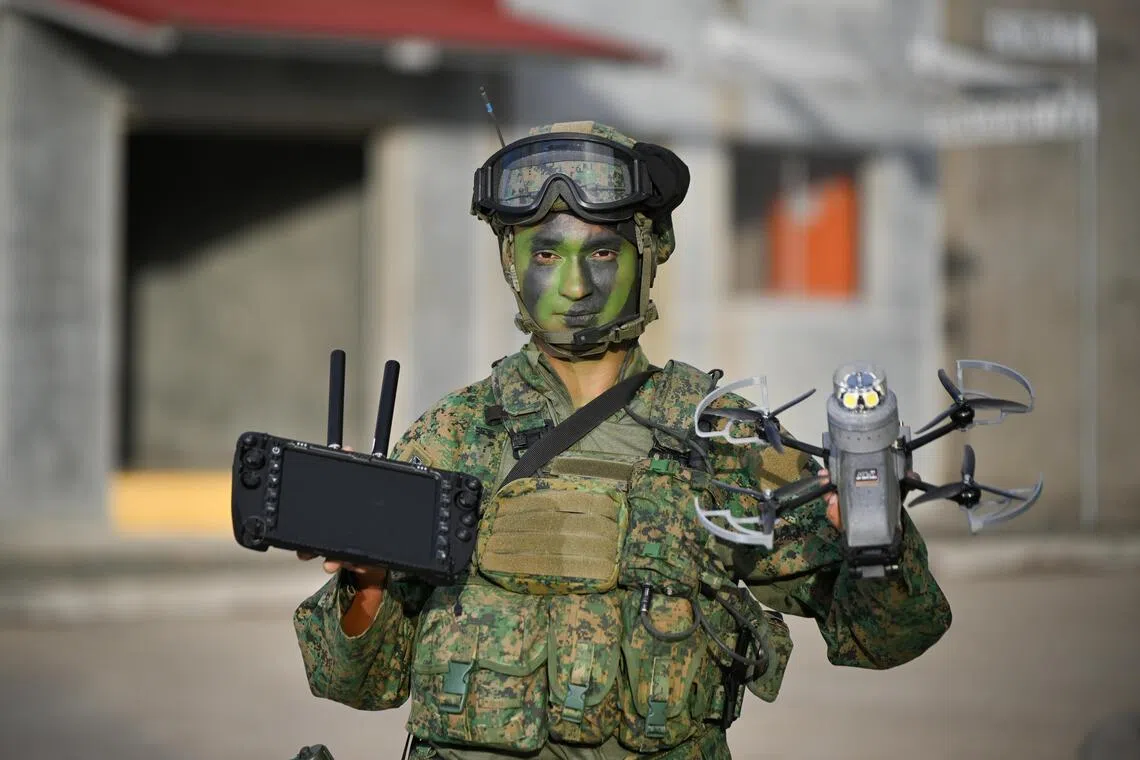
Steel Net section commander Scott Michael Thomas, 20, holding the Artos attack drone in the Shoalwater Bay Training Area in Queensland, Australia, on Oct 22.
ST PHOTO: LIM YAOHUI
Given that his men have grown up as digital natives with touchscreen devices at their fingertips, they have taken to the new tech naturally, Shahreel added.
Steel Net section commander Third Sergeant Scott Michael Thomas said the array of drones has given soldiers greater peace of mind going into missions.
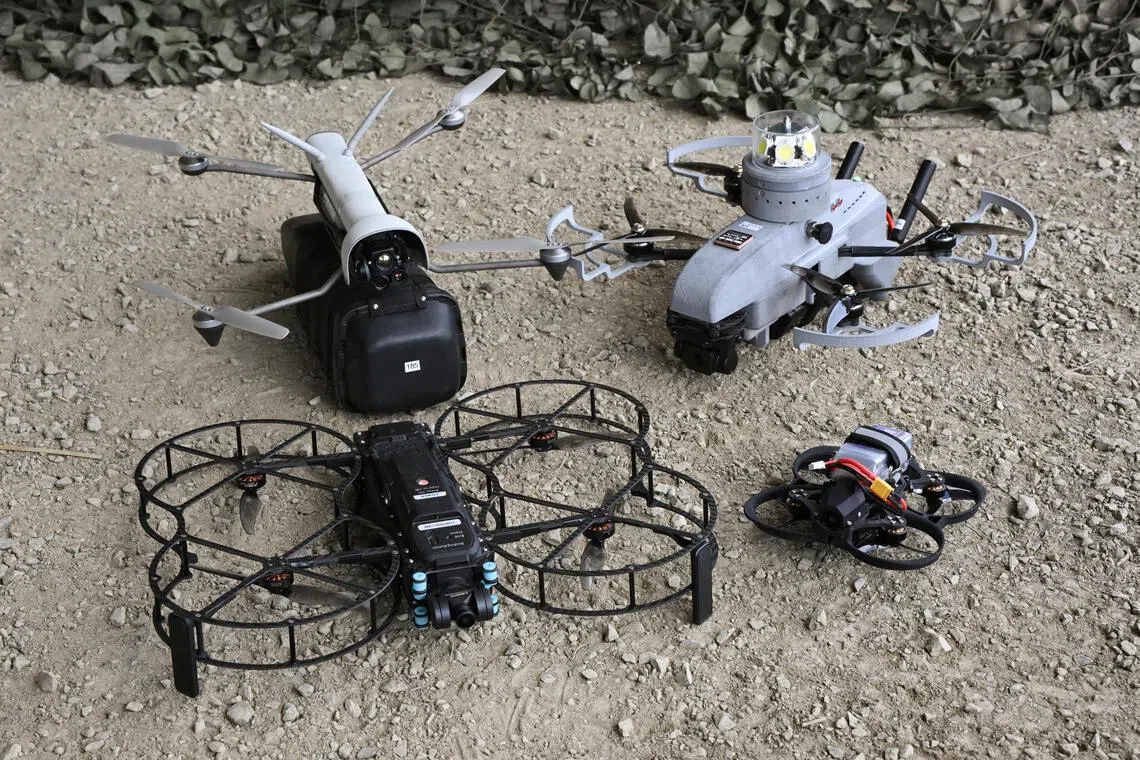
(From top left, clockwise) The Vesper unmanned aerial system, Artos, Ares and M6F quadcopter on display in the Shoalwater Bay Training Area in Queensland, Australia, on Oct 22.
ST PHOTO: LIM YAOHUI
“Since they know exactly where the enemy are, they know exactly where they can attack,” he said. “It gives us a ‘home ground advantage’ when it comes to these operations.”
MINDEF said the NGIB will continue to evolve to meet changing operational requirements.
Shahreel, the 5SIR commanding officer, described the system as a swiss army knife that gives SAF commanders a bigger toolkit in the field.
“We are able to leverage technology in putting a machine-first approach in all that we do, thereby keeping our soldiers safe and sending machines first in anything that is dangerous or onerous,” he said.
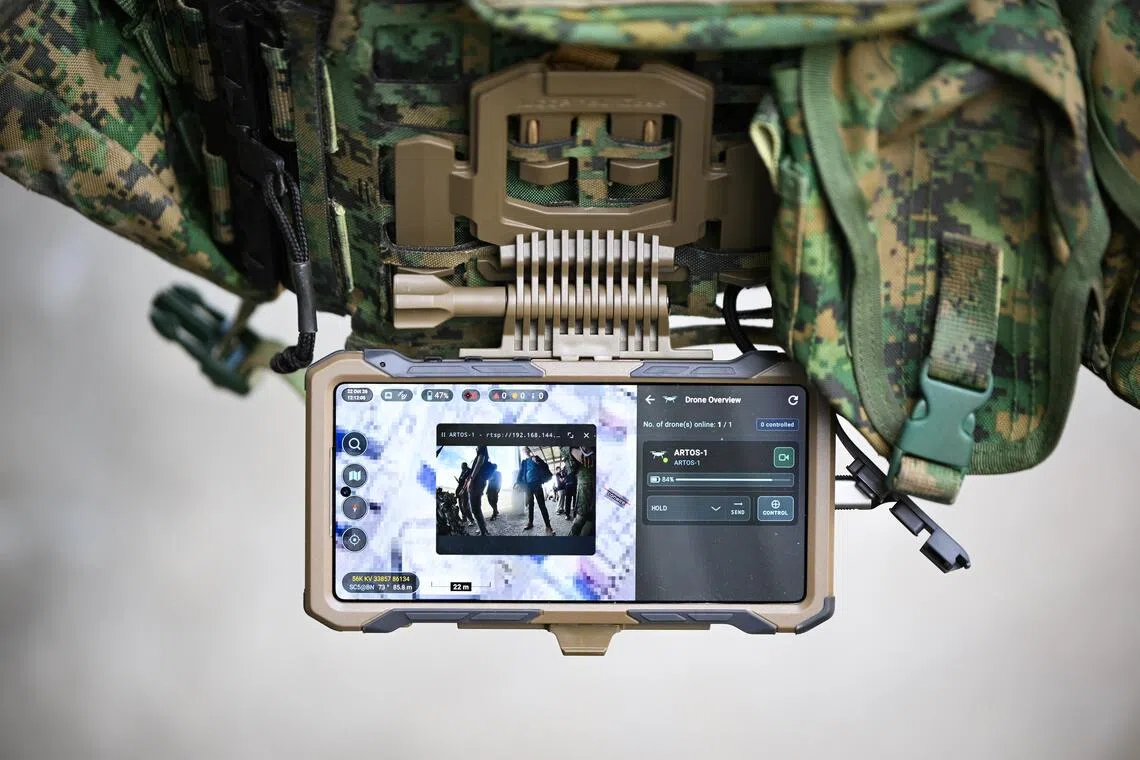
The Battlefield Manage System (Soldier) app, which connects users to a shared digital picture of the battlefield.
ST PHOTO: LIM YAOHUI
KioskNews shows a cleaned-up reading view extracted from the publisher’s page — the original always lives on their site, not ours.