‘That bridge almost broke our mob’: the Ngarrindjeri warrior women and the fight to preserve sacred knowledge
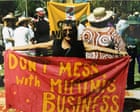
There’s a bridge in South Australia, about 300 metres of concrete and steel, that sparked an extraordinary, decades-long saga of heartbreak, skulduggery and vindication.
Millionaire developers, academics, state and federal governments, the media and the courts all played roles in what would become known as the Hindmarsh Island Bridge affair.
But at the heart of that story, buffeted by the winds of self interest, are the “warrior women”, the Ngarrindjeri women of the Coorong, the Lower Lakes, and the Murray River, and their sacred knowledge. Or, as it came to be called, their “secret women’s business”.
A new film telling their story – Kumarangk: Sacred Women’s Business – will have its global premiere on Saturday at the Adelaide film festival.
The feature documentary weaves the women’s stories through the past and present, connecting archival footage with the voices of the women today to re-examine the clash of sacred, cultural and land rights with property developers’ ambitions.
In 1989, developers Tom and Wendy Chapman proposed a bridge connecting mainland Goolwa, near where the Murray empties into the sea, to Kumarangk (Hindmarsh Island).
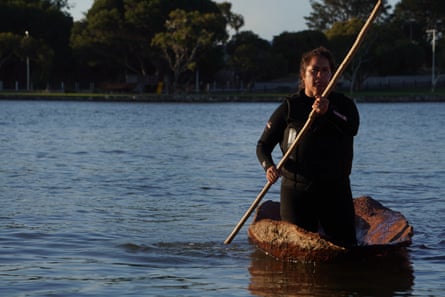
The Chapmans wanted to funnel more people towards the marina they were building on the island, “so yachties could come”, as anthropologist Dr Deane Fergie notes. But the tiny island of Kumarangk was the Ngarrindjeri women’s place for birth, burial and women’s business. And they were not going to sit quietly by and let their cultural place be trampled by marina traffic.
Writer and director, Tracey Rigney, is a Ngarrindjeri/Wotjobaluk woman, and was a teenager as the affair played out. As the film opens, she is taking her daughter over to Kumarangk on a boat. “Because we hate that bridge,” she says.
“That bridge almost broke our mob.”
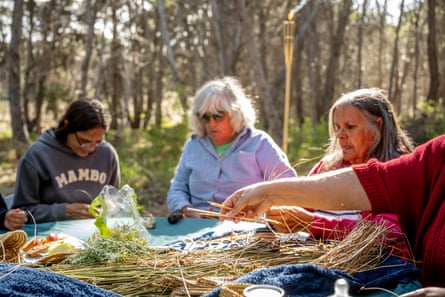
They’re travelling with her aunties: “Master weavers, branded liars of our culture. Fighters.”
For the film, she has charted the complicated cultural, legal and political battles, punctuated by deeply human moments.
There’s the flashback to footage of then prime minister Paul Keating talking about the Mabo decision, which overturned the false claim that Australia was terra nullius.
Robert Tickner, the Aboriginal and Torres Strait Islander affairs minister at the time, sums up how native title became fodder for a scare campaign: “Some politicians in this country alleged that the native title claims were going to take people’s back yards.”
The women Rigney talks to describe the day more than 150 women converged on Goolwa to discuss what to do about the bridge, when their reasons for challenging it had to stay secret.
“We talked it through and we worked out that every woman had a piece of the puzzle,” Aunty Eunice Aston says.
They talked about the tales their own aunties, mothers and nannas had told them about Kumarangk’s part in the Seven Sisters’ songline, about growing up, about womanhood. About how the bridge would cross sacred waters. And about how in the old ways when people died, they were “smoked” on nearby Mundoo Island, and the preserved bones then taken and buried on Kumarangk.
These beliefs, and the secret knowledge, were not enough to stop the state government giving the bridge the go-ahead.
Tickner had the power to ban the building of it for 25 years – but he needed more information.
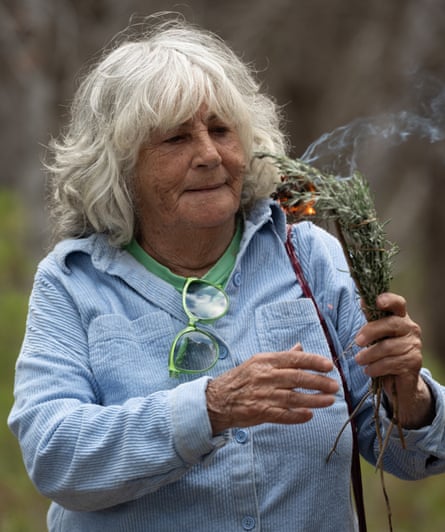
The film shows Ngarrindjeri elder, historian and genealogist Dr Doreen Kartinyeri fretting about what to do, not wanting to reveal the sacred information but fearing the bridge would destroy their culture. Ultimately she puts the information in an envelope for Tickner, but not for him to read. It’s for women’s eyes only.
“I did what I shouldn’t have done, maybe,” Kartinyeri says in the historical footage.
“That was my biggest mistake, putting black history on white paper.”
The ban was put in place. “It was after that that things just went apeshit,” Saunders says. The ban infuriated people.
The film skips to vision of South Australian Liberal MP Ian McLachlan bringing Tickner’s documents into parliament.
“How in the fuck did that get to his office?” Aboriginal Legal Rights Movement’s former head, Ngarrindjeri/Boandik elder Sandra Saunders asks.
Back then, she and Kartinyeri rang McLachlan, and asked if he had circulated the documents, including the sealed envelope that Kartinyeri had so begrudgingly put secrets into.
“And he said ‘yes,’ he did,” Saunders says.
“Doreen, oh, it was tragic. She fell on the ground, holding her guts and just rocking backwards and forwards and crying to her ancestors, telling them how sorry she was.”
after newsletter promotion
It turned out the documents had been addressed to Tickner’s adviser, Sean McLaughlin. They went to the wrong office, to McLachlan’s office. The documents, including the women’s business, were photocopied and shared.
Then “dissident women” came forward and said there was no such thing as the sacred women’s business. The warrior women, disbelieving and betrayed, said not everyone was given access to the knowledge, and the sharing of it was disrupted by the colonising forces.
Ten News journalist (now News24 host) Chris Kenny aired claims from Ngarrindjeri man Doug Milera that the sacred business was a fabrication. The idea was gaining ground.
“Lies, lies, lies,” said the headlines.
But in 1995, a state royal commission into the Hindmarsh Island affair determined the “secret women’s business” claims were fabricated and in 1997, under John Howard – but with the support of Labor – the federal government overturned Tickner’s ban.
In Rigney’s film, the Chapmans pop champagne and pose, smiling, for photographs.
Later, Milera recanted. He was drunk, he said.
In 2001, the bridge opened.
But the Chapmans went back for their hats and went back to court for $20m compensation over the bridge’s delay, challenging those who supported the women’s claims.
“The joy is that the Chapmans sued us [Saunders, Tickner and Fergie] and that gave us an appeal,” Fergie says.
Justice John von Doussa found against the Chapmans, and overturned the royal commission’s finding that the women’s business was fabricated.
The courtroom erupted in cheers.
The film shows Kartinyeri leaning, sobbing against a supporter while Saunders tells the media pack that the next day’s headlines should be: “Sorry, sorry, sorry.”
Von Doussa’s finding was accepted and endorsed by the state government in 2010.
Rigney says she remembers the story unfolding at the time because her grandfather told her that her father’s people were “fighting to protect something significant”.
In her 20s, she moved to Adelaide to reconnect with her dad’s community and ruwe (country), and as part of her work she visited remote communities.
“And I got to dance with the Seven Sisters dreaming, with that songline,” she says.
“It was amazing, it was incredible.”
Then, a couple of years ago, she got involved with the Kumarangk project, which includes an exhibition and a play as well as the film – her first feature documentary.
Rigney says she hopes people walk out of Kumarangk having learned more about what the Hindmarsh Bridge affair was, and more about the women who were only trying to protect country and culture.
KioskNews shows a cleaned-up reading view extracted from the publisher’s page — the original always lives on their site, not ours.