Knesset advances bill imposing PM term limits, restricting indicted MKs from forming government
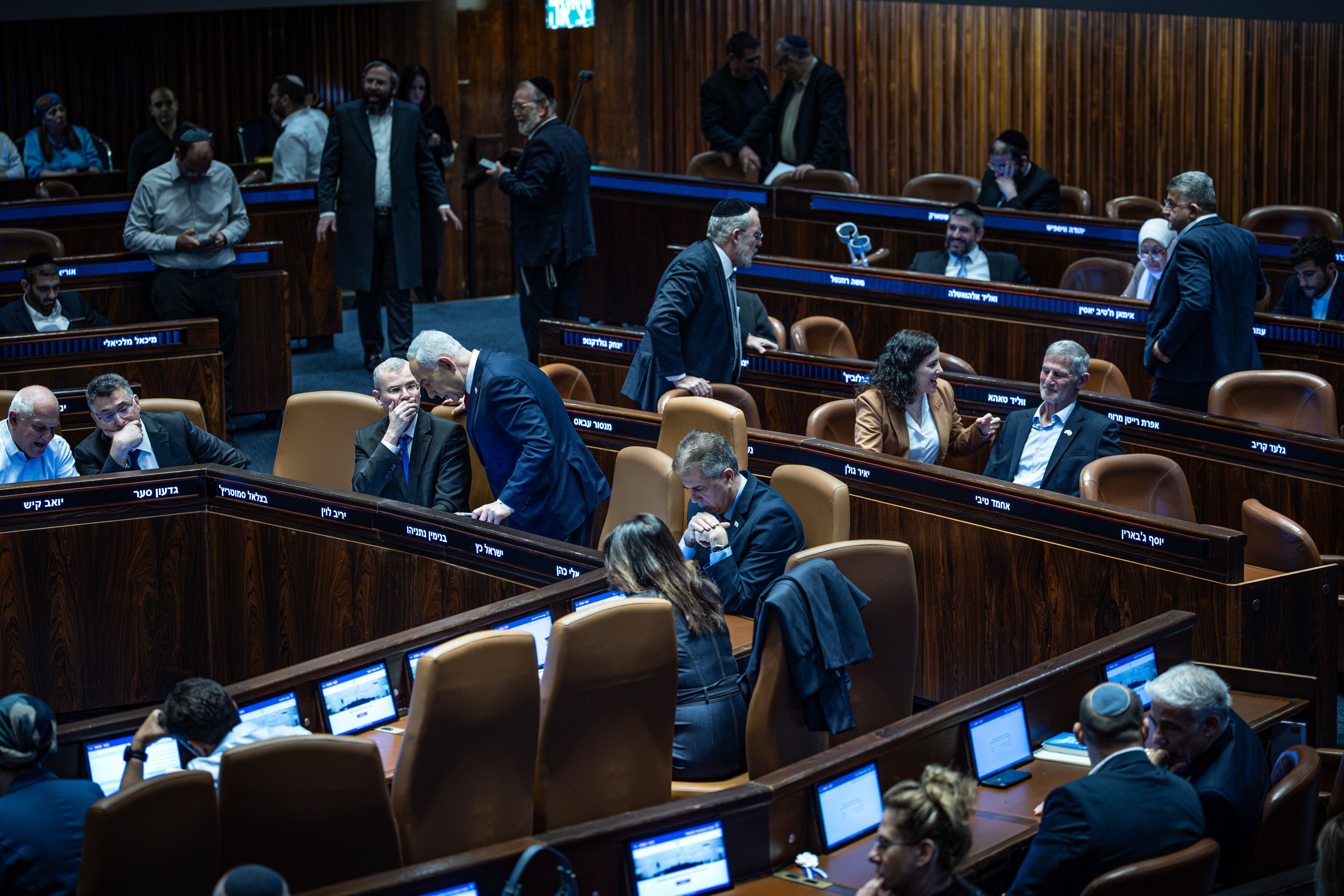
The bill, which passed its preliminary reading by a vote of 65-48, proposes an eight-year limit on consecutive terms as prime minister and restrictions on indicted MKs seeking to form a government/
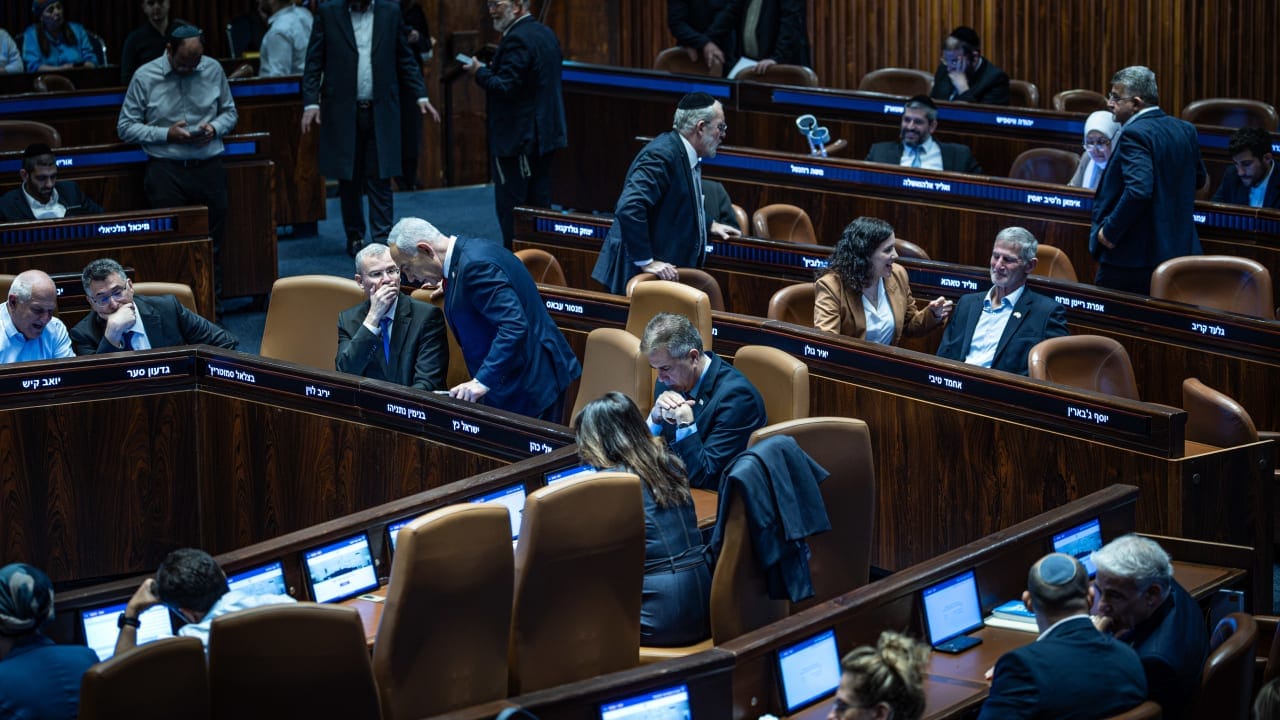
The Knesset plenum passed on Wednesday, in a preliminary reading, a bill seeking to impose term limits on the prime minister and introduce restrictions on who can serve in the position.
The bill passed its preliminary reading with 65 lawmakers voting in favor and 48 voting against. It was sponsored by Yisrael Beytenu, MK Oded Forer, and other lawmakers from the bloc led by Yashar party leader Gadi Eisenkot. It will now return to a Knesset committee for further deliberations and will still require three additional readings to become law.
The bill’s passage comes after the Eisenkot-led bloc secured a parliamentary majority over Prime Minister Benjamin Netanyahu’s bloc following the October 27 election.
If enacted, the legislation would directly affect Netanyahu, who has served as prime minister for more than 19 non-consecutive years.
One of the Eisenkot bloc’s key campaign promises during the election was to set term limits for the prime minister.

Bill proposes eight-year PM term limit, mandatory cooling-off period
The bill proposes amending Basic Law: The Government to stipulate that anyone who has served as prime minister for eight consecutive years may not return to the position until after an eight-year cooling-off period outside the government.
It also proposes that anyone with fewer than two years remaining before reaching the maximum term limit may not be appointed prime minister.
Additionally, the bill proposes that a member of Knesset facing a pending indictment for a felony may not be assigned the task of forming a government.
An exception would apply only if the chairman of the Central Elections Committee determines that, even if the allegations in the indictment are proven, the offense does not carry moral turpitude.
That aspect of the legislation would also affect Netanyahu, who is currently standing trial on charges of fraud and breach of trust in three cases and bribery in Case 4000.
The bill further proposes that an incumbent prime minister indicted for such an offense would cease to hold office if the High Court of Justice determines that the offense carries moral turpitude.
Under the proposal, these provisions would take effect with the next Knesset and would also apply to previous terms in office.
Eisenkot-led bloc strengthens control over Knesset proceedings
The passage of the bill in its preliminary reading comes after the Knesset plenum last week voted to remove Knesset Speaker Amir Ohana (Likud) and appoint Yashar MK Matan Kahana as his replacement, handing the Eisenkot-led bloc greater control over parliamentary proceedings, even as Netanyahu remains in office as head of a caretaker government.
The Eisenkot-led bloc has since advanced key legislation in the Knesset with the support of the Arab parties, although no government has yet been formed.
Eisenkot received the mandate to form the next government on November 8, giving him about two more weeks to do so with the option of requesting a 14-day extension.
The Knesset plenum passed a series of bills in preliminary readings last week seeking to repeal key components of the judicial overhaul enacted by Netanyahu’s outgoing coalition.
The bills returned to Knesset committees for further deliberations and will each require three additional readings to become law.
KioskNews shows a cleaned-up reading view extracted from the publisher’s page — the original always lives on their site, not ours.