Supreme Court seeks stricter action on live-streamed court clips
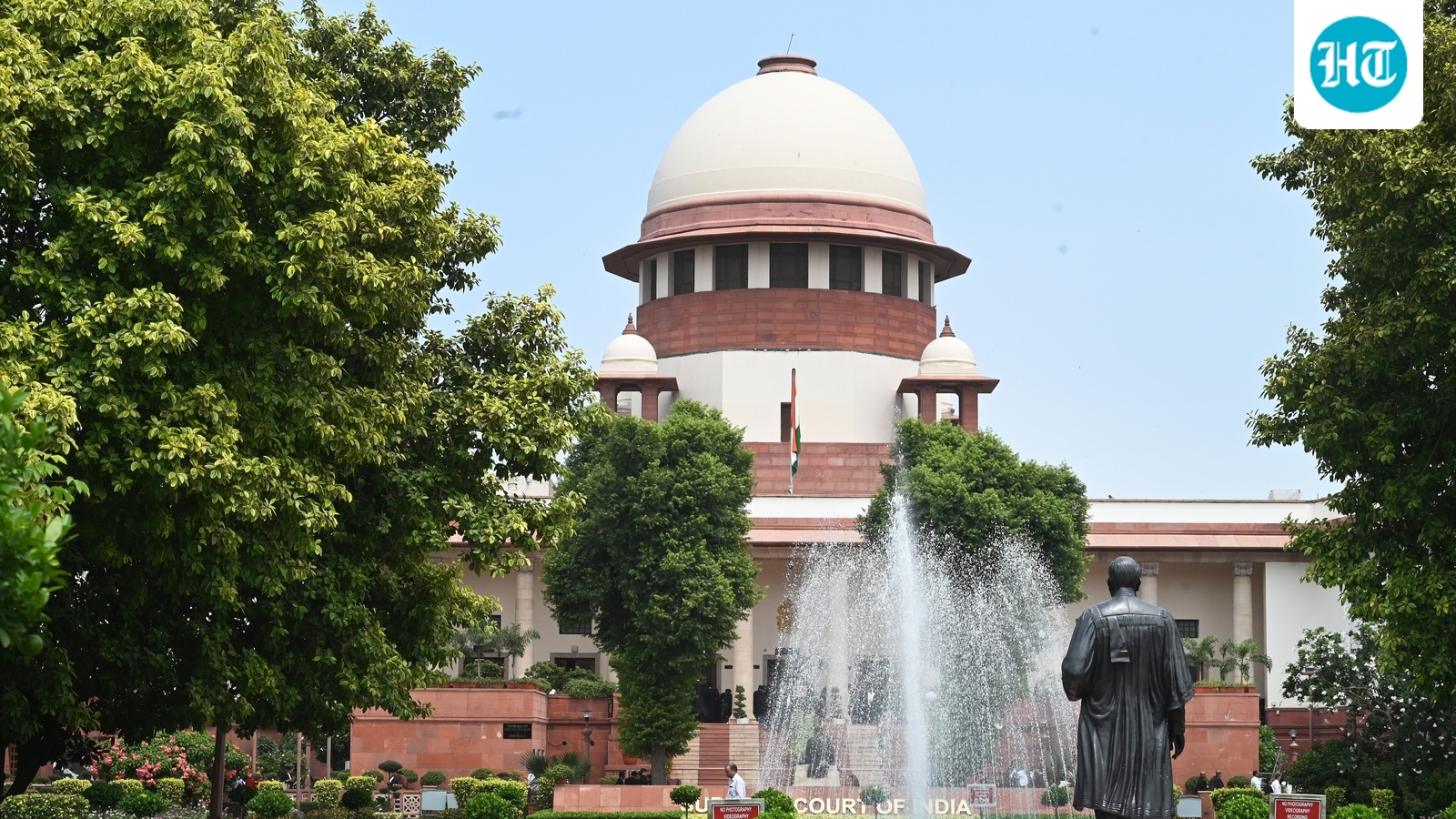
The Supreme Court on Friday directed the Centre to put in place a mechanism to take strict action against those who misuse live-streamed court proceedings by extracting clips for commercial exploitation. The court flagged continued violations of its July 24 order prohibiting the unauthorised use of such recordings.
“There are breaches taking place. We want that our order is complied with,” a bench headed by Chief Justice of India (CJI) Surya Kant said.
On July 24, the court imposed a blanket ban on the unauthorised extraction, editing, dissemination, reposting, uploading and monetisation of judicial proceedings that are live-streamed or accessed through video-conferencing platforms.
The order was passed on a public interest litigation (PIL) filed by journalist Harshita Grover, who flagged the absence of safeguards to prevent live-streamed court proceedings from being extracted and circulated out of context for sensationalism and commercial gain.
Solicitor general Tushar Mehta, appearing for the ministry of electronics and information technology (MeitY), told the court that the government was preparing a response and would submit it within a week. He said high courts had responded to the July 24 order on the impact and feasibility of continuous live-streaming, and that their responses were being examined to formulate a comprehensive policy.
The bench, also comprising justices Joymalya Bagchi and V Mohana, directed MeitY to ensure compliance with the July 24 order and incorporate measures to act against violations in the proposed policy.
The July 24 order was issued as an interim measure pending the finalisation of the policy. It barred the extraction, dissemination, monetisation, posting, reposting, uploading, transmission, modification, storage or hosting of audio-video recordings of judicial proceedings on social media or other digital platforms without prior permission from the Supreme Court secretary general or the registrar general of the jurisdictional high court.
The court had clarified that the order would not affect the reporting of court proceedings by recognised news outlets.
An intervention application argued by advocate Prashant Bhushan sought to ensure that official recordings of court proceedings were made available on court websites for use by those reporting on them through YouTube channels and social media.
Bhushan said the existing arrangement was unclear on whether a YouTuber covering a particular case could use an excerpt from the official recording. “Presently the arrangement is vague as it is not clear if a YouTuber who is doing a particular matter can use a part from the official clip of the court proceedings,” he said.
The bench responded that such users would need permission from the Supreme Court secretary general or the concerned high court registrar general.
The court said making official recordings available on court websites would not, by itself, resolve the problem. Even if extraction from the official recording were disabled, a person could make a duplicate of the recording and extract clips from it, the bench observed.
Mehta told the court that even official recordings could not be exploited for commercial gain. Bhushan said that the order passed by the court must be considered in the light of previous Supreme Court decisions allowing live-streaming of court proceedings in the 2018 Swapnil Tripathi case.
“We will have to consider if the judgment in Swapnil Tripathi allows an unfettered use of court proceedings without any judicial oversight,” the bench said.
The petition was filed against the backdrop of videos circulated on social media showing a petitioner flinging papers before a bench headed by Justice KV Viswanathan and using abusive language. Grover said in her petition that the circulation of such clips trivialised judicial proceedings.
The court acknowledged that regulating online content was one of the biggest challenges and issued notice on the PIL to the Centre, states and high courts, seeking their responses on the framing of guidelines.
KioskNews shows a cleaned-up reading view extracted from the publisher’s page — the original always lives on their site, not ours.