Fidget, fudge it, Budget
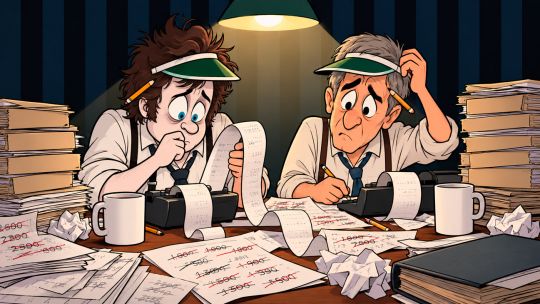
September 15 has been the deadline for presenting the budget ever since Law 24,156 was approved in 1992 – in the first years of convertibility when then-president Carlos Menem was seeking to convince the outside world that the rest of the economy was just as predictable as the one-to-one exchange rate between dollar and peso. Various administrations have come and gone since then – right of centre, left of centre, Peronist or not – but this journalist does not recall any of them as having missed the deadline for submitting a budget (apart from current President Javier Milei not presenting one at all in 2024 and 2025).
Punctuality is one thing, accuracy another. The 2027 Budget posits four percent growth, an annual inflation of 18 percent and an exchange rate just under 1,850 pesos per dollar. The equivalent figures for this year’s budget were five percent growth, 10 percent inflation and an official exchange rate of 1,423 pesos by Christmas when a stuttering economy is struggling to expand two percent despite impressive export-led growth in some sectors, inflation thus far this year was measured at 33.5 percent by the INDEC national statistics bureau last month after already breaking into double digits in April and the official exchange rate was 1,532 pesos per dollar in midweek (with 1,560 pesos the parallel equivalent). The budget now presented to Congress is thus already looking a lot like wishful thinking without bearing in mind that 2027 will be an electoral year. We could look at all the budgets since and before 1992 and similar discrepancies between optimistic forecasts and grim reality will almost invariably appear.
While the budget in any modern sense dates back worldwide to 1733 as a British innovation by Sir Robert Walpole (the United Kingdom’s first prime minister between 1721 and 1742 and still the longest-serving with little prospect of his record being broken, given the recent turnover of six premiers in the past decade), Argentina was already making sporadic stabs in that direction soon after confirming its independence in 1816. But while Juan Manuel de Rosas arrogated to himself la suma del poder público (the executive, legislative and judicial branches all rolled up into one person) during his long dictatorship between 1829 and 1852, his formal designation remained the governor of Buenos Aires Province, limiting his budgets to that district. National budgets only started with any regularity after the Constitution of 1853 when Argentina’s first elected (by around 6,400 voters) president Justo José de Urquiza created the modern Economy Ministry in 1854, followed by Law 217 for the Reglamento General de Pagos in 1858.
Argentina’s 19th-century budgets fell short of being balance sheets between outlay and inflow – instead they were a list of areas and objectives where spending was authorised without making any effort to identify the funding. The predictable result was chronic deficit spending (with a single surplus in the year 1864) eventually leading to the debacle of the 1890 crisis. Milei idolises that period as golden years yet their focus was not chainsaw austerity but nation-building via railways, port modernisation and other infrastructure, public education, subsidised immigration, impressive public buildings to house institutions, etc., heedless of the cost, whether running up foreign debt or printing money – a golden age but also leading to an exit from the gold standard for nine years in 1890.
By 1900, Argentina was established as the granary of the world, thus providing some sort of revenue base in the first third of the century via customs import duties funded by a massive trade surplus although lacking any direct taxation. Chief spending items were the infrastructure to sustain the export model (railways, ports, etc.) and a civil service expanding considerably under the democratic governments after 1916 – that period also saw rollovers because prolonged Congress debate often prevented the budget from being approved before the next one came up. World War I (1914-18) destroying international trade was a major hiccough in that period.
The onset of the Great Depression in 1929 was followed by various developments transforming the previous budgetary patterns – Argentina leaving the gold standard just two months after the Wall Street crash, the start of half a century of alternation between military and civilian governments in 1930, the introduction of income tax in 1932 and the creation of a Central Bank in 1935 as a monetary regulator competing with the budget. Until around 1940 the objective remained a balanced budget, which was sometimes achieved despite the strains of the new model of import substitution to counter the collapse of world trade.
The first Juan Domingo Perón presidencies (1946-1955) had little use for annual budgets, preferring five-year plans on the Soviet model. Public spending doubled to some 30 percent of gross domestic product with generous welfare schemes, the nationalisation of public services and ambitious infrastructural projects amid the overall aim of boosting consumer markets for a protected domestic industry. After rifling the Central Bank and pension funds, Perón resorted to the classic Peronist syndrome of financing fiscal deficits by printing money. The year after his fall Argentina had to resort to the International Monetary Fund for the first time (1956).
Budgets as we know them today with detailed items of spending and revenue were pioneered by the Arturo Illia Presidency, just before its fall in 1966. Paradoxically enough, this long overdue début of efficient drafting was followed by almost continuous budgetary chaos until Law 24,156 in 1992 – runaway social spending under 1973-1976 Peronism, runaway military spending under the 1976-1983 dictatorship taking the deficit up to a record 12 percent of GDP, the inability of the Raúl Alfonsín Radicals to head off the 1989 hyperinflation. Kicking off with half a decade of fiscal surplus, the Kirchnerism dominating most years of this century used its budgets to systematically underestimate inflation in order to generate billions of pesos in extra revenue to spend as they liked with their most recent chapter the pandemic pandemonium of the Alberto Fernández Presidency (2019-23). The gradualism of Mauricio Milei (2015-2019) merely trimmed the fiscal deficit – Milei has removed it entirely but somewhat meretriciously via zero infrastructural spending, floating debts, etc. And now we have the 2027 Budget only slightly more moderately optimistic than its 2026 forerunner.
KioskNews shows a cleaned-up reading view extracted from the publisher’s page — the original always lives on their site, not ours.