GEOPOLITICS OP-ED: Brazil’s election — a victory for Lula, a wake-up call for democracy
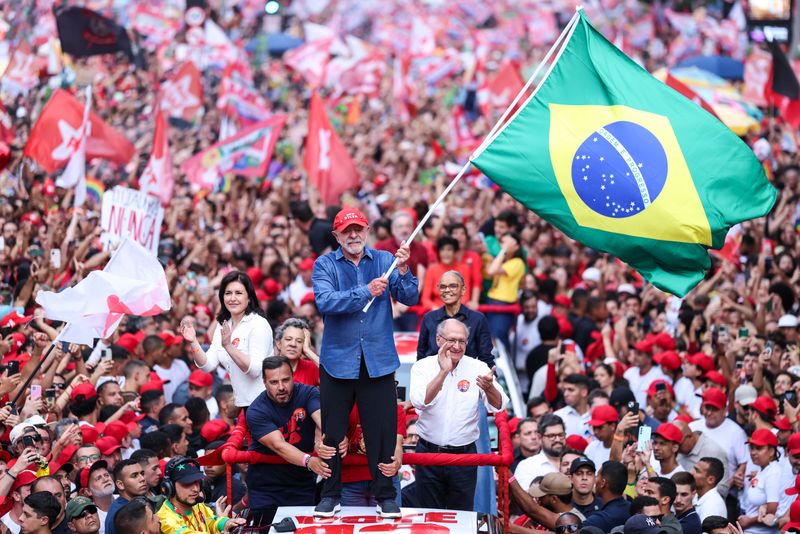
It was a triumph for age and incumbency. On Sunday, 25 October, 80-year-old Luiz Inácio “Lula” da Silva pulled off a remarkable comeback to defeat 45-year-old senator Flávio Bolsonaro in Brazil’s presidential run-off. Lula secured 51.76% of the vote against Bolsonaro’s 48.24%, winning a fourth, non-consecutive term as president of South America’s largest democracy.
Yet this was no resounding endorsement of Lula or the left. It was a narrow victory in a deeply divided country, and a rejection of the Bolsonaro family’s attempt to return to power. Having finished second in the first round on 4 October, Lula overturned the result in a contest that exposed both the resilience of Brazilian democracy and the fragility of its political settlement.
The choice was hardly an inspiring one for many Brazilians: an ageing socialist whose economic policies have unsettled investors, against a hard-right political dynasty promising lower taxes, tougher law enforcement and the release of Flávio’s father, former president Jair Bolsonaro, imprisoned for plotting a coup after losing the 2022 election. The electorate rejected the Bolsonaro succession, but nearly half still voted for it.
Lula has also bucked the broader regional drift towards conservative, often Trump-aligned leadership in Latin America. His victory is a setback for the Bolsonaro movement and a boost for Brazil’s continued engagement with BRICS, the Global South and multilateral institutions.
A shift to the right
But this is not a victory for the left. Brazil’s legislature has shifted decisively to the right. The incoming Congress is among the most conservative since the restoration of democracy, with Bolsonaro’s party and its allies strengthening their position in both the lower house and the Senate. Lula may have secured the presidency, but his ability to govern will depend on negotiation, compromise and the capacity to build workable coalitions.
The message is therefore more complicated and more important than the headline result suggests. Lula stunned his opponent and the Bolsonaro family has been checked, but the forces behind its appeal remain.
Brazil’s enduring paradox remains: a country of extraordinary resources and global importance that has struggled to convert its advantages into broad-based prosperity. It is often called “the country of the future, and always will be”. That cliché persists because the potential is real, but the delivery too often falls short.
Brazil is an agricultural superpower, a major oil producer and an energy leader. Around 89% of its electricity comes from renewable sources, predominantly hydropower, while wind and solar capacity are expanding. Its agricultural research has transformed the interior into a global farming powerhouse. It leads soybean, beef, coffee, sugar and orange juice production globally, and is poised to overtake the US as the world’s largest agricultural exporter. Its agricultural research capabilities offer lessons for food security across Africa.
It also holds the world’s second-largest reserves of rare earths, offering opportunities to develop critical-mineral processing and advanced manufacturing as countries seek more diversified supply chains. Its companies demonstrate that world-class competitiveness is possible: Embraer is the third-largest aircraft manufacturer after Airbus and Boeing, WEG is the global leader in industrial technology, Nubank in digital finance has disrupted legacy institutions in terms of brand and customer numbers, and Petrobras – Latin America’s top-ranked revenue earner – is leading in offshore oil and energy transformation.
Brazil attracted $77-billion in foreign direct investment in 2025, making it the largest recipient among developing economies apart from China.
Investor concerns
These are formidable foundations. Yet high borrowing costs, weak productivity growth, infrastructure gaps and mounting fiscal pressures continue to constrain investment. The market reaction to Lula’s victory on Monday underscored investor concerns about the credibility of his fiscal plans. His challenge is to protect social programmes while stabilising public finances and creating the conditions for sustained private investment.
The electorate’s message is clear: welfare and redistribution matter, but so do jobs, affordability, security and opportunity. Voters will not indefinitely reward a government for its history or its intentions. They expect tangible improvements and measurable personal progress.
Brazil’s election carries geopolitical significance well beyond Latin America. As one of the largest emerging economies and a leading voice of the Global South, Brazil helps shape debates on trade, climate change, development finance and the balance of power in international institutions.
Lula’s return means BRICS is likely to retain its emphasis on multipolarity and cooperation among developing countries, even as Brazil must continue to engage pragmatically with both China, its largest trading partner, and the United States.
For South Africa, the relationship is strategically important but commercially underdeveloped. Bilateral trade was a modest $2.3-billion in 2025. Real opportunities lie in agricultural technology, food security, renewable energy, mining technology, digital finance and industrial development. Brazil’s experience of turning research and innovation into agricultural competitiveness is particularly relevant to Africa.
But shared membership of BRICS, the G20 or other international forums is not a strategy. The value lies in what countries do together: mobilising investment, expanding trade, developing technology and creating productive capacity. South Africa and its African partners should approach Brazil not simply as a political ally, but as a source of practical expertise, capital and commercial partnerships.
The wider lesson
There is a wider democratic lesson too. Elections across the region have reflected dissatisfaction with incumbents and frustration with the gap between promises and performance. Lula’s victory interrupts that rightward movement, but it does not abolish it. The strength of the right in Brazil’s legislature shows that voters’ concerns remain unresolved.
For South Africa and other African democracies, the lesson is equally pertinent: liberation histories, ideological affiliations and international solidarity cannot substitute for effective government. Institutions matter, but they must deliver. Political legitimacy is renewed through jobs, functioning public services, economic opportunity and accountable leadership.
Lula has won a historic fourth term. The harder task begins now. He must use his mandate and the constraints imposed by a right-leaning Congress to build consensus for reform and unlock Brazil’s enormous economic potential.
For Brazil, South Africa and the wider Global South, the defining question is no longer what these countries represent on the world stage. Can they finally stop being the countries of the future and become the countries that deliver in the present? DM
Professor Lyal White heads up the Porter Institute Africa at the Gordon Institute of Business Science (Gibs).
KioskNews shows a cleaned-up reading view extracted from the publisher’s page — the original always lives on their site, not ours.