How Taiwan’s new AI satellite system aims to speed up early warning against PLA moves
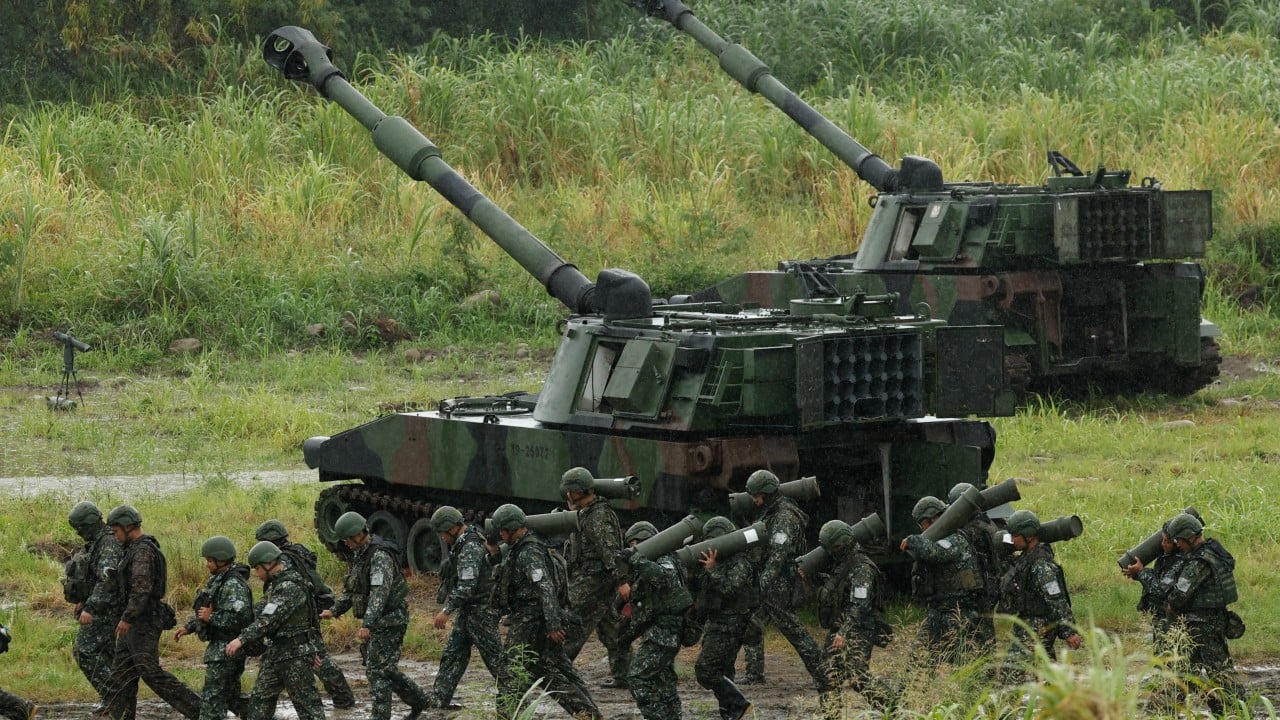
Taiwan will acquire an AI-powered satellite imagery system capable of rapidly identifying People’s Liberation Army ships, aircraft and missile launchers, as it seeks to boost early-warning capabilities in the face of growing military pressure from Beijing.
The NT$46.55 million (US$1.45 million) system will use artificial intelligence (AI) to analyse satellite images covering 100 sq km (38.6 square miles) within minutes, potentially cutting the time and manpower needed to track changes in PLA deployments, according to the island’s defence ministry.
In a public procurement notice this week, the ministry’s Communication Development Office (CDO), a primary military intelligence unit, awarded the contract to ThinkTron, a Taiwan-Japan joint venture specialising in AI, geospatial information systems and monitoring technology.
The contract took effect on September 25, and the system is expected to be completed by the end of April.
Taiwan’s defence minister, Wellington Koo Li-hsiung, confirmed earlier this year that the island’s military planned to develop a prototype AI satellite imagery recognition system.
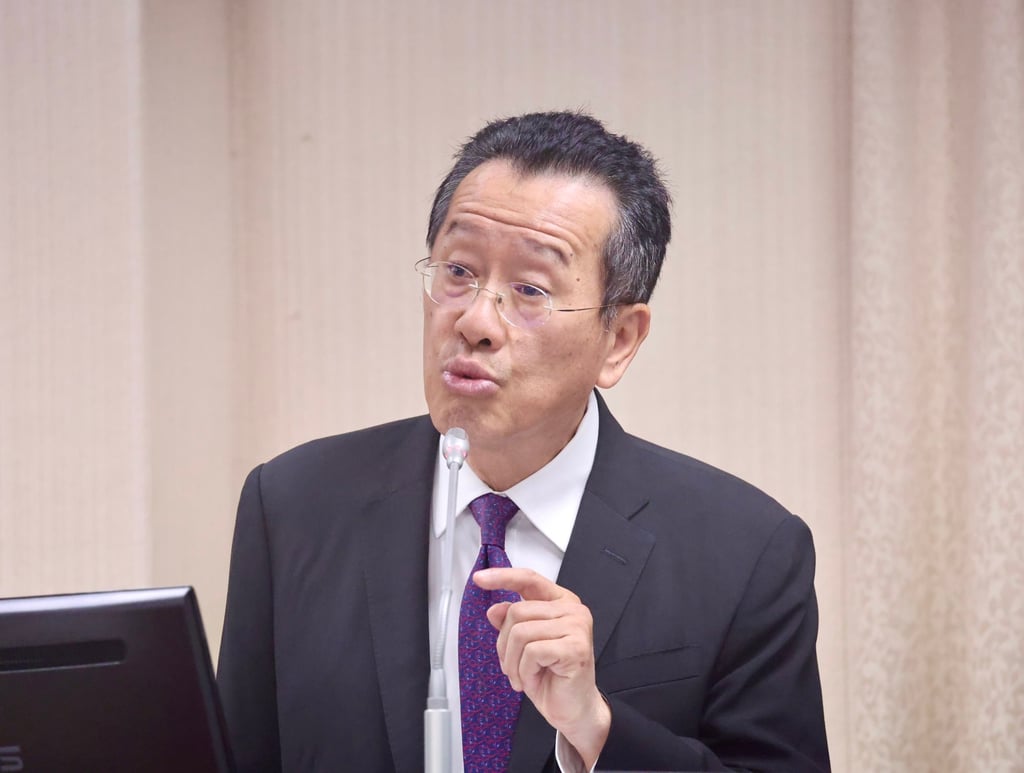
Ministry officials said the technology was intended to rapidly search for and identify enemy forces and activity at military bases and elsewhere near Taiwan, automatically compare new imagery with historical data and flag changes for intelligence analysts.
Sources familiar with the project said the aim was to improve strategic early warning and support combat-readiness decisions.
The system could analyse several 10km by 10km areas within minutes, identifying ships more than 10 metres (about 33 feet) long as well as smaller targets such as aircraft, missile launchers and radar vehicles, they said.
According to Zivon Wang, a military analyst at the Chinese Council of Advanced Policy Studies in Taipei, the project should not be confused with the acquisition of new reconnaissance satellites.
“The system’s main function is to use AI to help the CDO rapidly analyse imagery and information received from satellites,” he said.
The CDO did not itself operate the military-grade imagery satellites providing the data, Wang added. Rather, the AI would serve as an analytical layer processing imagery obtained from other sources.
That distinction also helps to explain the project’s relatively modest cost.
Wang said building an entire satellite reconnaissance architecture – from operating satellites to receiving their imagery – would require far greater investment.
The new system instead sits at the end of the intelligence pipeline, automatically screening large quantities of imagery that would otherwise require labour-intensive analysis.
Max Lo, executive director of the Taipei-based Taiwan International Strategic Study Society, said the underlying technology was already mature and used by advanced militaries and remote-sensing organisations.
He explained that the significance for Taiwan lay in operationalising the technology and integrating it with the island’s existing intelligence capabilities.
02:55
Taiwan concludes annual war games, including preparing for PLA sea blockade
“The PLA is already capable of installing AI systems directly on satellites to conduct preliminary analysis of imagery before the data is transmitted to the ground, allowing it to respond more quickly,” Lo said.
But the Taiwan project is different, he added, noting the analyses would be done on the ground at the CDO.
Lo said there would be no difficulty for the island to set up such an AI-powered system, noting that ThinkTron was jointly established by Taiwan’s Sinotech Engineering Consultants and Japanese geospatial specialist Kokusai Kogyo.
According to ThinkTron’s website, its existing “Tron Eyes” technology uses convolutional neural networks to analyse imagery for applications ranging from disaster prevention and infrastructure inspection to agriculture and transport.
Lo argued that AI could help address a growing intelligence challenge for Taiwan’s military: the sheer volume of information generated by frequent PLA operations around the island.
“Instead of requiring analysts to manually search large satellite images for ships, aircraft or mobile missile launchers, the system could automatically flag potential targets or changes for closer examination,” he said.
This would be particularly useful when monitoring large areas of sea, he added, with synthetic aperture radar, or SAR, detecting vessels at night and through cloud cover, while optical imagery could provide greater detail in clear daylight conditions.
By comparing successive images, AI could also help analysts track changes in the location and movement of military assets, Lo said.
“Potentially more important is the ability to combine what Taiwan’s intelligence apparatus ‘sees’ with what it ‘hears’.”
The Linkou-based CDO in northern Taiwan specialises in signals intelligence, intercepting and analysing electronic emissions and communications associated with the PLA.
Lo said AI-assisted imagery analysis could be cross-checked against such signals intelligence.
An unidentified vessel detected in satellite imagery, for example, could be compared with radar or radio emissions collected from the same area to help analysts determine whether it was associated with the PLA.
Such intelligence fusion could be particularly useful when military vessels operate among civilian shipping or switch off their Automatic Identification System transponders, making conventional tracking more difficult, according to analysts.
Wang said the system could help Taiwan more quickly assess PLA exercises, changes in tactics and force deployments.
“Most importantly, it could help Taiwan monitor PLA force movements and its broader strategic deployments, allowing the military to identify developments earlier and prepare appropriate responses,” he added.
The CDO is one of Taiwan’s most sensitive military intelligence organisations and has long specialised in collecting signals from mainland China.
Lo said the office’s strength in signals intelligence meant the new imagery system would complement rather than replace existing collection methods.
Intelligence generated by the system could also be compared with information obtained through cooperation with the United States and other partners, he noted, although details of such arrangements are rarely made public.
Wang said the project could lay the groundwork for wider use of AI within Taiwan’s military intelligence apparatus.
“I believe this system represents part of the technological foundation for further innovation by the Communication Development Office,” he added.
“In the future, we are likely to see additional and more comprehensive systems developed to analyse intelligence on the PLA.”
Beijing regards Taiwan as part of China to be reunited by force if necessary. Most countries, including the US, do not recognise Taiwan as an independent state, but Washington is opposed to any attempt to take the self-ruled island by force and is committed to supplying it with weapons.
KioskNews shows a cleaned-up reading view extracted from the publisher’s page — the original always lives on their site, not ours.