The 10 Most Controversial TV Finales of All Time, Ranked

Jeremy has more than 2800 published articles on Collider to his name, and has been writing for the site since February 2022. He's an omnivore when it comes to his movie-watching diet, so will gladly watch and write about almost anything, from old Godzilla films to gangster flicks to samurai movies to classic musicals to the French New Wave to the MCU... well, maybe not the Disney+ shows.
His favorite directors include Martin Scorsese, Sergio Leone, Akira Kurosawa, Quentin Tarantino, Werner Herzog, John Woo, Bob Fosse, Fritz Lang, Guillermo del Toro, and Yoji Yamada. He's also very proud of the fact that he's seen every single Nicolas Cage movie released before 2022, even though doing so often felt like a tremendous waste of time. He's plagued by the question of whether or not The Room is genuinely terrible or some kind of accidental masterpiece, and has been for more than 12 years (and a similar number of viewings).
When he's not writing lists - and the occasional feature article - for Collider, he also likes to upload film reviews to his Letterboxd profile (username: Jeremy Urquhart) and Instagram account.
He has achieved his 2025 goal of reading all 13,467 novels written by Stephen King, and plans to spend the next year or two getting through the author's 82,756 short stories and 105,433 novellas.
Sign in to your Collider account
Endings are hard, you know? They have to happen, though, because the alternative is something not ending, and if it doesn’t end, then it doesn’t have an ending. And no one really likes a lack of an ending, though some of the endings below were anticlimactic and possibly not intended as full-on endings. Well, talking about TV, the last episode might not be intended to be a last episode, but it’s still the ending in the sense that it’s the last episode.
What? Huh? Introductions are hard too, apparently. Anyway, there are endings to TV shows that are widely liked, as can be seen with M*A*S*H, The Wire, and Breaking Bad, and then there are other finales that proved far more divisive or controversial. Some of the most controversial finales in TV history are outlined below, with an emphasis on finales some people like and some dislike, alongside at least a couple that are mostly disliked (either way, some degree of controversy ensued).
10 'Lost' (2004–2010)

Lost is included here with an acknowledgment that it is – or at least was – controversial, but the person writing these words (I am not AI, I am a human being!) does not understand why. As far as closure goes, you get a lot of it emotionally here, and the appropriately named “The End” does wrap everything up as far as the characters go. If you were watching Lost for the massive cast, you get so much by way of farewells here.
The characters still alive at the end of season 6 get send-offs, in one way or another, and then so many characters who’d exited the show much earlier also get closure. As for “answers” to all the “mysteries,” most get resolved during the final season of Lost and/or addressed in this final episode. If you're the kind of person who thinks that so many threads were left hanging, rather than a fairly small number, then you honestly weren’t paying attention.
9 'Twin Peaks' (1990–1991)

An honorable mention should go out to Twin Peaks: The Return, which is kind of season 3 of Twin Peaks, but also kind of its own thing. That season has a more baffling ending than season 2’s finale, which was the series finale for a while (and still is the finale of the “original” Twin Peaks), but the ending of Twin Peaks: The Return wasn’t as controversial, because people were probably/generally anticipating something alienating to a greater extent.
The 30th episode of the show overall, and the 22nd of its second season, is sometimes called “Beyond Life and Death,” and it’s being counted as controversial here because it left so much hanging, and it was all left hanging for so long. At the time, it definitely wasn’t loved, but it’s one of several “controversial” finales being counted here that has become a little more appreciated as time has gone on.
8 'Berserk' (1997–1998)
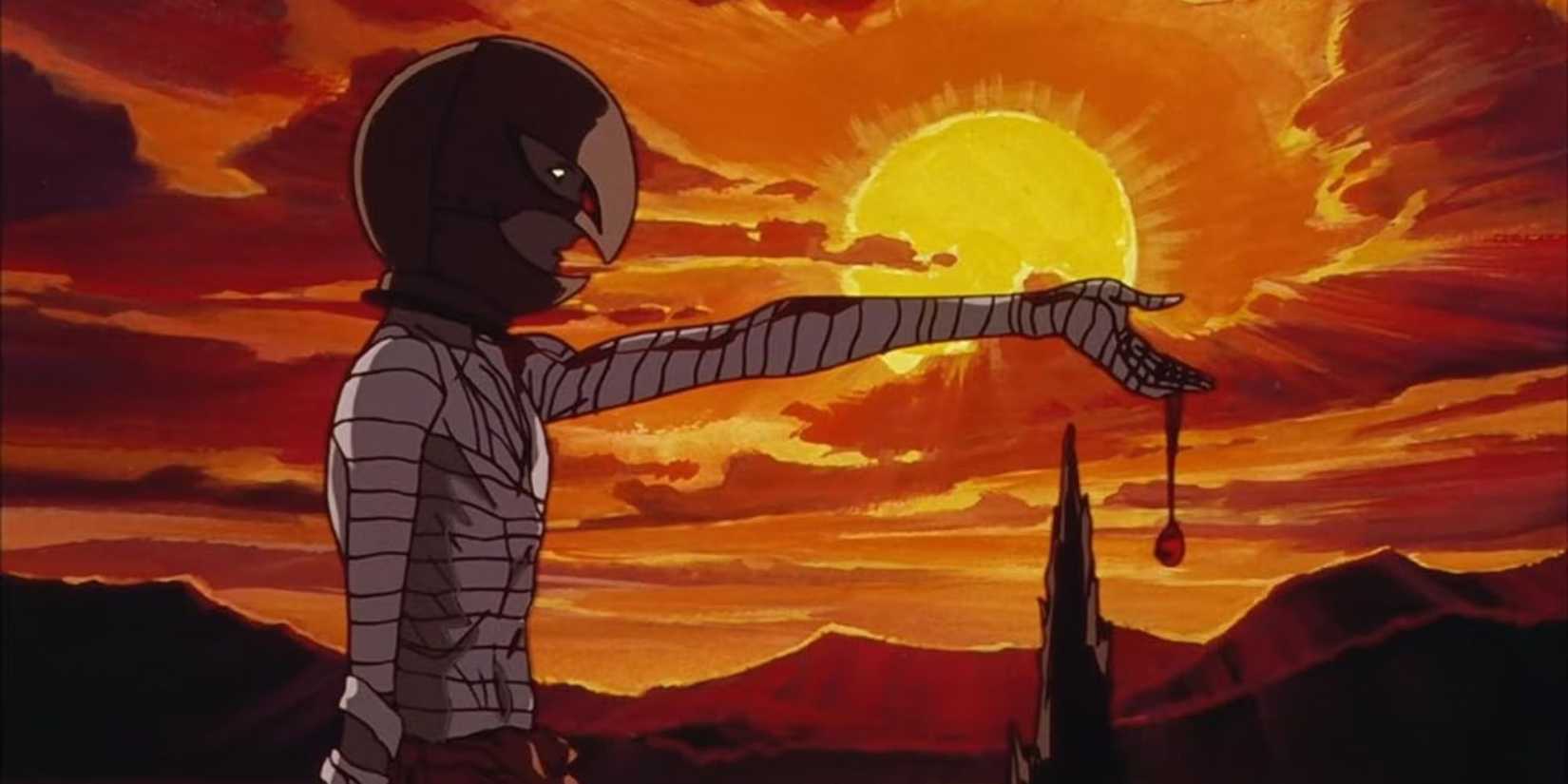
Berserk has a very memorable ending, if you're talking about the original anime series, which is admittedly kind of anticlimactic, but in a way that really works. It’s hard to talk about it without spoiling things, though it also aired nearly 30 years ago, so it feels like fair game to say that Berserk ending where it did is a bit like if a soon-to-be-mentioned fantasy show ended with the Red Wedding.
The manga of Berserk goes on beyond the point that the original anime series got to, so the “intended” ending is not supposed to be quite so tragic or confronting. Still, it works for the kind of gritty and sometimes somber show that Berserk was, and that whole arc leading up to the finale is representative of the show at its best… while also representing the show at its most shocking and potentially controversial.
7 'The Sopranos' (1999–2007)
Much of what can be said about the finale of Lost can also be said about the finale of The Sopranos, honestly. “Made in America” has possibly been more vindicated in time than “The End” has been for Lost, so that makes it arguably more divisive. Like, there was confusion and even quite a bit of outrage back in 2007, when the finale aired, but now, “Made in America” seems to be considered an all-timer of a finale.
It is still alienating and frustrating, albeit in ways that are easier to appreciate once you sit with it all for a bit. It comes down to that cut to black in the final scene, which still might be the gutsiest final few seconds of a show in television history (the rest of the finale, though, does deliver in more conventional ways, for the most part, so it really comes down to that final scene, and the way that final scene does – or doesn’t – end).
6 'Stranger Things' (2016–2025)

They had a pretty good thing going with Stranger Things for quite a while there. Season 1 was largely loved, most people seemed to dig season 2 outside that one episode, season 3 wasn’t necessarily a high point, but it also wasn’t too divisive, and then season 4 was either a return to form or a new peak for the series, depending on who you asked.
And season 4 also set up an intriguing endgame for the fifth and final season, but then season 5 kicked off by backpedaling on some of the stuff that seemed to get set up. Then it dawdled around, didn’t do anything of significant consequence, and made its fearsome big bad of season 4 (who ended up being the big bad of the whole show) far less threatening than he had been before. Things culminated with “Chapter Eight: The Rightside Up,” which more or less intensified and condensed all the major problems of season 5 into one episode, making it a pretty perplexing finale overall.
5 'How I Met Your Mother' (2005–2014)

Uh, How I Met Your Mother was a show this writer never bothered with, and he doesn’t really regret that decision, especially after hearing so many people complain about the ending. But that writer does listen and knows things about stuff he hasn’t really watched. He really has watched a lot, but How I Met Your Mother is not among the many titles watched.
It was a show that was probably always going to disappoint someone with its ending, because a big part of the show was revealing who the mother was, and, you know, how she was met. What probably wasn’t intended was the extent to which the eventual reveals proved disappointing, especially regarding what actually happens to the mother, and who the eventual “final” couples are and all.
4 'Neon Genesis Evangelion' (1995–1996)

It’s somewhat amusing that if you want to “explain” the ending to Neon Genesis Evangelion, you technically have to explain several different endings. It’s a whole franchise that’s extended beyond the original anime series, but it’s that anime series that’s being focused on here, because it’s the strangest and most anticlimactic of “all” the “endings” (The End of Evangelion is a different kind of strange and alienating).
Like the penultimate episode, “Do You Love Me?,” it feels pretty apparent that creative burnout and/or a reduced budget led to a very static and choppy episode.
The final episode of Neon Genesis Evangelion is called “Take Care of Yourself,” and like the penultimate episode, “Do You Love Me?,” it feels pretty apparent that creative burnout and/or a reduced budget led to a very static and choppy episode. There isn't really a sense of finality here, and by the time you get to the final scene, with main character Shinji being literally congratulated by all the show’s supporting characters, it feels like the punchline to a joke that’s been told, at your expense, over the course of 26 20-ish-minute-long episodes.
3 'Dexter' (2006–2013)

“Remember the Monsters” concluded Dexter in a way no one really liked, and stood out for flopping hard at the finish line because Breaking Bad was also concluding right around the same time, and if you were a fan of one show, you probably liked the other. It’s also the case that Breaking Bad had a great final season and a satisfying finale, while Dexter had an utterly miserable eighth and final season followed by a dismal finale.
It feels bad on purpose. It’s like anything that might've been a good idea to include in a final episode of a show like this was automatically discarded for being predictable or something, but predictable would've been so much better than the anti-art that this was. Dexter has technically continued beyond 2013, but this was the finale for the “main” show, and it is, without a doubt, one of the worst ever aired.
2 'Game of Thrones' (2011–2019)

There are some very confronting episodes of Game of Thrones that feel that way because they're intentionally disturbing, but the finale, “The Iron Throne,” is distressing for different reasons. It was the nail in the coffin for the whole show, but if it can be defended in any way, it’s simply by acknowledging that the ways in which it was flawed can also be felt throughout almost all the episodes in the show’s final two seasons.
The race to the finish line didn’t have to be this much of a sprint, and in any event, if it was a 100-meter dash, Game of Thrones stopped at the 50-meter mark and declared the race over right then and there. What happens at the end of Game of Thrones could well have been satisfying if it had been paced properly, and if A Song of Ice and Fire ever ends, maybe people will be able to experience the ending, but good. Until then, all anyone has is the not-so-good ending. It was just such a pity that it apparently had to end so breathlessly.
1 'Seinfeld' (1989–1998)
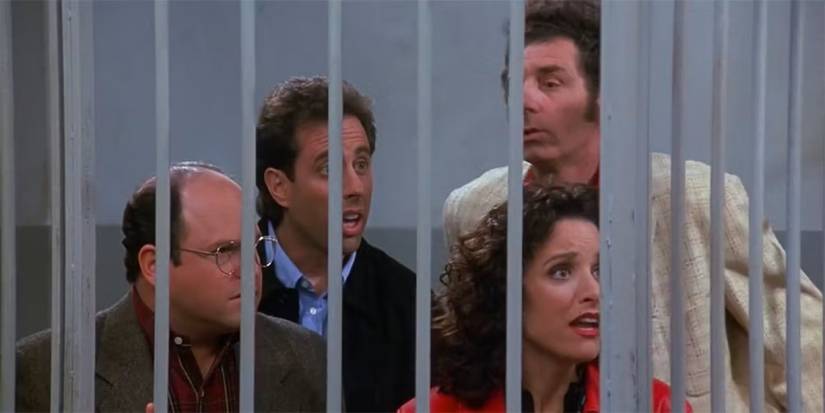
Regardless of the ending, Seinfeld is still one of the absolute best comedic shows of all time, and it also has that reputation regardless of how it began. Neither the first season nor the final episode represents Seinfeld at anywhere near its best, with “The Finale” being admirably bold, that much can be said, at least. And, like, it’s a good idea for an episode on paper, putting the four main characters on trial because they violate a Good Samaritan law.
It’s a way to bring back many minor characters while also giving the selfish main characters some kind of comeuppance after nearly a decade of being generally terrible (but also funny) people. The problem with “The Finale” is that it’s unfunny. It’s a good and fitting idea written kind of lazily, just not delivering when it comes to comedy the way the vast majority of episodes (whether you're talking Seinfeld or Curb Your Enthusiasm) written by Larry David are.
KioskNews shows a cleaned-up reading view extracted from the publisher’s page — the original always lives on their site, not ours.