Iran responsible for antisemitic terror attacks in Liège, Antwerp earlier this year - report
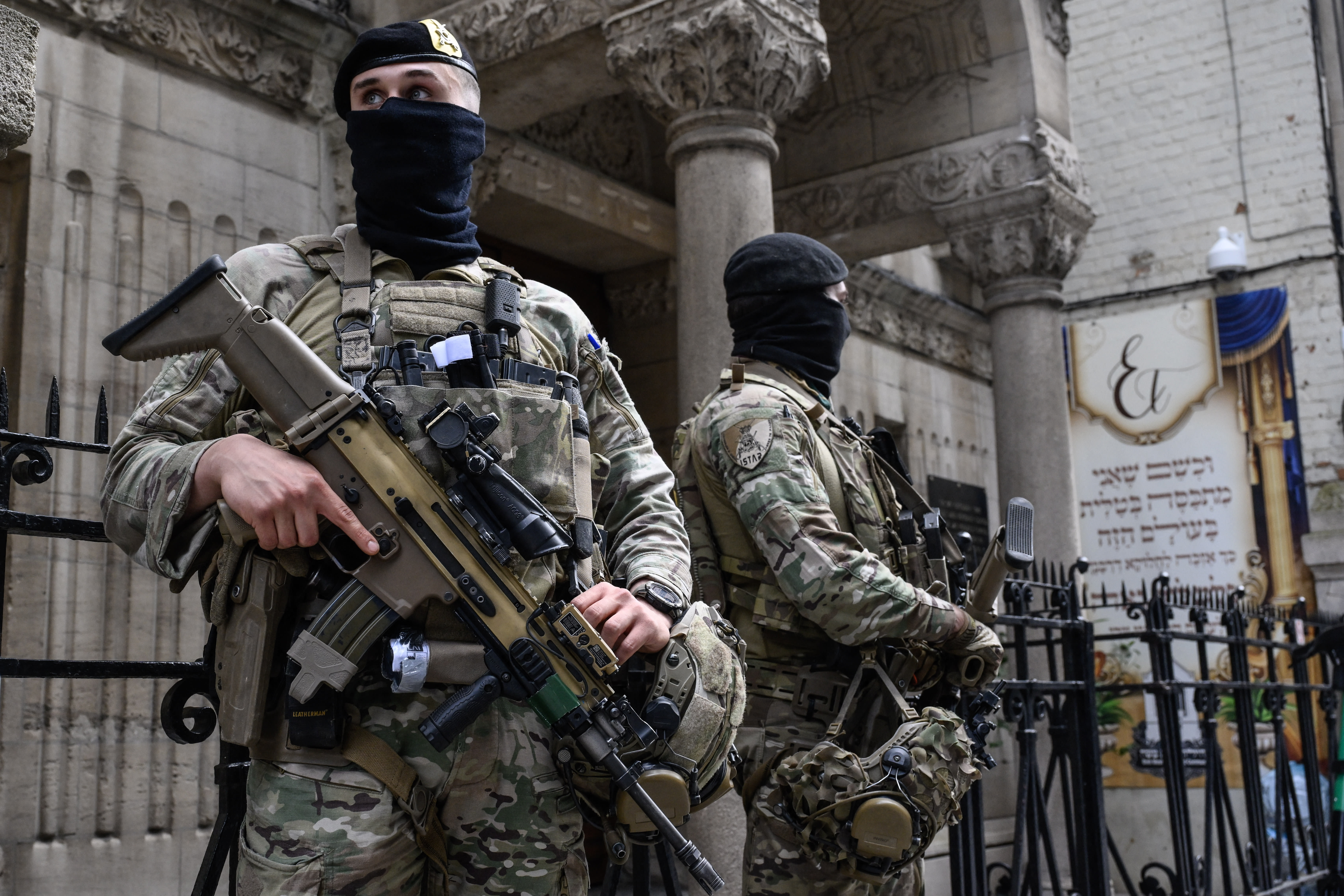
The Belgian Coordination Unit for Threat Analysis (CUTA) currently lists the threat level in Belgium as "very serious."

The Islamic regime is directly responsible for two separate terrorist attacks in the Belgian cities of Liège and Antwerp earlier this year, KAN News reported on Saturday.
The report cited the Belgian Coordination Unit for Threat Analysis (CUTA) Director Gert Vercauteren, who told French broadcaster RTBF on Thursday that the terrorists in both attacks "certainly" acted on instructions from Tehran to attack Jewish targets around the world.
The attacks referred to by Vercauteren include an arson attack against a vehicle outside a Jewish-owned business in Antwerp and an explosion at a synagogue in Liège, with both attacks occurring in March.
The Ashab al-Yamin Islamist group claimed responsibility for the Antwerp attack, publishing a video that appeared to show three masked individuals setting a vehicle on fire. Two minors were arrested in connection with the attack, while Ynet News reported at the time that the targeted vehicle's owner was not Jewish despite the attackers believing him to be haredi (ultra-Orthodox).
According to KAN, Vercauteren said both attacks were part of a coordinated campaign, including an additional attempted attack targeting a Dutch synagogue, which was foiled by Belgian intelligence agencies.

Vercauteren: Belgium threat level 'very serious' primarily due to Iran war
CUTA currently lists the threat level in Belgium as "very serious," according to the agency's website. Vercauteren attributed the high threat level to the "geopolitical context, particularly the war in Iran."
"In 2025, the main threat continued to come from the Islamist jihadist movement, even though this share decreased," he told RTBF. "These are primarily newly radicalized individuals, because those who have returned from Syria or Iraq in the meantime generally do not pose a threat."
"There has been significant disillusionment," he added. "Generally speaking."
US extremism a 'dystopian vision,' Vercauteren says
Vercauteren further attributed the threat level to rising extremism in the United States, describing the situation to RTBF as a "dystopian vision."
"They want to sow chaos and violence," he emphasized. "They are fascinated by extreme violence. And the images they circulate among themselves come from various scenes, from the neo-Nazi world, for example, even Satanist ones."
He stressed that such extremists seek out "vulnerable victims," noting that this often includes minors.
"We learned our lessons, I must say," he said. "They were hard lessons, but the government and the services understood that we had to do things differently and better."
He concluded that the issues of extremism are a "societal problem that security services alone cannot solve. Therefore, security, prevention, and reintegration must be linked."
KioskNews shows a cleaned-up reading view extracted from the publisher’s page — the original always lives on their site, not ours.