Fall of border post enabled Hamas invasion of Be’eri on Oct. 7, IDF probe finds
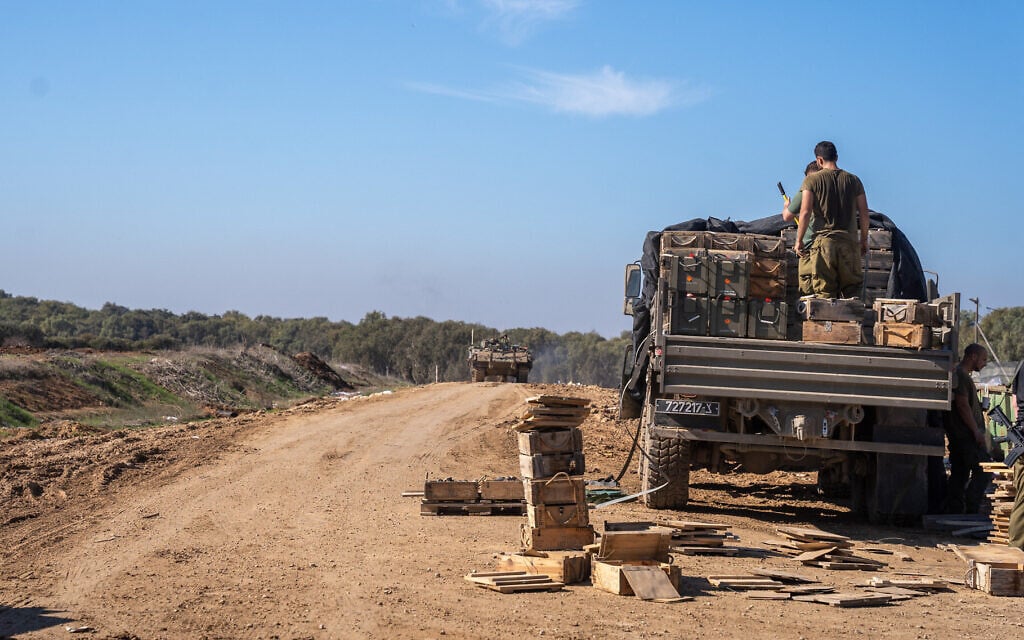
On the morning of October 7, 2023, between 60 and 80 Hamas terrorists overran the military’s Paga post on the border with the Gaza Strip, killing or wounding nearly all of the troops stationed there and abducting the bodies of two, which allowed nearby communities to also fall to the invaders with calamitous consequences.
The Paga post is located just west of the border community of Be’eri, one of the hardest-hit communities during the October 7 onslaught. Officially, the Paga post is named “Magen Be’eri,” or in English, Defender of Be’eri, a mission it failed to fulfill during the attack.
During the attack on the Paga post and a nearby tank position, of the some 40-50 troops stationed there, 18 soldiers and commanders were killed, and 22 soldiers were wounded.
0:00 / 0:00
Promoted: Bridges for Peace

Among the dead were 14 Golani soldiers: Cpt. Dekel Swissa, Sgt. Lior Azizov, Sgt. Roei Peri, Sgt. Itamar Cohen, Staff Sgt. Tomer Barak, Sgt. Habib Kiean, Staff Sgt. Idan Raz, Sgt. Ido Binenstock, Staff Sgt. Shalev Baranes, Staff Sgt. Yakir Levi, Staff Sgt. Itay Glisko, Staff Sgt. Haim Meir Eden, Staff Sgt. Itamar Ben Yehuda and Staff Sgt. Dolev Amouyal; three 7th Armored Brigade soldiers: Staff Sgt. Shay Levinson, Sgt. Ariel Eliyahu, Sgt. Ofir Testa; and a tracker from the Gaza Division: Sgt. Maj. Muhammad el-Atrash.
The bodies of el-Atrash and Levinson were abducted to the Gaza Strip and later returned and recovered.
Get The Times of Israel's Daily Edition by email and never miss our top stories
By signing up, you agree to the terms
On Tuesday, the Israel Defense Forces published its probe into the attack on the post, which found, as in other investigations, that the military “failed to fulfill its defensive mission” and did not prevent the area “from falling into enemy hands, including the infiltration of terrorists into Be’eri and the capture of Paga outpost.”
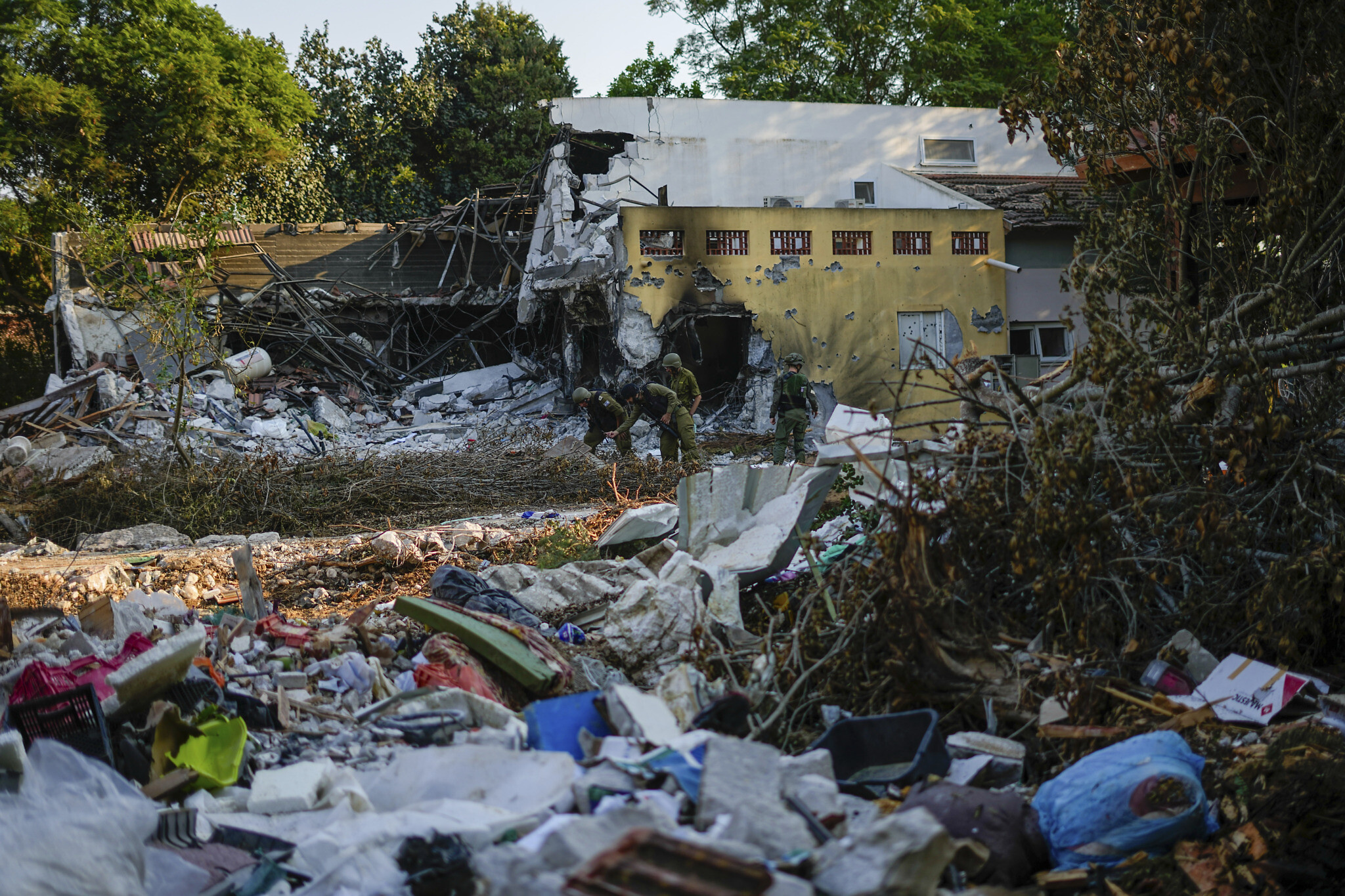
The investigators said that the outcome of the battle at the Paga post “reflects the systemic failure to prepare for a broad surprise attack and to fulfill the responsibility to defend the sector against such an attack.”
The findings published Tuesday are the latest in a series of detailed investigations into some 40 battles and massacres that took place during Hamas’s October 7 onslaught, when about 5,600 Palestinian terrorists stormed across the border, killed some 1,200 people, and took 251 hostages into Gaza.
The probe, carried out by Col. Ori Ron — Israel’s defense attaché to Brazil — and approved by former IDF chief of staff Lt. Gen. Herzi Halevi, covered all aspects of the fighting at the Paga post and the surrounding area. The IDF said the investigators visited the scene and reviewed every possible source of information.
It was unclear why the probe’s release to the public was delayed by many months.
The Paga post probe was aimed at drawing specific operational conclusions for the military. It did not examine the wider picture of the military’s perception of Gaza and Hamas in recent years, which has been covered in separate, larger investigations into the IDF’s intelligence and defenses.
The investigation found that at the tactical level, the company of troops stationed at the Paga post “was not adequately prepared for the mission,” including in terms of combat equipment and the post’s defensive infrastructure.
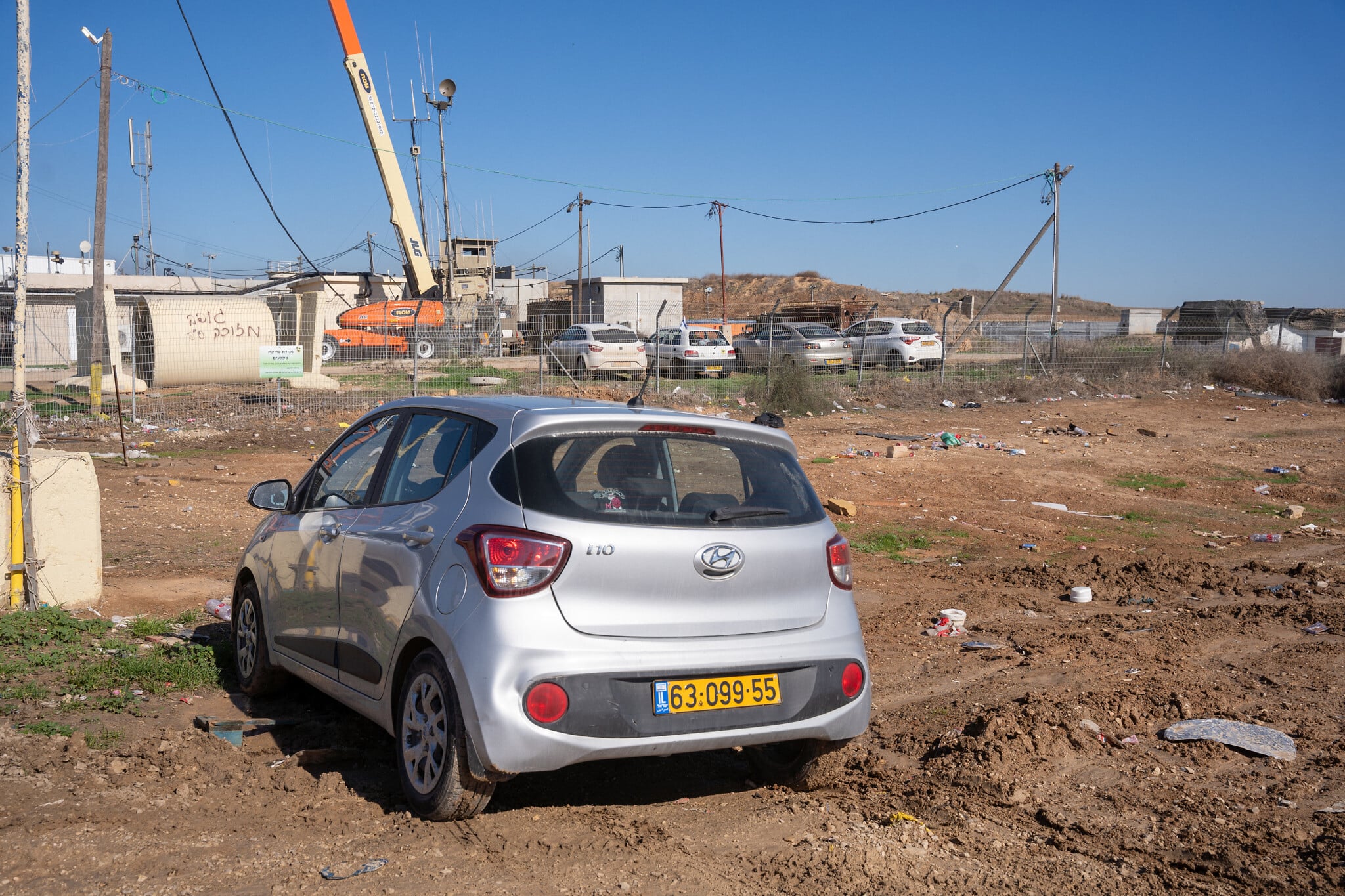
At the time, the Paga post was manned by a company of troops of the Golani Brigade’s 13th Battalion, along with a tank platoon from the 7th Armored Brigade at an adjacent position, and a tracker — el-Atrash, whose body was abducted.
During their deployment ahead of October 7, the troops at the Paga post primarily dealt with Hamas-staged violent riots along the border fence. “This reality affected their state of mind and the training and drills system, which did not correspond to the scenario of a simultaneous surprise attack throughout the entire sector,” the investigators noted.
However, despite the lack of preparedness and “an operational reality that was complex to the point of being impossible,” the probe found that “there were displays of heroism and independent actions worthy of note at the level of junior commanders and soldiers.”
The probe found that because the outpost was overrun, terrorists were then able to infiltrate Be’eri, where 101 civilians and 31 security personnel were killed, and 30 residents and two other civilians were taken hostage.
Israeli airstrikes in the area during the battle at Paga “were not effective due to gaps in coordination with the ground forces,” the probe found.
The deaths of commanders during the battle, including the outpost commander, heavily affected the decisions made by troops and the manner in which the battle was managed. The company commander was unable to reach the post because junctions and roads en route were blocked by the fighting.
Timeline of the attack
Amid Hamas’s initial barrage of rockets on southern Israel at 6:29 a.m., terrorists breached the border fence and advanced toward the Paga post.
Troops at the post entered protected areas, while forces from the adjacent tank position began advancing to the fence to block the terrorists.
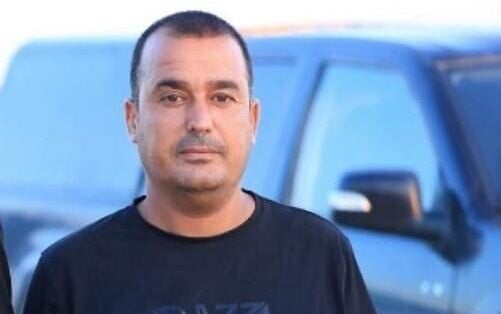
At the same time, commanders searched for el-Atrash, who served as a tracker in the Gaza Division’s Northern Brigade, but were unable to locate him. It was not until June 2024 that the IDF determined he had been killed later in the morning while battling Hamas terrorists in the area and his body was abducted to Gaza.
Between 6:41 and 6:45 a.m., tanks were engaging terrorists crossing the border fence. One was struck by an RPG warhead dropped by a Hamas drone, disabling it, but its crew continued fighting for about an hour.
Meanwhile, another tank, commanded by Staff Sgt. Shay Levinson, with soldiers Sgt. Ariel Eliyahu, Sgt. Ofir Testa, and Cpl. Ido Somech, killed about 10 invading terrorists crossing the border on foot and in vehicles.
At around 6:49 a.m., terrorists began firing at the outpost. A soldier stationed at a guard post at the entrance to the encampment, who didn’t have a radio, spotted the attack and ran to warn those inside, but the information did not reach a mortar team from the 13th Battalion, which was preparing to fire.
By 6:52 a.m., commanders had been warned that terrorists were approaching the outpost in vehicles, and soldiers were ordered to reinforce defensive positions.
At 6:55 a.m., an initial nine terrorists entered the outpost. They split into several groups and attacked from different directions.
At 6:56 a.m., Levinson’s tank on the border was hit by an anti-tank missile.
Levinson was killed immediately, and his body was abducted by the terrorists to Gaza. Eliyahu and Testa were fatally wounded and later died of their wounds.
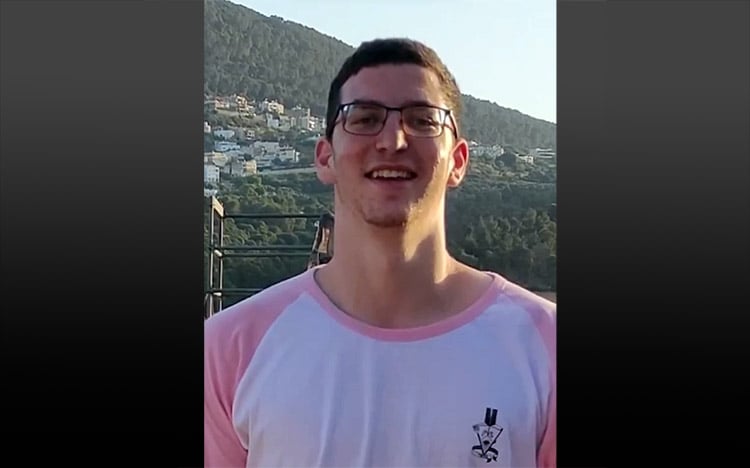
Only the driver, Somech, was able to keep fighting.
He escaped with his tank toward the east and kept driving until he came across the site of the Nova music festival, where a major battle between the terrorists and police was going on. Upon seeing the tank, the terrorists briefly halted their advance on the Nova party.
At 6:57, another nine terrorists invaded the post, split up into three teams and attacked the mortar position.
The Golani soldiers killed about four of the invaders, but one soldier was killed, and several others were wounded, including the mortar unit’s commander. More terrorists then entered the outpost, killing two wounded soldiers who had been moved to safer areas.
Other wounded soldiers continued fighting while taking cover beneath armored vehicles. During the later exchange, one soldier was killed, and another was fatally wounded. He died of his wounds around two months later.
At 7:00 a.m., soldiers moved out from their main gathering area to reinforce the post’s defenses. They also requested urgent reinforcements and began evacuating wounded personnel.
At 7:13 a.m., soldiers engaged terrorists near the northern side of the outpost. Commanders reported that some soldiers lacked full equipment and that ammunition was running low.
At 7:43 a.m., an Israeli Air Force drone struck the northern part of the outpost in an attempt to disrupt the terrorists. The attack was found to be limited by incomplete information and poor communication with the soldiers on the ground.
At 7:49 a.m., a terrorist was identified inside a defensive position at the rear of the outpost. Soldiers attempted to eliminate him, but came under grenade attack. Another soldier was killed and one wounded by fire from the surrounding area.
At 8:34 a.m., the outpost commander ordered remaining forces to gather at an assembly area, and at 8:57 a.m., an armored personnel carrier (APC) evacuated two wounded soldiers.
Commanders then developed a plan to evacuate the remaining wounded using APCs. At 9:19 a.m., the outpost commander gathered soldiers in the dining hall and gave them a motivational speech as part of the evacuation preparations, and at 9:34 a.m., soldiers began moving wounded personnel toward the vehicles.
As one already badly damaged APC entered the area, a terrorist attached an explosive charge to its rear door. The charge exploded, damaging the door and forcing the soldiers to retreat. The wounded troops were brought back inside and continued receiving treatment.
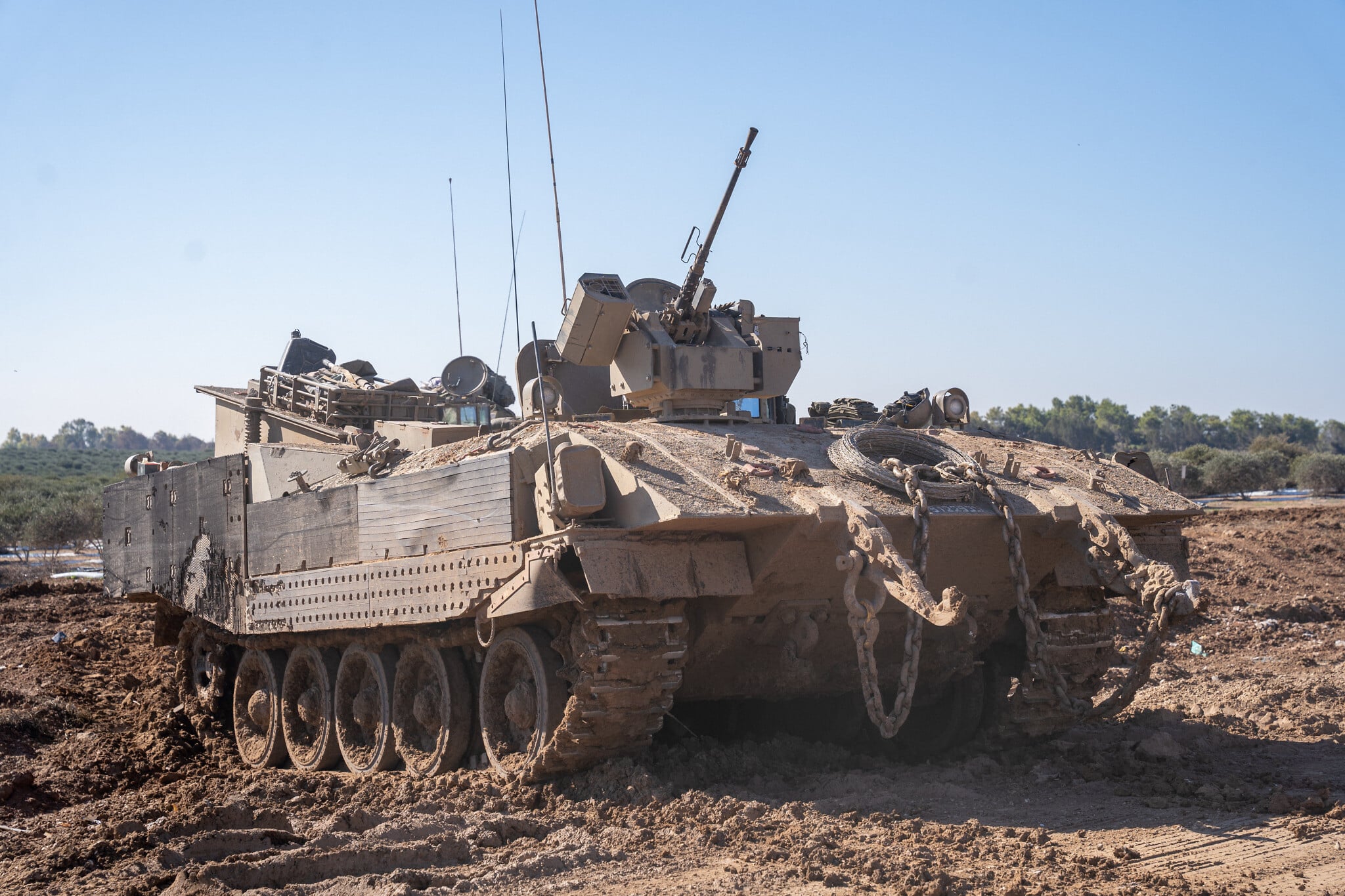
At 10:11 a.m., one of the APCs headed east to replenish ammunition, during which its team spotted some 20 terrorists nearby. The APC then moved further east because it had no ammunition to engage the terrorists.
At around 10:25 a.m., the outpost commander ordered the remaining soldiers to gather together because their position had become increasingly difficult to defend. As they moved, terrorists opened fire.
At 10:27 a.m., an IAF helicopter arrived and attacked in an attempt to disrupt the terrorists.
At around 10:35 a.m., the outpost commander and another soldier fought terrorists at the encampment’s guard post and killed several of them before both were killed.
At 11:00 a.m., terrorists attempted another entry into the outpost through the mortar position. Soldiers covering that entrance retreated.
Between 11:30 and 11:35 a.m., an IAF drone killed several terrorists and temporarily disrupted the Hamas assault.
In light of the dire situation, six soldiers, under the command of the platoon sergeant, formed a group and decided to leave the outpost. At 11:50 a.m., they moved out under heavy fire, exchanged fire and killed a terrorist, and reached the APC in the orchards to the east between 12:00 and 12:15 p.m.
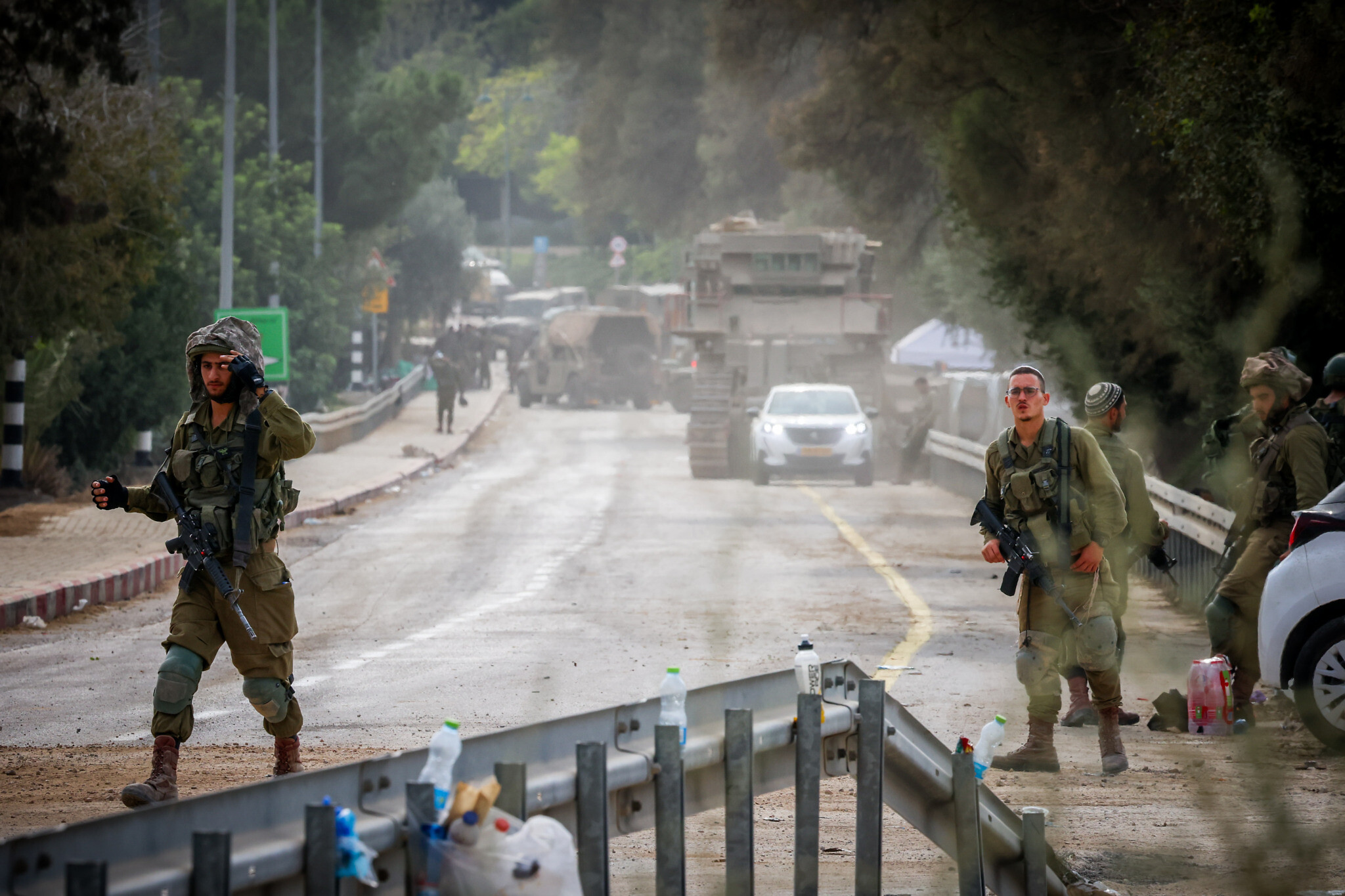
Meanwhile, soldiers who remained inside the post’s fortified dining hall barricaded the entrances and continued fighting terrorists trying to break in.
At 1:00 p.m., the terrorists used mattresses and diesel to set fires on both sides of the dining hall and then introduced smoke through an air-conditioning opening. Smoke filled the building, causing the soldiers to choke and partially lose consciousness.
At around 1:10 p.m., one soldier exited the dining hall building and killed two terrorists.
At 1:13 p.m., five soldiers attempted to leave the dining hall and fight the attackers, but all five were killed during the attempt. A large number of terrorists had been waiting outside the building and opened fire on the soldiers as they tried to leave. However, the terrorists began to retreat following that engagement.
At around 1:19 p.m., an IAF helicopter fired at a terrorist vehicle inside the outpost but missed, and the vehicle left the area.
Between 4:20 and 4:50 p.m., rescue forces and additional troops reached the outpost, cleared the area, found the remaining soldiers, and evacuated the wounded.
No terrorists remained inside the outpost when the rescue forces arrived.
Later that evening, a rescue force returned to recover bodies from the post. During the journey, terrorists fired an anti-tank missile at the convoy, killing one soldier and wounding another.
KioskNews shows a cleaned-up reading view extracted from the publisher’s page — the original always lives on their site, not ours.