Gilad Schalit’s release, 15 years later: Why Israel must remember joy of his homecoming - opinion

Last Sunday, October 11, an important anniversary passed almost unnoticed.
On June 25, 2006, a 19-year-old Israeli soldier was abducted during a Hamas attack near the Gaza border. For the next five years, his name became part of the daily consciousness of Jews worldwide.
We saw his photograph everywhere. We watched the demonstrations. We followed every rumor of negotiations, every hopeful report and every subsequent disappointment.
We prayed for him in our synagogues, attended rallies, and signed petitions. His name became familiar to people who had never met him and probably never would.
I was living in Britain at the time, and I remember vividly how deeply his captivity affected Jewish communities far beyond Israel’s borders.
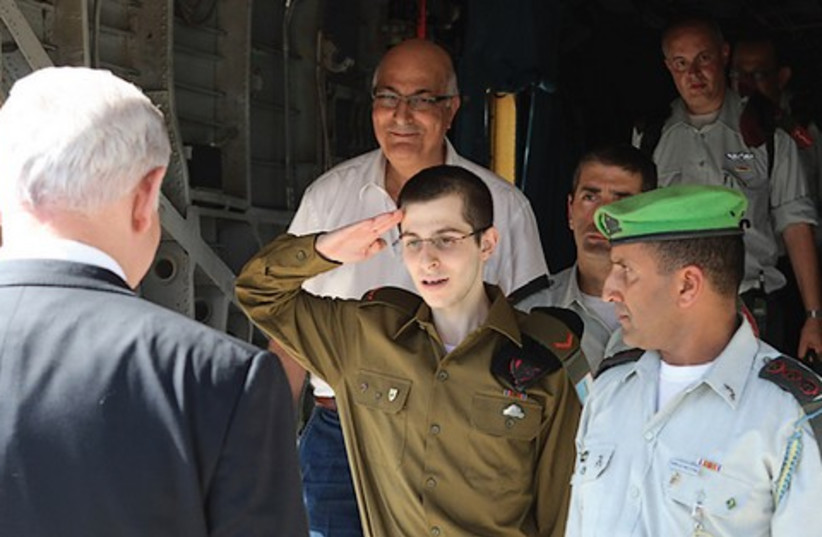
Gilad Schalit was not simply another soldier. He was somebody’s son, somebody’s brother, a young man who should have been enjoying the ordinary experiences of early adulthood.
Instead, he was being held in isolation, deprived of his freedom, and separated from everyone he loved.
For five long years, we prayed and hoped he would somehow return.
And then, suddenly, the extraordinary news came.
There was an agreement. He was coming home.
On October 11, 2011, 15 years ago, Israel announced that an agreement had finally been reached to secure Gilad’s release after more than five years of hell on earth. One week later, on October 18, he came home.
It was a moment of almost indescribable national joy. And perhaps, amid everything that has happened since, we should pause to remember it.
Of course, the Schalit prisoner exchange has been analyzed, criticized, and debated endlessly.
Much has been written about the price Israel paid, the prisoners who were released, the precedent it established, and the possible consequences for the horrific events of October 7, 2023. These are serious questions, and history has made some of them even more painful.
I do not dismiss the argument. But that is not what I want to write about today.
I want to remember something simpler, something profoundly human. I want to remember how it felt when we heard that Gilad was coming home.
I remember the overwhelming relief, happiness, excitement, and, above all, gratitude. After years in which hope had repeatedly been raised and dashed, something truly wonderful was happening.
For a brief moment, it seemed that an entire nation could share in one family’s happiness. The joy was almost overwhelming; we wanted to laugh out loud and greet perfect strangers with a grin and a hug.
When Gilad finally appeared on our television screens on October 18, thin, pale, and visibly affected by his ordeal, the emotion was extraordinary.
Here was the young man whose photograph we had studied for years. Here he was, alive. Here he was, back on Israeli soil.
And then came the images of him reunited with his family.
How could anyone watch without being moved?
We had never met him, yet somehow we felt we knew him. His parents’ relief became our relief. Their happiness became our happiness. The prayers of five years seemed to find their answer in that single embrace.
Of course, even then there were families for whom the release of convicted terrorists brought renewed anguish rather than celebration. Their pain was real and deserves recognition.
Remembering the joy of Gilad’s return does not require us to dismiss their suffering or ignore the difficult decisions involved, far from it.
But surely we can acknowledge that, whatever our views about the agreement, the return of a young man from captivity was itself something worth celebrating. And there are two people whose extraordinary contribution should never be forgotten.
A place for gratitude
Noam and Aviva Schalit, Gilad’s parents, refused to allow their son to disappear from public consciousness.
For five years, they campaigned tirelessly. They attended meetings, confronted politicians, spoke to journalists, and kept their son’s photograph before the eyes of the nation.
Noam, in particular, became the public face of a family’s determination never to give up. He was not a professional campaigner or a politician. He was a father who wanted his son back.
What could be more human about that simple truth?
In 2022, Noam died after a battle with cancer. He was only 68. But he lived to see his son return, embrace him again, and, in 2021, accompany him to his wedding.
What a blessing that was. What a reward for years of anguish and perseverance.
And what of Gilad himself?
Thankfully, after the extraordinary public attention surrounding his captivity and release, he has largely chosen, and achieved, a quieter life.
He married Nitzan Shabbat and has worked as a sports journalist, pursuing an interest that existed long before his abduction.
In many ways, that is perhaps the most heartening part of his story.
We sometimes imagine that the happy ending to a dramatic story must itself be dramatic. But perhaps the greatest victory for someone who has endured years of captivity is the ability to live an ordinary life.
To go to work. To enjoy sport. To spend time with family and friends. To marry, laugh, make plans, and wake up each morning without fear of what the day might bring.
Most of us take these things for granted. For somebody who has had them forcibly taken away, they must assume an entirely different significance.
We cannot know everything that Gilad has experienced since his release, nor should we presume to understand the lasting effects of his captivity. He deserves his privacy and the freedom to build his life away from the public gaze.
But it brings great joy to know that the young man whose face once appeared on countless posters has been able to move forward with his life.
The events of October 7 brought the terrible reality of hostage-taking back into our lives on a scale that none of us could have imagined.
Once again, we became familiar with photographs, names, families, and campaigns. Once again, prayers for the return of captives became part of our daily existence.
And once again, we were reminded how precious a single human life can be.
We live in an age of relentless argument. Every event is immediately subjected to political analysis. Every decision is judged, often with considerable bitterness, and every moment of happiness seems destined to be overshadowed by the next crisis.
There is a place for criticism, accountability, and historical reflection. But there must also be a place for gratitude.
Not every memory needs to become an argument. Not every anniversary needs to reopen a political battle.
Sometimes we should allow ourselves simply to remember that something good happened.
Fifteen years ago, after 1,941 days in captivity, a young Israeli soldier returned to his family. A mother embraced her son. A father saw the culmination of five years of tireless effort. And millions of people, in Israel and across the Jewish world, shared a moment of extraordinary happiness.
Whatever happened afterward should not erase that moment.
As we approach the anniversary of Gilad’s homecoming on Sunday, let us remember the tears of joy, the relief, and the gratitude.
Let us remember Noam and Aviva and the extraordinary love that sustained their campaign.
And let us wish Gilad many more years of peace, happiness, and the ordinary pleasures of a life lived in freedom.
The world has enough darkness. Sometimes we need to remind ourselves that there is light, too.
And do you know what? Fifteen years later, it is still worth stopping to say thank you.
The writer is a rabbi and physician. He writes and teaches on Jewish ethics, leadership, and resilience. His work appears on rabbidrjonathanlieberman.substack.com and youtube.com. @rabbidrjonathanlieberman
KioskNews shows a cleaned-up reading view extracted from the publisher’s page — the original always lives on their site, not ours.