Looming Medicaid cuts mean that US hospitals must prepare for a perfect storm | Letters
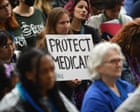
Your report (Millions of Medicaid recipients to face draconian requirements as of 1 January, 13 October) warns that millions may lose Medicaid coverage just as hospitals face rising uncompensated care and growing emergency department demand.
Protecting eligible patients from losing coverage through paperwork must remain the first priority. But hospitals also have a responsibility to prepare operationally for 1 January. They should not compound the coming increase in emergency demand with avoidable peaks they create themselves.
My colleagues and I analysed 1,692,090 hospital admissions across New York State. Emergency admissions varied relatively little across the week, while scheduled admissions were concentrated early in the week. For a representative 500-bed hospital, the resulting pattern was equivalent to needing 103 additional beds on Monday and having 160 fewer patients on Friday. Hospitals cannot schedule heart attacks, strokes or uninsured patients’ emergencies. They can, however, schedule most elective admissions. By distributing them evenly across weekdays, hospitals can reduce competition for the same beds and nurses.
Smoothing scheduled admissions cannot prevent coverage losses or eliminate every cause of emergency department crowding. It can, however, help hospitals absorb the added pressure with less avoidable boarding, delay, and patient harm. Before building more beds or accepting five-hour waits as inevitable, every hospital should determine how much usable capacity its own scheduling practices are wasting.
Eugene Litvak
President and CEO, Institute for Healthcare Optimization; adjunct professor of operations management, Harvard TH Chan School of Public Health
KioskNews shows a cleaned-up reading view extracted from the publisher’s page — the original always lives on their site, not ours.