US or China? Why Kazakhstan refuses to pick sides as it eyes AI revolution
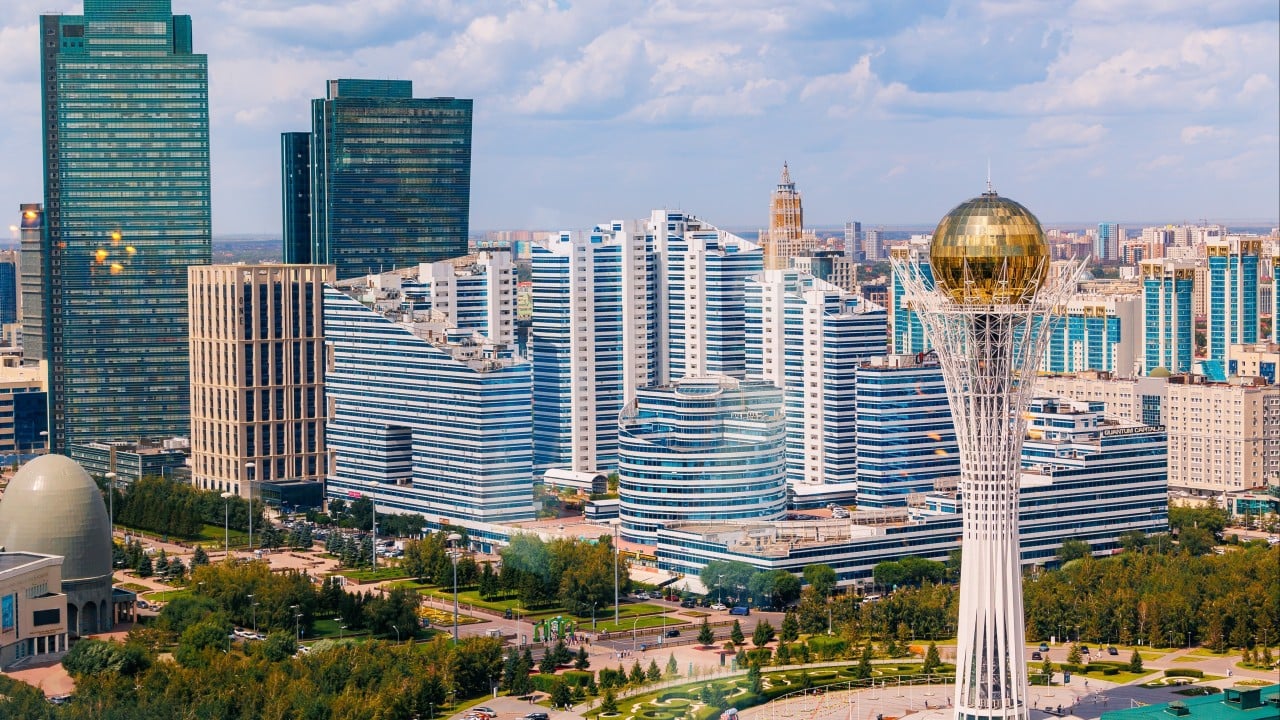
Driving along the wide boulevards of Astana during a recent trip to the Kazakh capital, signs of China’s growing commercial footprint were everywhere.
Chinese cars were becoming a common sight on the streets here, as brands from BYD to Changan made aggressive inroads in a market once dominated by South Korea’s Hyundai and Kia, said the driver who picked me up from the airport in a gleaming Changan electric vehicle.
But it was not the rise of Chinese tech that had brought me to this energy-rich pocket of Central Asia; it was an American giant.
Jensen Huang, CEO of US chip titan Nvidia, was in town to join a fireside chat with the country’s deputy prime minister. Their topic: “sovereign AI” and its role in Kazakhstan’s future.
The high-profile visit underscored Astana’s bid to reinvent itself as a regional computing hub. Known for its vast oil, natural gas and uranium reserves, Kazakhstan is betting that its abundant electricity supply can help it grab a lucrative slice of the global artificial intelligence boom.
Huang has repeatedly framed AI as a new industrial revolution, envisioning data centres as “AI factories” that take in electricity and compute to manufacture digital intelligence.
The hope is that nations like Kazakhstan can become a new form of export factory hub – one that focuses on selling computing power rather than the clothing, smartphones and cars that drove China’s manufacturing boom.
For Astana, the economic appeal is obvious: harness its vast domestic power reserves to fuel server farms and export AI services. But it also has bigger digital ambitions: it wants to cultivate home-grown engineering talent and nurture domestic tech firms.
At the Alem.ai International Artificial Intelligence Centre, operating under Astana Hub, the country’s government-backed technology and start-up platform, I saw that effort up close.
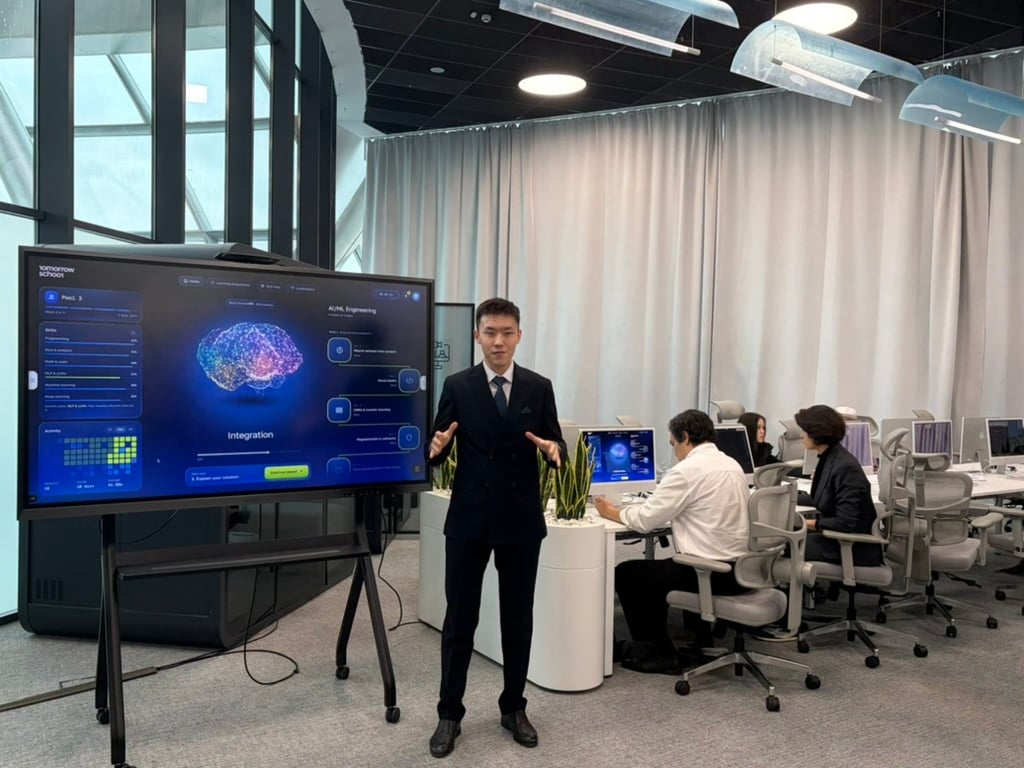
At Tomorrow School, a free coding academy, students learn about AI through project-based, peer-to-peer collaboration rather than a traditional classroom structure. Down the hall at TUMO Astana, another educational initiative, local teenagers are introduced to robotics and digital creativity.
These grass roots classrooms offered a counterweight to the glossy, multibillion-dollar rhetoric surrounding Huang’s stage appearance.
They also laid bare a harder reality: while data centres can be financed and plugged into power grids relatively quickly, it can take decades to build the vast talent pool, business ecosystem and ongoing innovation needed to foster a competitive knowledge economy.
And nations like Kazakhstan must do this while navigating an intensifying tech rivalry between Beijing and Washington.
China’s manufacturing juggernaut dominates electric vehicles and consumer electronics, while US tech champions command the high ground in advanced semiconductors and AI architecture.
In Kazakhstan, which shares a 1,780km (1,100-mile) border with China, those two spheres of influence meet in real time. Chinese cars roll through its streets, while American chips power its digital ambitions.
Rather than picking a side, Astana is playing the middle, drawing on both superpowers to develop its own technological capabilities.
It was a balancing act that echoed a trip I had made just a week earlier to New Delhi. On the sidelines of the Bloomberg New Economy Forum, Sino-American friction was a recurring theme.
Singapore’s deputy prime minister, Gan Kim Yong, stressed the importance of preserving economic ties despite geopolitical fragmentation, while Indian Commerce Minister Piyush Goyal spoke of rebuilding trade relations with Beijing even as New Delhi maintained close strategic ties with Washington.
Their remarks reflected the central dilemma confronting middle powers: how to exploit the respective strengths of the world’s two largest economies without falling captive to either.
China’s own rise offers both a blueprint and a cautionary tale. Building an enduring industrial powerhouse took relentless infrastructure spending, deep supply-chain integration and decade-long talent training.
Whether Kazakhstan can transform its energy reserves into a sustainable AI ecosystem remains an open question. But on the windswept steppe of Central Asia, it is clear Astana is determined to stake its claim in this new industrial era, as two rival superpowers race to write its rules.
KioskNews shows a cleaned-up reading view extracted from the publisher’s page — the original always lives on their site, not ours.