NASA's nuclear-powered Mars delivery service takes shape
SR-1 Freedom gets a shorter boom and larger antennas, with roughly two years to finish design, construction, and testing
NASA has settled key design choices for its planned nuclear-fission-powered spacecraft, Space Reactor-1 (SR-1) Freedom, following a mission review in October.
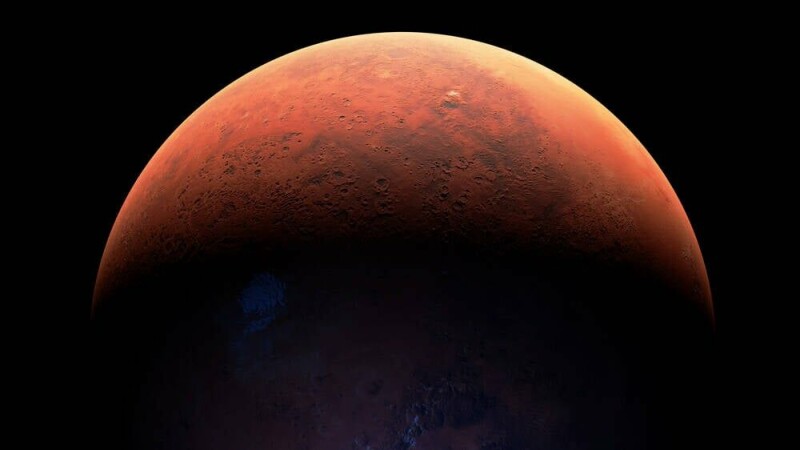
Targeting launch in late 2028, SR-1 would be the first fission-powered spacecraft to travel beyond Earth orbit. It is designed to demonstrate nuclear electric propulsion and deliver a capsule carrying three helicopters to Mars.
There have been some changes since NASA Administrator Jared Isaacman showed off the concept [PDF] at the agency's Ignition event in March. Improved shielding and spacecraft design will allow a shorter boom between the reactor and the spacecraft's main body, protecting its electronics and the SkyFall payload. The shorter boom will, according to NASA, "reduce weight, simplify assembly, and help streamline the spacecraft’s design."
REG AD
The revised design also includes larger X-band antenna dishes to transmit data to Earth.
REG AD
Decisions are still pending on how many radiator panels the vehicle needs, the output power levels of the nuclear power module, and how long the reactor will operate.
Currently, the mission calls for the spacecraft to start its reactor once it has left Earth orbit and gradually ramp up power. After a period during which performance data will be sent back to Earth, the reactor will be shut down until after the SkyFall capsule, containing a trio of Mars Ingenuity-class helicopters, is delivered to Martian orbit.
Solar arrays will power the spacecraft during its cruise to Mars. The fission reactor will then be reactivated to let engineers collect more data on its performance in deep space.
NASA also awarded a $39.3 million contract to Johns Hopkins University's Applied Physics Laboratory to develop the heat rejection system for the nuclear power module.
"Further maturation of the spacecraft plans will focus on reducing risk, simplifying the design, and staying on schedule," the agency said.
The latter part regarding the schedule is certainly a challenge. Meeting the late-2028 launch target leaves roughly two years to finish designing, building, and testing the spacecraft.
ESA is also targeting late 2028 for its long-delayed Rosalind Franklin rover. Missing the intended Mars departure opportunity could push SR-1 into a later launch window, although NASA has not specified a fallback schedule. ®
KioskNews shows a cleaned-up reading view extracted from the publisher’s page — the original always lives on their site, not ours.