North Korea’s DMZ landmines sabotage the South’s peace push
North Korea’s laying of landmines along its heavily fortified border with the South has laid bare how misaligned the two nations have become over their de facto land boundary, after three South Korean soldiers were wounded in an explosion last month.
Seoul blames Pyongyang for the blast near the military demarcation line (MDL) on September 21, in which one soldier lost a foot. On Tuesday, its Foreign Ministry said in a statement it was preparing a response to force an apology for the blast, without going into specifics, further urging the North to hold talks on the poorly signposted MDL.
Military personnel from both sides are technically forbidden from crossing the MDL under their 1953 armistice agreement. As the precise centre line of the 4km (2.5-mile) wide demilitarised zone (DMZ) that bisects the Korean peninsula, it serves as the effective land border between North and South Korea.
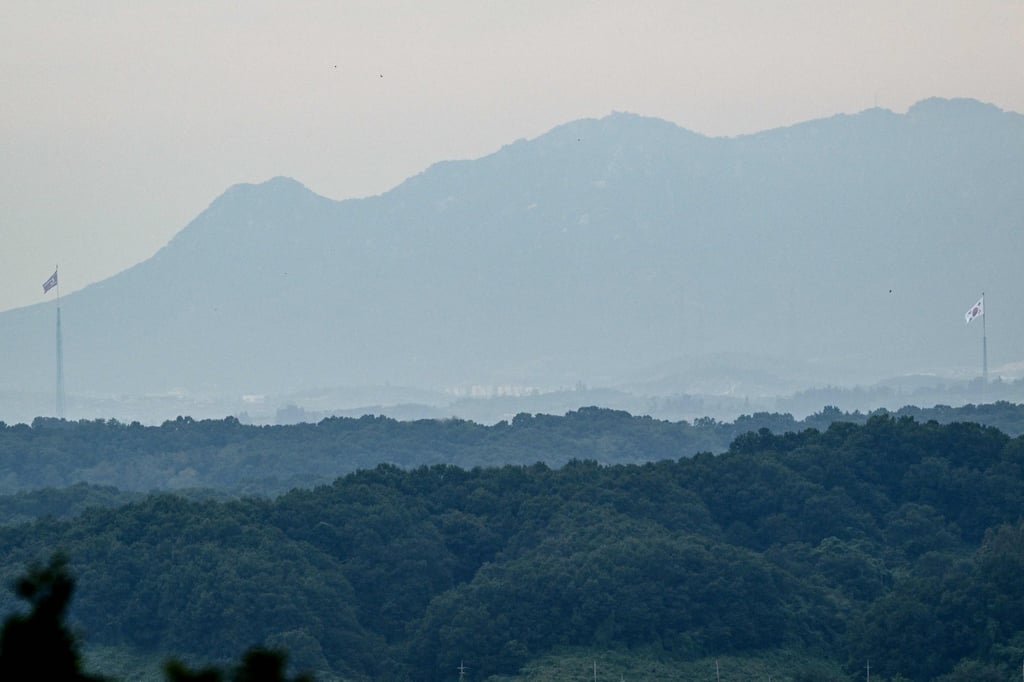
But the 250km (155-mile) long line is sparsely marked, with few of the more than 1,200 original markers that were installed over seven decades ago still in place.
A joint investigation by South Korea and the US-led United Nations Command concluded that at least four mines at the site of last month’s blast, 10 metres (32 feet) south of the MDL, were deliberately planted by the North.
Forensic evidence, including explosive residue and mine fragments, pointed to Pyongyang’s culpability, Seoul’s Joint Chiefs of Staff said in a statement on Monday.
Kim Yo-jong, the powerful sister of North Korean leader Kim Jong-un, said in a statement on Friday last week that the fortification work was meant to “cut off the relationship forever” with the South. She also called South Korean President Lee Jae Myung’s peace overtures a “farce”.
Boundary creep
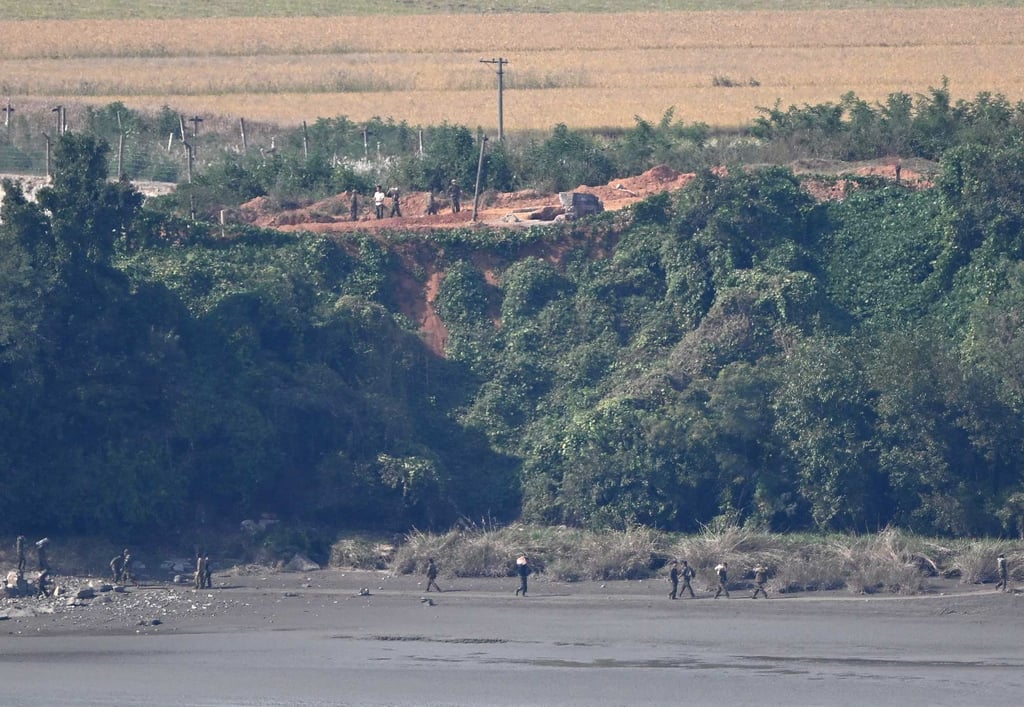
North Korea began fortifying the border in 2024, clearing vegetation, laying new minefields, building tactical roads and installing barbed-wire fences.
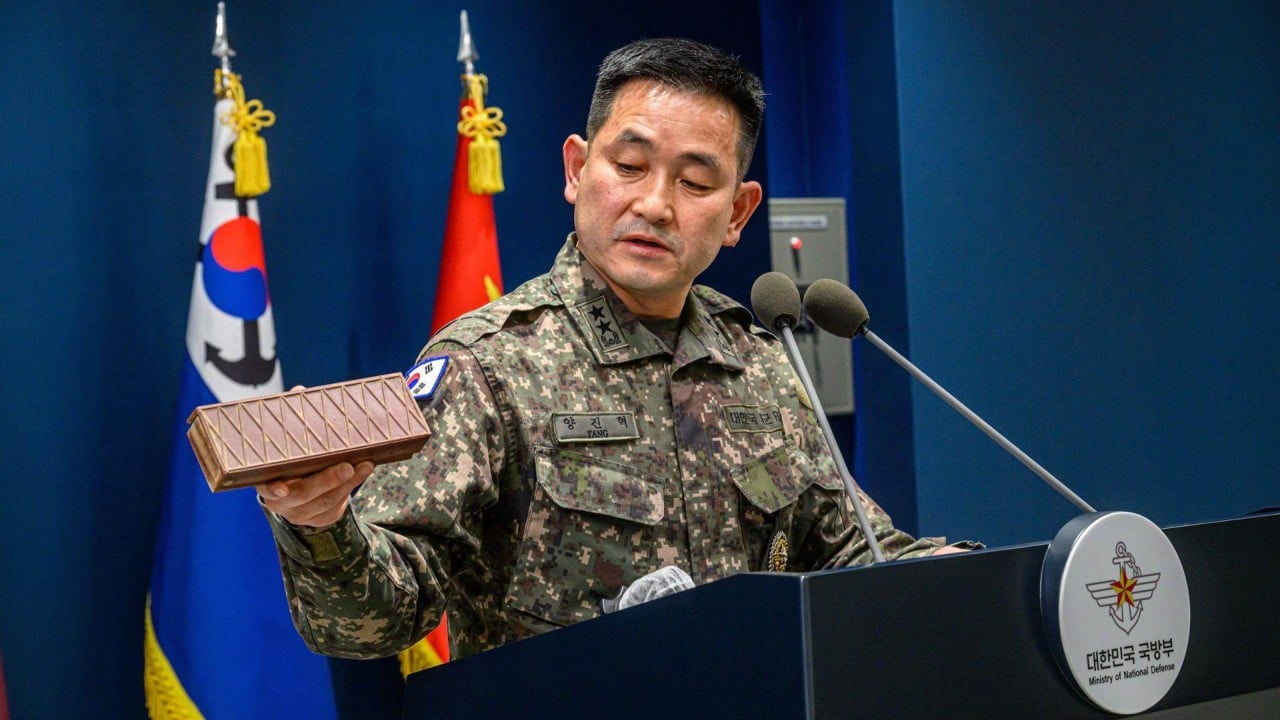
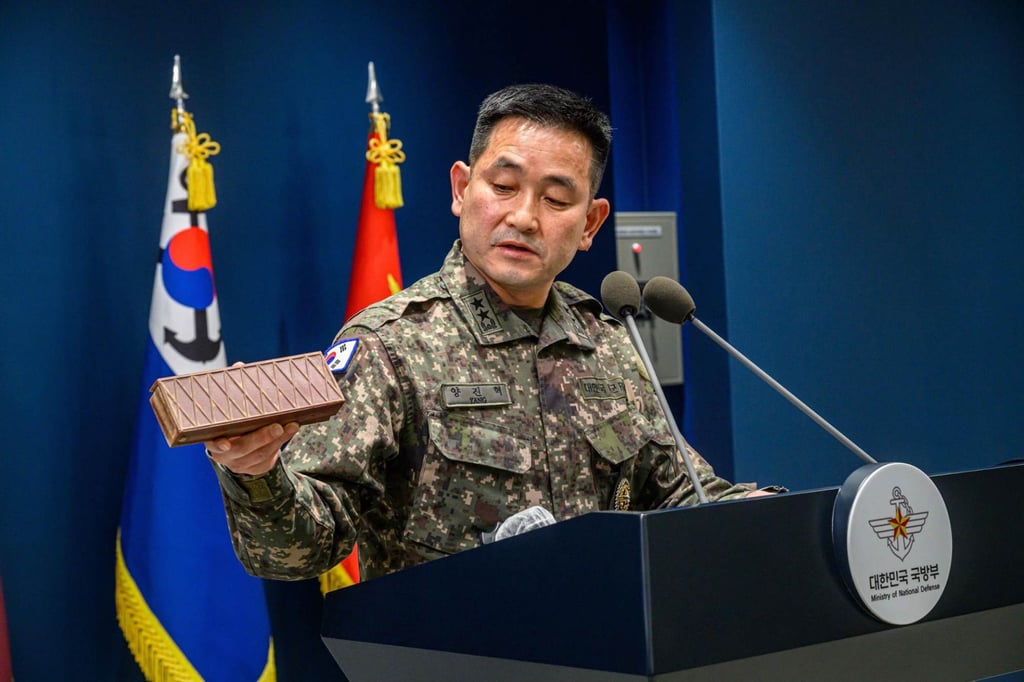
Major General Yang Jin-hyeok, director of operations for Seoul’s Joint Chiefs of Staff, told reporters on Monday that “up to 7,000 personnel” had been deployed every day this year along the entirety of the MDL as part of the fortification effort.
Fences, minefields and road construction in the area were about halfway complete, he said, with the work expected to be complete within two years.
North Korean troops have crossed the MDL more than 50 times this year, according to the South’s military, the vast majority occurring since August on the eastern portion of the boundary.
Soldiers are thought to have pushed as far as 20 metres (66 feet) south of the line, the Joint Chiefs said. By contrast, Seoul detected just 17 incursions last year and nine in 2024.
Compounding matters is the fact that Pyongyang’s interpretation of the MDL’s location differs from that of Seoul and the UN Command.
Yoo Yong-won, a lawmaker from the opposition People Power Party, told broadcaster MBC on Thursday that such discrepancies had also been an issue under the South’s past conservative administrations, with repeated proposals for talks receiving no reply.
The North was “taking advantage of the poorly marked MDL to move its border fortification work slightly southward”, Oh Gyeong-seob, a senior research fellow at the Korea Institute for National Unification, told This Week in Asia, adding that he expected more incidents to occur in future.
‘Next to impossible’
South Korean Unification Minister Chung Dong-young has proposed that the two Koreas meet to reverify and firmly establish the location of the MDL.
He rejected the People Power Party’s calls to resume anti-Pyongyang loudspeaker broadcasts, suspended since June 2025, as “irresponsible and dangerous”.
“Stoking hatred and hostility is not politics,” he told reporters on Friday. “The role of politics is to transform that hatred and hostility into mutual respect and peaceful coexistence.”
Chung reportedly clashed with Foreign Minister Cho Hyun at last Thursday’s National Security Council meeting, after Cho had proposed unilateral sanctions against North Korean cyber activities.
Chung was quoted as saying such sanctions were unrelated to the border blast and would be not be appropriate at a time when Seoul was pursuing dialogue.
The country’s military, meanwhile, has responded with broadcasts and warning shots whenever North Korean troops approach or cross the MDL.
01:47
North Korea launches second 5,000-tonne nuclear destroyer in 75 days
Yang Moo-jin, a political scientist and professor at the University of North Korean Studies, said Pyongyang was attempting to turn the armistice line agreed in 1953 into a permanent border between “two hostile states”.
“As long as the North sees the line as an impregnable border while the South sees it as a poorly marked line that should be clearly redrawn” then dialogue over the issue would be “next to impossible”, he said.
Yang warned of a further flashpoint at sea. The 1953 armistice left the western maritime boundary between the two Koreas unsettled, so the UN Command unilaterally drew the so-called Northern Limit Line, which Pyongyang has never recognised.
An agreement was reached in 2018 to turn the area into a maritime peace zone, but it was never fully implemented due to recurring military tensions and unresolved border disputes.
“Should the North, emboldened by its recent naval build-up, extend its fortification work from the land border into the sea off the western coast, it would be a potential source of conflict,” Yang said.
KioskNews shows a cleaned-up reading view extracted from the publisher’s page — the original always lives on their site, not ours.