For Israel’s sake, Netanyahu has to go

“The public is paying a huge price in this war. Hundreds of thousands of citizens have been called up for reserve duty. I myself have [just] finished over 100 days in the reserves as a combat soldier [on the northern border]. How are the people who are sending their children to the army supposed to feel about the fact that the government you head provides funding, to the tune of NIS 35 million, for organizations whose declared goal is [enabling] draft-dodging [by Haredi males]?” — Question from Yuval Sadeh, reporter for Calcalist, to Prime Minister Benjamin Netanyahu at a press conference on January 27, 2024.
“Another biased, unfair and inaccurate question… We have a coalition that, I’m pleased to say, has unified most of the public… I’ve seen the Haredim volunteering to help… in every way, and I’ve seen them coming to the IDF, too. Obviously, you ignore that, because you want to foster division. And you don’t want to acknowledge… that we’ve managed to forge a national consensus, and you want to keep pulling it apart… I’ll say it again, there’s a division of the workload: I’ll focus on eliminating Hamas, and you’ll wage the counteroffensive.” — Netanyahu, in reply.
0:00 / 0:00
Promoted: JPPI, Rabbi Sharon Brous

The Times of Israel was founded and continues to do its utmost to report on Israel accurately and fairly. I don’t know the politics of many of our staff, and I don’t want to. Our commitment to fair-minded, dependable reporting is one of the main reasons why The Times of Israel is so globally resonant, despite being an avowedly Zionist enterprise in a world increasingly hostile to the sovereign right of the Jewish nation to any part of its historic homeland.
And yet, as editor, I have increasingly focused these weekly columns — opinionated articles, clearly marked as such — on the words and deeds of Prime Minister Benjamin Netanyahu, and my conviction that before and especially after the Hamas invasion of October 7, 2023, he is unfit to lead Israel — that he has not only failed our people, but endangers the existence of the state.
Get The Times of Israel's Daily Edition by email and never miss our top stories
By signing up, you agree to the terms
As these most fateful elections have approached, I could not forgive myself if I had not used whatever respect and influence our readers feel it is appropriate to accord my writing in order to explain as best as I could why the fundamental security and sustainability of Israel requires new leadership, genuinely acting in the interests of the state.
First and foremost, in an Israel traumatized and changed forever by the Hamas massacre, and by the political and military leadership’s still unfathomable failure to recognize that it was about to happen and prevent it, the person who should have been the first to acknowledge principal responsibility, the prime minister, is the only central figure who has still not done so.
Most national leaders who had failed to prevent the worst catastrophe in their country’s history, despite an abundance of evidence that it was imminent, would have immediately tendered their resignation. Especially if they themselves had ignored multiple warnings from their security chiefs in the months before the attack, blocked repeated recommendations to target key enemy leaders, championed the funding of the terror-controlled neighboring entity, and shared the tragic mis-assessment that the enemy was deterred.
Some others might reasonably have waited a little — ensuring a smooth transition of power rather than creating a vacuum at the very top in the midst of a horrific crisis.
But no national leader whose true priority was the existential well-being of their nation would have obdurately remained in office for three more years, prevented the establishment of a state commission of inquiry into everything that had gone wrong, attempted relentlessly to pin blame on anybody and everybody but himself, and then sought reelection.

No national leader whose true priority was the existential well-being of their nation, moreover, would have sought reelection while pledging to maintain the same political alliances and to advance many of the same inequitable and untenable policies that had riven their nation before the catastrophe, exacerbated Israel’s global pariah status, and undermined its ability to fully recover.
I’m talking here, of course, about Netanyahu’s coalition partnerships with the parties led by the Jewish supremacists Bezalel Smotrich and Itamar Ben Gvir, and the consequent rise and indulgence of Jewish extremist violence and terror in the West Bank, Temple Mount prayer visits calculated to inflame the Arab world, the abuse of anti-Israel flotilla activists, the fracturing of the national police force, and much more besides.
I’m thinking, too, of Netanyahu’s partnerships with the two ultra-Orthodox parties, in whose service he has maintained the illegal exemption from military service of almost all ultra-Orthodox young men, and the colossal financial subsidizing of a community that denies its youngsters a proper education and the chance to play a productive role in the workforce. This bolsters a skewed Judaism that insults the faith, places avoidable strain on the standing army and the reservists, harms Israel’s economy, raises the tax burden on everybody else, and is catalyzing the departure from Israel of many who contribute most to our society.
And I’m also referring to his and his colleagues’ declared intention to revive their program of judicial “reform,” the naked attempt to center all power and authority in the hands of the elected political leadership and especially the prime minister. This “reform” would see the judiciary, the sole current safeguard against dictatorship in an Israel that has no constitution or independently effective legislature, politicized and neutered. It was, of course, the judicial overhaul — the key legislative gambit his government unveiled days after taking office, even though it had not been a central feature of its election campaign — that plunged Israel into internal convulsions, distracting national focus and emboldening our external enemies, in the months before Hamas struck.
Healing the nation

There is a powerful argument, going into an election now less than a week away, that Israel needs a broad Zionist government to heal our battered and divided nation. Indeed so. But Netanyahu can play no role in this. He failed Israel on October 7. He failed to take responsibility for failing Israel on October 7. Key officials have also publicly charged that he subsequently passed up clear-cut opportunities to bring more hostages home from Gaza alive because doing so would have risked his political career.
His every instinct is to duck and deflect blame, deride and demonize opponents, betray alliances. He discriminates against non-sycophantic journalists; he plays politics with hostage families; he simultaneously condemns, casts doubt and plays down the West Bank settler violence, while preventing the IDF from using the vital tool of administrative detention to thwart the perpetrators.
In this campaign, he has done his utmost to discredit his prime opponent Gadi Eisenkot, allowing his pet Channel 14 news outlet to deride Eisenkot’s Sephardic heritage, mocking Eisenkot’s English, claiming Eisenkot would establish a Palestinian state and branding Eisenkot a danger to Israel. It is Netanyahu who intermittently espoused Palestinian statehood, where Eisenkot has not done so; Netanyahu who exposed Israel to the gravest security breach in its history.
Channel 14 has for months been publishing polls that, uniquely, purport to show Netanyahu sailing serenely to reelection. The consequences, should this prove not to be the case, are extremely worrying: How might his supporters respond when the actual results are very different? Will they conclude that they have been cheated? And will some of the more extreme among them take the law into their hands? As the opposition leader at the time of the assassination of Yitzhak Rabin in 1995, Netanyahu knows full well the dangers of violent political extremism in Israel.
His self-declared supporters include thugs who hounded an Arab TV anchor and her family, punched an anti-Netanyahu protester, and confronted a judge in his own ongoing corruption trial. He has not publicly denounced them.
In these last few days before we vote, his loyalists have set about destroying minor rival political parties from his own potential bloc, not only with promises of ministries and jobs, but by targeting their candidates — stooping so low as to have hostile posters placed near the home of Davidi Ben Zion, No. 8 on the slate of the right-wing People of Israel party, and near a school transport pickup point used by his children. Ben Zion stepped down, citing the pressure; Netanyahu congratulated him.
The former prime ministerial candidate Benny Gantz made the need for a broad, Zionist, healing government the centerpiece of his campaign. Gantz’s diagnosis is correct, though his failed election bid showed very few Israelis see him as the cure. And Gantz’s own experience — partnering with Netanyahu and keeping him in power in 2020, with an agreement that he would become prime minister in a rotation arrangement — underlines why Netanyahu cannot be part of the process. To nobody but Gantz’s surprise, Netanyahu utilized a loophole to renege on their deal before he was supposed to hand over the premiership.
Ahead of Tuesday’s vote, Netanyahu’s Likud and Smotrich’s Religious Zionism parties have announced plans to deploy some 2,000 activists at Arab polling stations — not as the official observers each party may send, but with no formal role at all, in what appears to be an overt attempt to deter Arabs from voting and thus boost the Netanyahu-bloc’s reelection prospects.
The High Court is currently hearing a petition regarding an app Likud has developed which, according to an affidavit to the court, may enable his party to secretly and illegally track who is voting in real time, and thus to reach out to potential Likud supporters who have not cast their ballots and encourage them to do so.
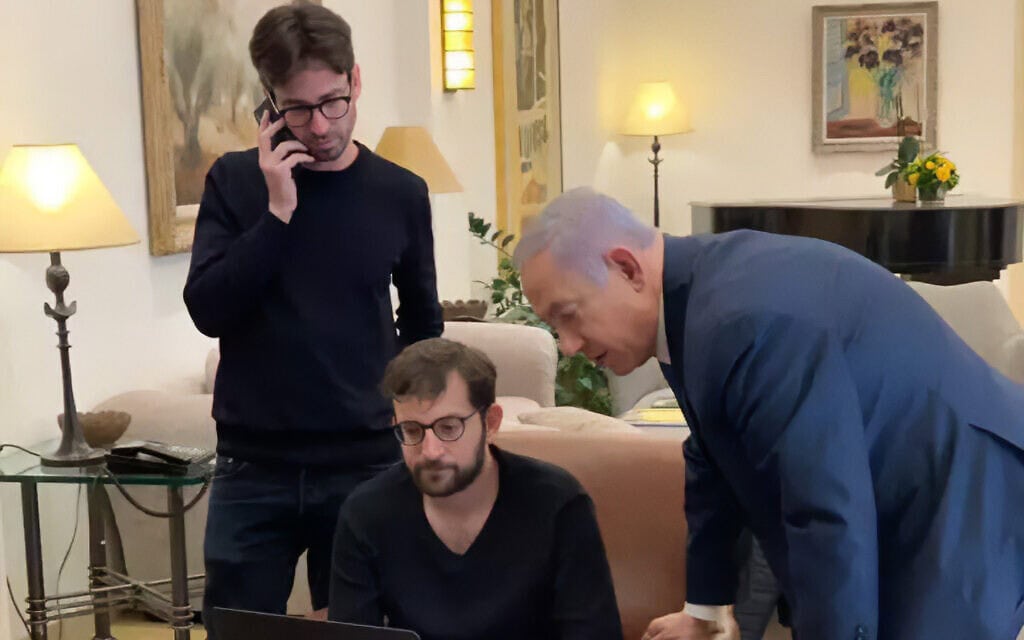
He continues to employ a key campaign aide, Jonatan Urich, who has been indicted for allegedly transmitting classified information with the intent to harm state security and who has reportedly acknowledged working from within the Prime Minister’s Office, before and after October 7, 2023, to improve the international image of Qatar.
He and his supporters would highlight that Hamas has been radically degraded, there are no more hostages in Gaza, Hezbollah is largely broken, and Iran’s nuclear program was set back. These are genuine achievements, but all they come with caveats: Hamas is reviving and the Gaza war has no end in sight, Hezbollah is not done yet, and Iran’s regime remains in power and retains its stockpile of 60%-enriched uranium. And they do not redeem the failures of October 7, or the prime minister’s untenable policies and conduct before and since.
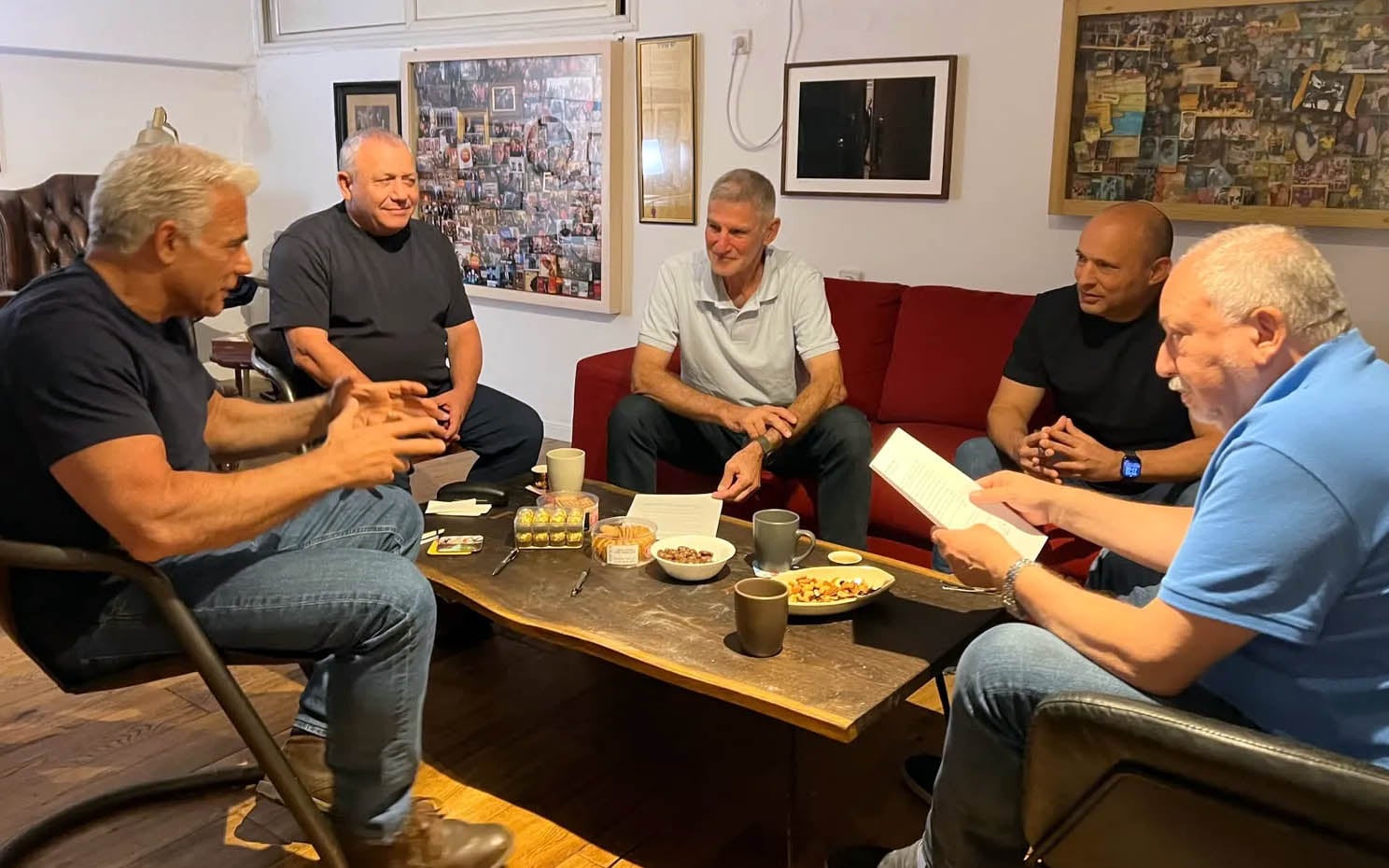
Gadi Eisenkot, Naftali Bennett and Avigdor Liberman, the three Zionist opposition leaders declaredly eyeing the premiership, have reasonable claims to lead Israel. Eisenkot is a former army chief of staff, minister and MK. Bennett has actually been prime minister, and has a wealth of political and business experience. Liberman is a political veteran who has served as foreign and defense minister. I don’t believe any of them would be a perfect prime minister. I do think they’d all be more competent, and less dangerous, dishonest and divisive than the incumbent.
I don’t wish to tell you how to place your vote. Only that Israel needs a government led by a prime minister who will dependably place Israel’s interests above his own, protect the country from its potent enemies, reverse the damaging policies set out above, work to marginalize extremism, overhaul an education system that is failing so many young minds, and take responsibility when things go wrong.
Netanyahu cannot be part of the healing process. It is Netanyahu from whom we need to be healed.
This Editor’s Note was sent out earlier on Wednesday in ToI’s weekly update email to members of the Times of Israel Community. To receive these Editor’s Notes as they’re released, join the ToI Community here.
KioskNews shows a cleaned-up reading view extracted from the publisher’s page — the original always lives on their site, not ours.