Israeli study shows success of robotic surgery in repairing complicated abdominal hernias
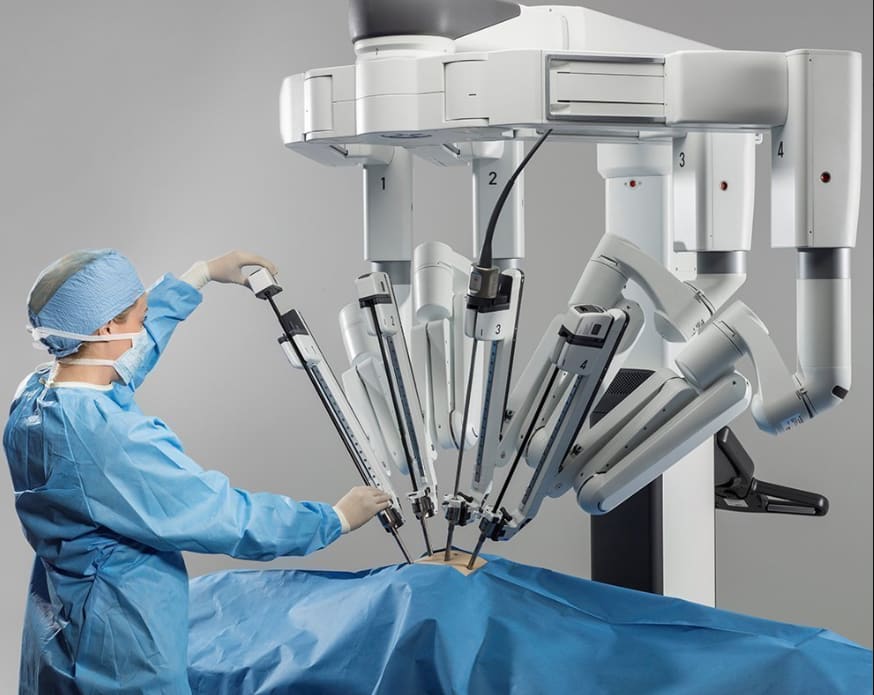
Surgeons successfully completed 39 complex lateral abdominal wall hernia repairs using robotic surgery, forgoing the need for open or keyhole surgery and allowing most patients to go home after just one day, a new study published by Hernia found.
A hernia is formed when tissue or part of an organ pushes through a weak area in the abdominal wall, with lateral abdominal wall hernias forming along the side of the body instead of the groin or middle of the abdomen.
The location adds difficulty to surgical repair close to the ribs, pelvis, muscles, nerves, and blood vessels. Surgeons generally have little room to work or position the mesh used to strengthen the abdominal wall. This is compounded by any previous operations, which may leave scar tissue and change the standard anatomy.
The study, led by Dr. Michael Freund of the Hebrew University and Shaare Zedek Medical Center under the guidance of Prof. David Hazzan of Raphael Hospital in collaboration with Sheba Medical Center and Tel Aviv University, examined 39 such hernia repairs completed robotically.
Most of the patients in the study had developed their hernias at the site of an earlier operation, including kidney, colorectal, spinal, or gallbladder surgery.

Robotic surgery eases difficulty, complications
Without robotic surgery, they would have either undergone open surgery, requiring a large incision and a longer recovery, or more conventional keyhole surgery, which uses smaller incisions but involves rigid instruments that can be difficult to move at the angles necessary for a hernia repair on the side of the body.
Robotic instruments can bend and rotate like a human wrist, give a surgeon a magnified, three-dimensional view of the area, and make it substantially easier to reach the hernia, close the opening, and place a large piece of reinforcing mesh behind the muscle.
While in another recent study of hernias located away from the center of the abdomen, some procedures had to be partly converted to open surgery, complications occurred in around one-third of patients, and some hernias returned; in the new Israeli study, every operation was completed robotically and no hernias returned during the follow-up period.
However, the researchers emphasized that the studies involved different patients and cannot be directly compared.
Scientists call for further research
Two patients did develop bowel obstructions and needed another laparoscopic procedure, but both recovered without having any part of the bowel removed, and most patients recovered without complications and reported little pain after surgery.
Researchers further noted that while this was one of the largest studies focused specifically on robotic repair of lateral abdominal wall hernias, it was still a relatively small retrospective study and did not directly compare robotic surgery with other methods. Patients will need to be followed for longer to determine the long-term success rate.
KioskNews shows a cleaned-up reading view extracted from the publisher’s page — the original always lives on their site, not ours.