Lights out: the island that goes dark to save young seabirds – in pictures
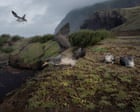
Once a year, Corvo, the smallest and most northerly island of Portugal’s Azores archipelago, goes dark. Since 2019, the island’s 450 or so inhabitants have chosen to switch off the lights every autumn for five nights to tackle the disastrous effects of artificial light on Cory’s shearwaters, a seabird endemic to the Atlantic Ocean.
It began in 1991 when the community noticed huge numbers of deaths among young shearwaters.
The juveniles spend three months in their nests before attempting their first flight to the ocean, orienting themselves by the stars.
-
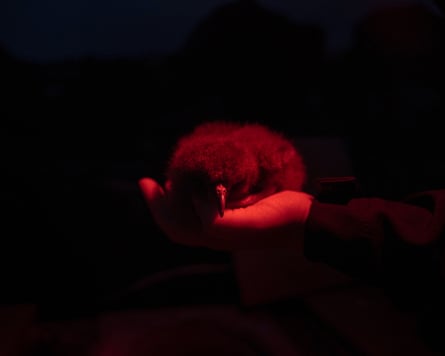
A newborn Cory’s shearwater chick
Unfortunately, many are fatally confused by the artificial glow of streetlights, and end up crashing into Vila do Corvo’s narrow streets.
Local people began rescuing them at night, roaming through the village in the dark. This inspired other communities, and in 1995, the Azorean government launched the “SOS Cagarro” [shearwaters] campaign to include the other eight islands.
In subsequent years, the Portuguese Society for the Study of Birds (SPEA) joined the project, helping it grow.
-
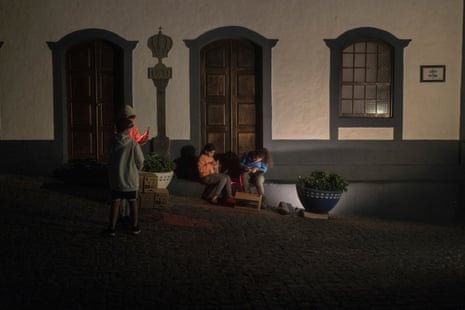
At nearly 2am, dedicated young volunteers remain engaged in their work, helping with the recovered birds
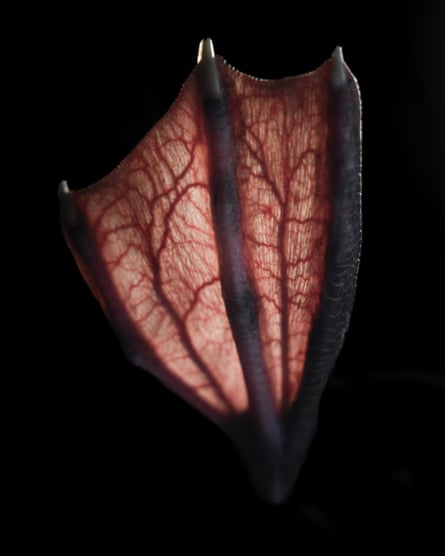
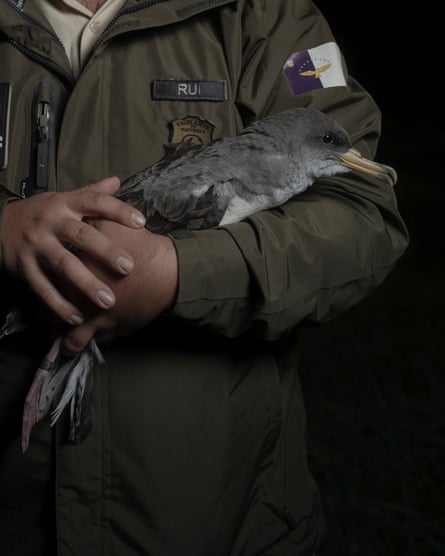
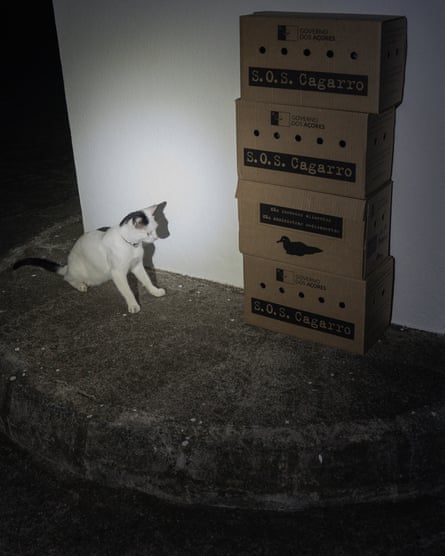
-
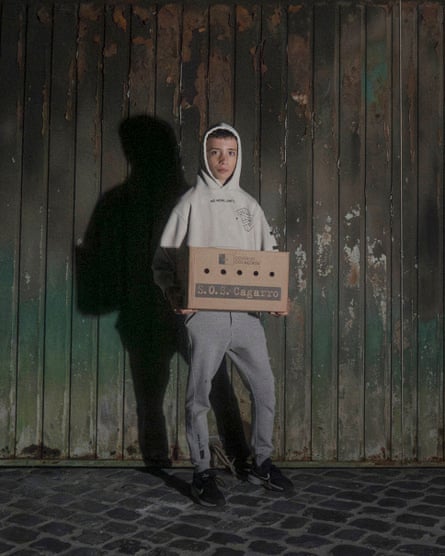
Leonardo Xavier is one of the young volunteers who helps to capture the disoriented birds around the village, top left. Top right, the webbed foot of a Cory’s shearwater. Rui Pimentel, left, is Corvo’s forest ranger, and on the frontline of Cory’s shearwater conservation. Cats, right, are the main predators of Cory’s shearwater chicks. The SPEA team has installed ultrasonic devices around nests to deter attacks
I discovered the initiative on my second trip to Corvo, in June 2024. I knew of the Cory’s shearwater because I had travelled to the Azores before and had the chance to observe them in the open sea.
But it was not until I saw a campaign sticker in a shop on the island that I found out about the blackout. When it was explained to me, I decided to come back and document it.
To me, the message of this story is that there is always hope, especially when we involve future generations and teach them to care about our planet and its beauty.
Today, Corvo is still the only island that performs a full blackout of public illumination to help the birds find their way to the ocean without interference from artificial lights.
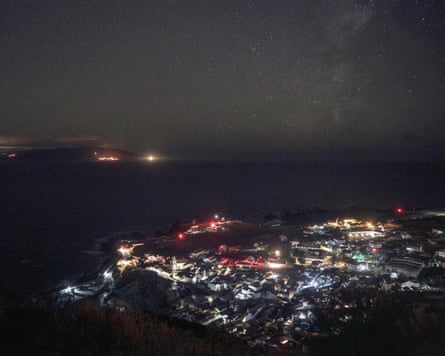
-
Vila do Corvo during the blackout, with only security lights on. People do not have to turn off their household lights, but many choose to do so. The island of Flores can be seen in the distance
-
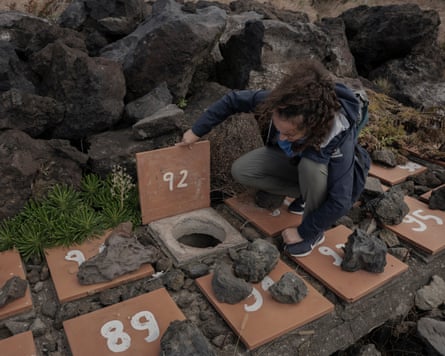
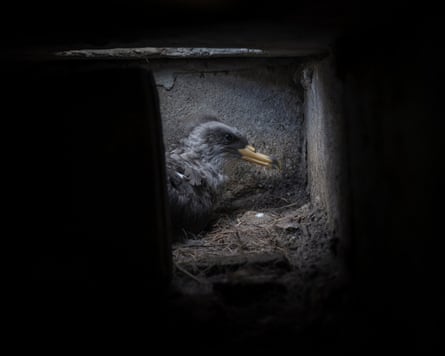
Tania Pipa, left, a marine biologist from SPEA, checks each artificial and natural Cory’s shearwater nest on the island. A native of São Miguel Island, the largest of the Azores, she travels to Corvo every year to check on the birds. ‘To me, the day I don’t hear Cory’s shearwaters in the Azores, it will certainly not be the Azores,’ she says. Right, a Cory’s shearwater in its artificial nest
The island sinks into darkness and the stars can be seen clearly; the birds begin their journeys, hoping to find their way to the ocean, while people walk through Vila do Corvo, the only village on the island, to find and rescue any fallen birds.
Those rescued will be placed in cardboard boxes overnight to recover, and released the next day from a cliff close to the ocean, giving them a second chance to reach the water, their new home.
The campaign says more than 30,000 Cory’s shearwater fledglings have been rescued in the Azores since 2015 – about 6,000 of them on Corvo alone.
This collective effort is a powerful example of how reducing light pollution can restore ecological balance. It demonstrates that small changes can significantly affect biodiversity.
How can an action like this inspire global reflection? This intentional blackout is not just an act of conservation but a step towards developing the ability to coexist with nature without disrupting its rhythms.
-
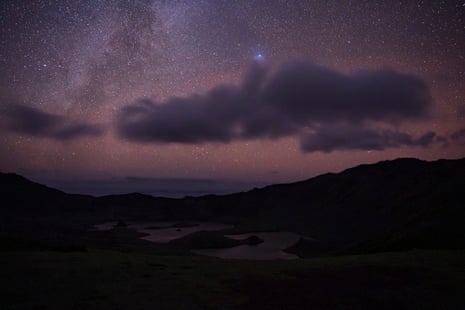
The night sky above Caldeirão, the volcanic crater that shapes the island of Corvo
Find more age of extinction coverage here, and follow the biodiversity reporters Rebecca Ratcliffe, Phoebe Weston and Patrick Greenfield in the Guardian app for more nature coverage.
KioskNews shows a cleaned-up reading view extracted from the publisher’s page — the original always lives on their site, not ours.