EXPLAINER: How PH is preparing for Super El Niño
Make this your preferred source to get more updates from this publisher on Google.
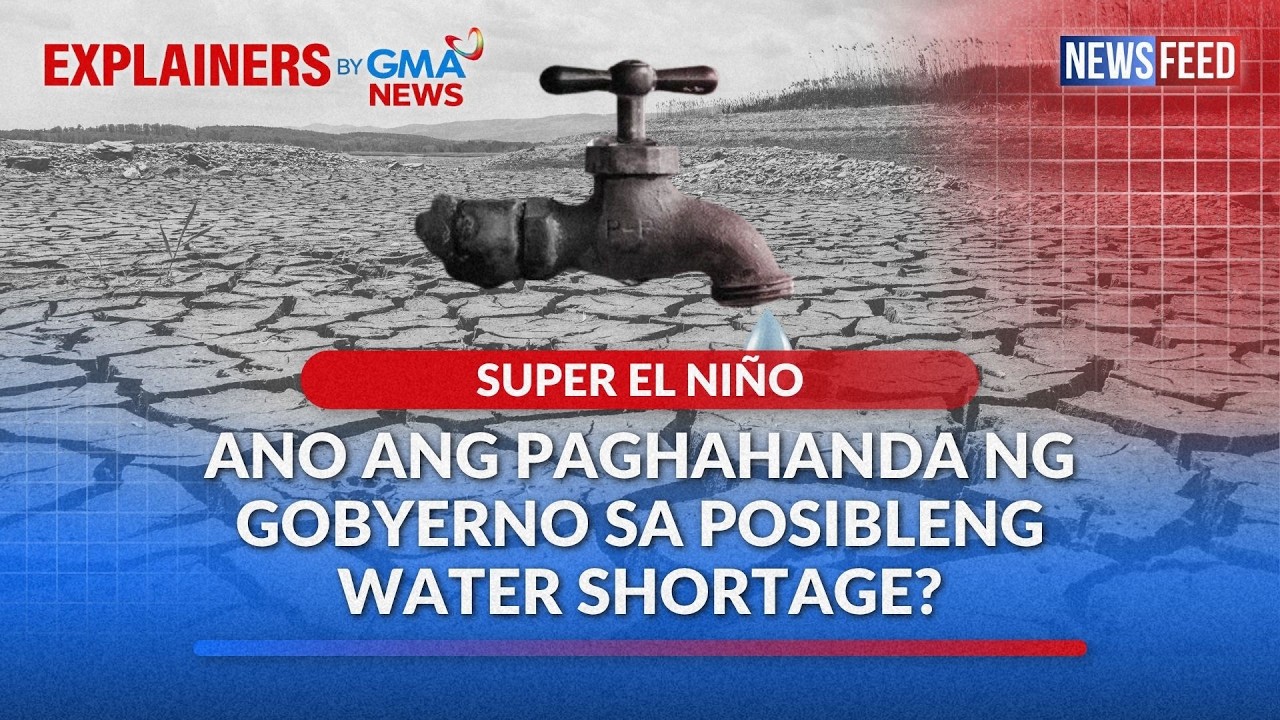
Amid the threat of Super El Niño, the public has been advised to start storing and conserving water due to possible supply shortages once the drought worsens.
Several government agencies have also launched their initiatives, plans, and technology that they plan to use to mitigate the effects of the extreme heat and dry conditions/
What are these measures?
Air-to-water system
The Department of Social Welfare and Development (DSWD) has adopted an air-to-water technology, which converts moisture from air to create potable water through a process called Atmospheric Water Generation.
With this technology, air flows through the heat exchanger to evaporate and cool so that the water vapor condenses into small droplets of water.
The water will then go through the filtration process and UV light to remove dirt and other contaminants, and then undergo a mineralization process to add minerals to the water before flowing into the built-in reservoir for storage.
The DSWD said the water could be used for drinking or stored for future use.
Rainwater collection
One of the effects of Super El Niño is the decrease in rainfall—some agencies have advised the public to take advantage of passing rains to collect water.
The Department of Environment and Natural Resources (DENR) has constructed a rainwater harvesting system to store water that can be distributed to communities that may experience water shortages.
In this system, the rainwater that the roof catches flows through the gutters, then through filtration to remove debris such as leaves, and finally to the collection system.
The collected water is stored either in a tank, rain barrel, or cistern. Other rainwater collection systems feature an overflow outlet to release excess water when the tank is full.
The DENR noted that water collected with this system is not automatically safe to use as drinking water, but is instead recommended for non-potable uses such as watering plants, cleaning, and flushing toilets.
Farming
One of the most crucial sectors that must prepare is agriculture, as livelihoods and the food supply depend on it.
In preparation, the National Irrigation Administration said that it targets using the groundwater maps of the Mines and Geosciences Bureau to identify potential groundwater sources to use in its solar-powered irrigation pump systems planned for deployment in various areas.
Using this measure, a site assessment is first conducted to study the water source location and the volume of water needed for irrigation. Once assessed and approved, solar power is used to generate electricity that powers the pumps.
Depending on the design, water may flow through pipes into a storage tank or directly into the irrigation network to be distributed to farmlands.
Aside from securing water supply, agencies are also promoting the use of Project SARAi, or Smart Approaches to Reinvigorate Agriculture as an Industry, led by the University of the Philippines Los Baños and funded by DOST-PCAARRD.
Project SARAI provides farmers with location-specific weather advisories to help them plan their farming activities based on the specific conditions of their location.
The agency noted that while the effects of El Niño are widespread, the actual impact and status vary across different areas and famlands. —VAL, GMA News
KioskNews shows a cleaned-up reading view extracted from the publisher’s page — the original always lives on their site, not ours.