Ministry mulls third phase of EV promotion
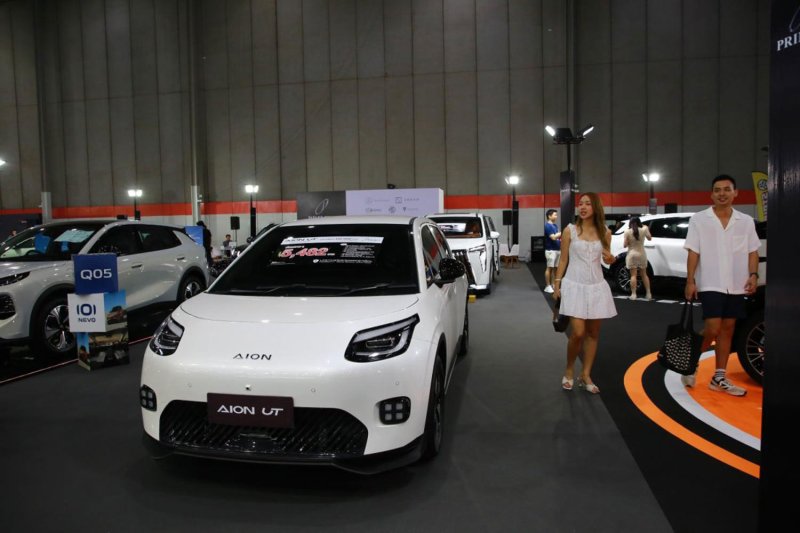
The Finance Ministry is considering introducing a third phase of policies to promote the electric vehicle (EV) industry, which would enforce new local content requirements.
According to finance permanent secretary Lavaron Sangsnit, after Thailand introduced its EV 3.0 and EV 3.5 incentive schemes, which provided subsidies to EV buyers, eight Chinese EV manufacturers invested in establishing production facilities in Thailand.
The second step, which was recently approved by the cabinet, involves increasing the excise tax on imported EVs to 35% from 2027, up from the current rates of 10% for battery EVs and 15% for range-extended EVs.
The move increases the tax burden on importers of completely built-up (CBU) EVs.
According to Mr Lavaron, the Excise Department's tax calculation system applies the "tax-inclusive" method, meaning the actual tax burden for imported CBU EVs will be much higher than 35%.
Under the tax-inclusive method, the excise tax is calculated based on the vehicle's value including import duties and value-added tax. Importers would face an effective excise tax burden of 49%, he said.
"A higher excise tax burden would significantly raise the cost of imported EVs, making them less competitive with domestically manufactured vehicles," said Mr Lavaron.
"The move is expected to attract more manufacturers to establish production facilities in Thailand. A ninth EV factory in Thailand is already in discussions, with a 10th expected to follow."
For Thailand to become an EV hub, he said Tier 1, Tier 2 and Tier 3 parts manufacturers must benefit. A potential third phase would involve enforcing new local content requirements, said Mr Lavaron.
The Customs Department applies the World Trade Organization local content criteria, which includes financial costs such as profits and water and electricity expenses in the local content calculation.
Under the new criteria, which will apply to both new and existing automotive factories, only locally sourced auto parts counted towards local content.
Factories that meet the prescribed local content requirements or the Made in Thailand criteria can continue to enjoy the existing excise tax rate of 10%, while those that fail to comply with the new criteria or do not use any locally sourced parts are subject to an excise tax of 35%, he said.
Factories that use local content but fail to meet the required threshold may face excise tax rates of 15-20%, said Mr Lavaron.
Pickup Trade-in Scheme
Regarding a vehicle trade-in scheme, he said the Excise Department already submitted the proposal to the committee overseeing the use of the 400-billion-baht emergency loan decree, which he chairs.
The scheme aims to replace old pickups with new ones capable of running on B20 biodiesel, which would help reduce oil imports.
According to a Finance Ministry source who requested anonymity, the pickup trade-in scheme would be funded with 6 billion baht from the loan decree.
The proposal is being submitted to the subcommittee responsible for screening projects under the energy-related loan decree, chaired by Kulit Sombatsiri, a former energy permanent secretary, for consideration.
If approved, the proposal heads to the main screening committee and then the cabinet for approval. The scheme is expected to begin by the end of this year.
Eligible old vehicles can be passenger cars, vans or pickups, provided they were registered before 2012 and are not wrecked, remain operational, have fully paid taxes and are free of outstanding obligations.
The vehicles can be exchanged for domestically manufactured pickups or passenger pickups, as well as multi-purpose vehicles that use either electric technology or B20 biodiesel.
"The objective of this scheme is to reduce environmental pollution and revive Thailand's auto industry. Thailand has an accumulated 8.17 million vehicles aged 10-20 years or older, many of which are older diesel pickups that emit high levels of pollutants," said Mr Lavaron.
"The pickup market is also experiencing a severe downturn as many buyers are unable to obtain financing. The Finance Ministry is accelerating efforts to formulate a policy, while coordinating with the Government Savings Bank to provide low-interest loans at no more than 5% per year."
The ministry is also coordinating with vehicle dismantling facilities capable of handling up to 50,000 scrapped vehicles annually, he noted.
KioskNews shows a cleaned-up reading view extracted from the publisher’s page — the original always lives on their site, not ours.