Analysis: Akali Dal's Old Guard Returns, But Can Badals Win Back Punjab?
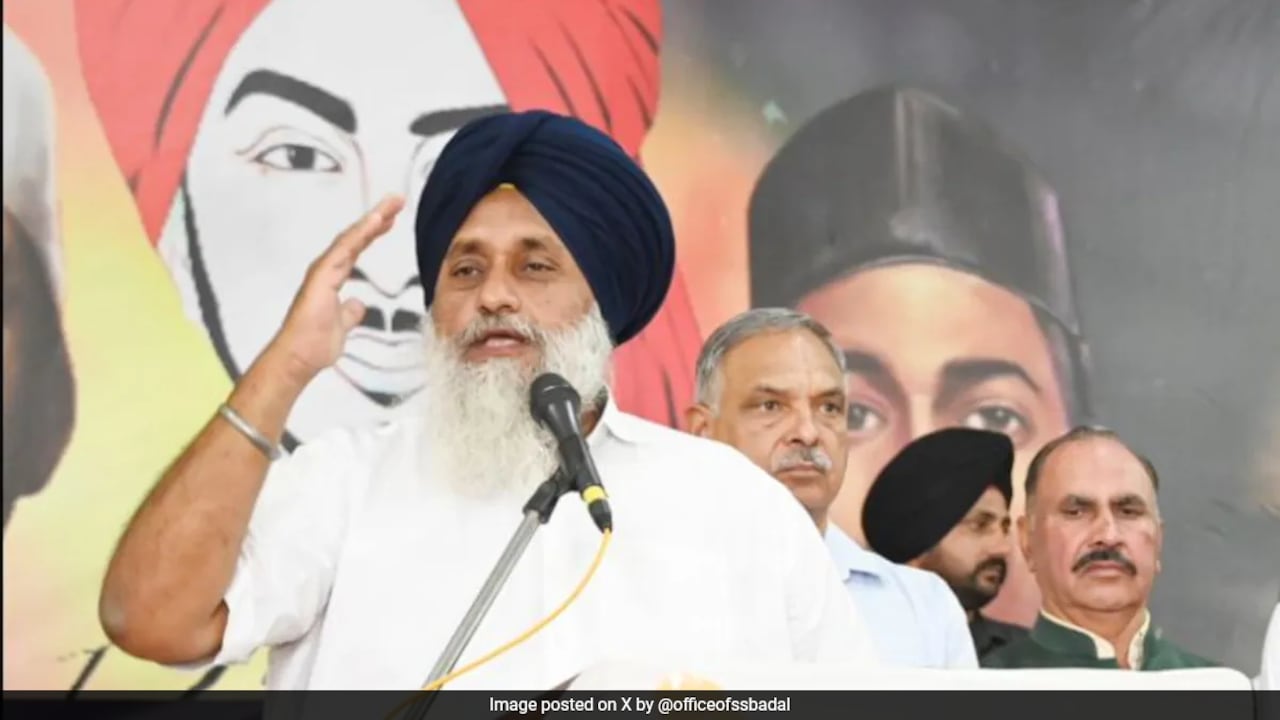
The Shiromani Akali Dal (SAD), once Punjab's dominant political force, is attempting to rebuild its organisation ahead of the 2027 Assembly elections, with the return of prominent former leaders signalling a possible consolidation of the party. Former three-time MP Prem Singh Chandumajra rejoined the Sukhbir Singh Badal-led Akali Dal on Friday, November 6, along with his son and former MLA Harinderpal Singh Chandumajra. Former SGPC president Bibi Jagir Kaur is also set to return, with sources in the SAD and SAD (Punar Surjit) confirming the development.
The homecoming of these leaders could encourage more disgruntled members to return to the parent organisation, dealing a setback to the breakaway faction.
The developments assume significance amid the BJP's renewed efforts to bring together Akali factions and explore a possible NDA arrangement in Punjab. Union Home Minister Amit Shah has spoken about an NDA government in the state, fuelling speculation about a revival of the BJP-SAD alliance that ended in 2020 over the farm laws. Chandumajra's return, coming close on the heels of his meetings with senior BJP leaders in Delhi, including Shah, has added to the speculation. For the BJP, a united Akali Dal could provide an established regional partner with a traditional Sikh support base and an organisational network across Punjab. However, the political equation has changed since 2020, with the BJP now seeking to expand independently in the state. Any reunion will involve difficult questions of seat-sharing, political positioning and the balance of power within the alliance.
While the return of veterans such as Chandumajra and Jagir Kaur could strengthen the Akali Dal's organisational machinery and bring back experienced political faces, it also raises questions about the party's ability to connect with a younger electorate. Sukhbir Badal appears conscious of this challenge and has initiated outreach to Gen Z through the 'Vibe Punjab Di' campaign. His interaction with students at Khalsa College in Patiala on October 1, along with earlier engagements with youngsters in Bathinda and Patiala, was an attempt to present a more accessible image and engage young voters on jobs, law and order, and Punjab's future. However, social media campaigns and student interactions alone may not be enough. The party will have to offer credible answers on unemployment, drugs, migration, education and opportunities if it hopes to win over first-time voters who have little political memory of its decade in government.
The Akali Dal's biggest challenge remains its political baggage. Out of power since 2017, the party suffered its worst electoral setback in decades in the 2022 Assembly elections, winning just three of Punjab's 117 seats. Its association with the sacrilege incidents and police firing cases during its previous tenure, allegations of political interference, and the perception of concentration of power within the Badal family continue to weigh on its image. The rebellion within the party and the emergence of breakaway factions also reflected a deeper crisis of leadership and credibility, particularly among sections of the Sikh electorate. Reuniting leaders may address organisational fragmentation, but it will not automatically resolve the questions that led to their departure. After nearly a decade outside power, the Akali Dal must convince voters that it has changed and can offer a credible alternative to the AAP, Congress and BJP.
The party also has a cautionary example in neighbouring Haryana, where regional political formations have struggled to retain their relevance. The Indian National Lok Dal (INLD), once a formidable force under Om Prakash Chautala, has steadily lost ground, while its breakaway faction, the Jannayak Janta Party (JJP), saw a dramatic electoral collapse. The JJP had emerged as a kingmaker in 2019 and joined the BJP-led government, with Dushyant Chautala becoming Deputy Chief Minister.
However, after the alliance collapsed ahead of the 2024 Assembly elections, the JJP failed to win a single seat. The INLD managed just two seats. The comparison with the Akali Dal is not exact, given its longer history, Panthic identity and deep-rooted political presence in Punjab. Yet Haryana demonstrates that a regional party's legacy, organisational network and alliance with the BJP cannot guarantee electoral survival if it fails to reinvent itself and retain voter confidence.
The return of the old guard allows Sukhbir Badal to project unity and rebuild the Akali Dal ahead of 2027. A united party could recover some of the political space it has ceded to the AAP, Congress and BJP, while a possible NDA arrangement could provide additional political and organisational advantages. But it could also raise questions about the Akali Dal's independent regional identity and its ability to negotiate with a BJP that is increasingly ambitious in Punjab.
Ultimately, the challenge is not merely to bring back veteran leaders but to bring back voters. Whether the reunion of political warhorses marks the beginning of an Akali revival or remains an exercise in organisational consolidation will be tested in the 2027 Assembly elections.
KioskNews shows a cleaned-up reading view extracted from the publisher’s page — the original always lives on their site, not ours.