Israel elections: Can Arab parties turn votes into power this time?
Over 7.3 million Israeli voters will cast their ballots on Tuesday (October 27) for the Israeli parliamentary election. No single party or bloc is projected to win a majority in the 120-seat Knesset — both the right-wing bloc led by the incumbent Prime Minister Benjamin Netanyahu and the opposition (“Change”) bloc led by Gadi Eisenkot each sit near 53, short of the 61 needed.
Arab citizens, who are 21% of Israel’s population, make the Arab parties pivotal. Poll averages put the Joint List — a three-party alliance of Hadash, Ta’al, and Balad — at about eight seats and the Ra’am party (also known as the United Arab List) at about six.
The war and destruction in Gaza — especially after the October 7, 2023, attack on Israel orchestrated by the militant group Hamas — have made Arab participation harder. We explain who the Arabs are in Israel, where they stand in the Israeli electorate, and what electoral representation can and cannot do for them in a country divided over national identity, security, and Palestinian statehood.
Who are the Arabs in Israel?
Arab Israelis refer to citizens or permanent residents of Israel of Arab descent, mostly composed of Palestinians who remained inside Israel’s borders after establishment of the State of Israel on May 14, 1948, and the Arab-Israeli war (1948-49).
The war forced around 700,000 to 800,000 Palestinians to flee their homeland. The Palestinians who stayed back — roughly 150,000 — became citizens, although they lived under military rule until 1966. Today, Israel’s Arab citizens include Muslims, Christians, Druze, and even Bedouin communities. Although they have had the right to vote since the first election in 1949, they remain unequally represented and marginalised in housing, infrastructure, public safety, and public resources.
Also, Israel has no single written constitution. While its Declaration of Independence promised equality of political rights, a 2018 law (called the “Nation-State Law”) defined the right to national self-determination as exclusive to the Jewish people.
Palestinians in Israel regularly complain that they are treated as “second-class” citizens. According to the Palestinian non-profit Adalah, there are over 65 laws in place that discriminate directly or indirectly against Palestinian citizens in Israel and residents of the Occupied Palestinian Territories.
Story continues below this ad
The law governing elections is another constraint. As Israel is a democracy with a proportional representation system of elections, it has several lists and parties. Simply put, a party is an institution that seeks power within the established rules of elections, whereas a list is a list of candidates prepared for the elections sponsored by a party or by a group of parties.
Under Israel’s Basic Law, lists can be barred if they reject Israel as a Jewish and democratic state, incite racism, or support armed struggle. In September, Israel’s Central Elections Committee voted to bar the Joint List and Ra’am under these provisions, but the Supreme Court unanimously overturned the bans. However, Balad’s leader, Sami Abou Shahadeh, withdrew his individual candidature before the court ruled on his own disqualification.
Arab parties in government
Arab parties have sat in the Knesset for decades, but power has remained elusive. For Arabs, representation came first through the Communist party and Arab lists allied to Mapai, the forerunner of Labor. Independent parties such as Hadash, Ta’al, Balad and Ra’am came later.
Until 2021, the closest Arab parties had come to power was Labor leader Yitzhak Rabin’s second government. Rabin’s coalition survived on the outside support of five Arab Members of Knesset (MKs).
Story continues below this ad
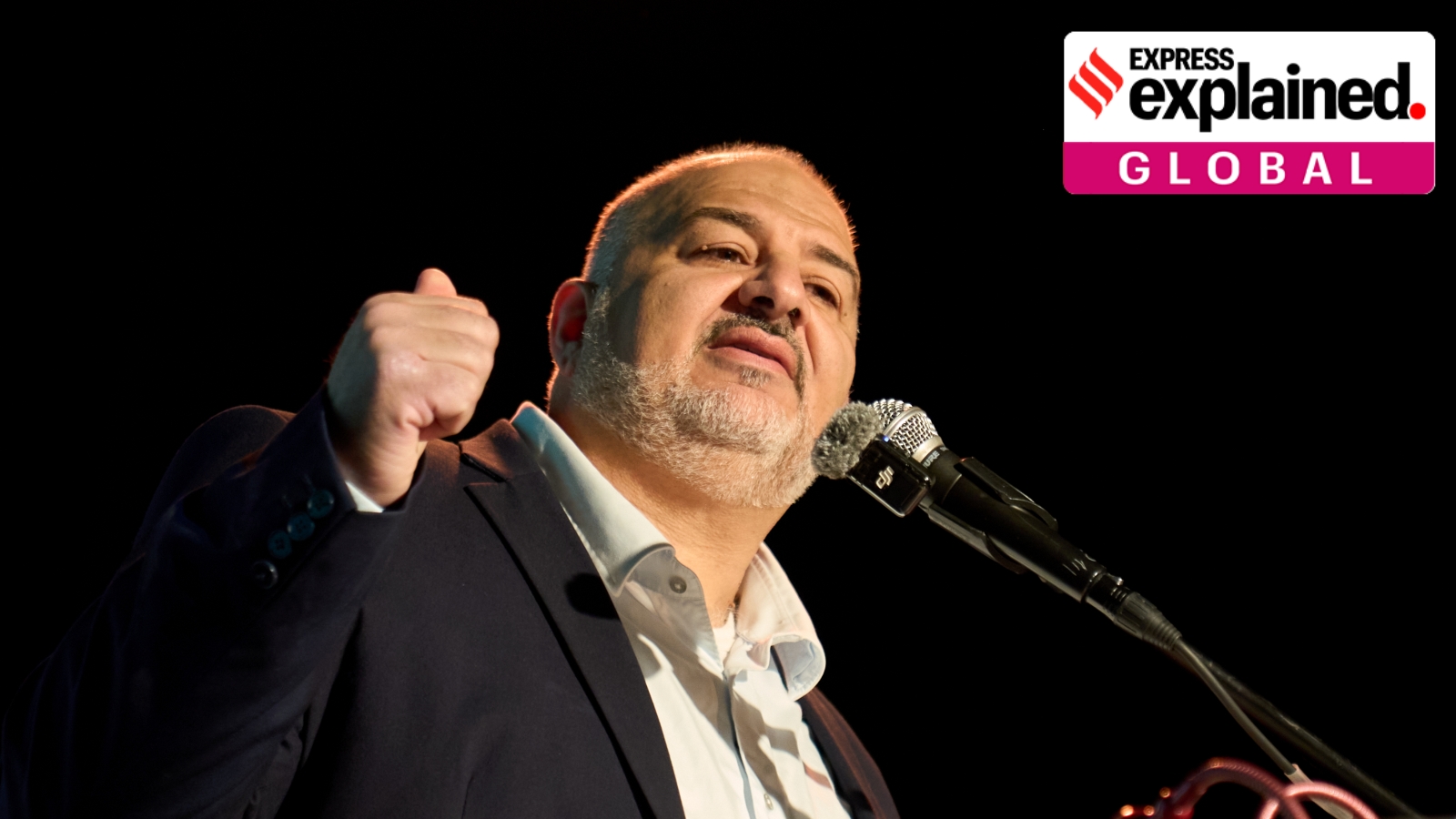
In 2021, Mansour Abbas’s Ra’am had joined the coalition government led by Naftali Bennett and Yair Lapid. It was the first independent Arab party to enter an Israeli governing coalition. Abbas bargained for investment in Arab towns, housing, infrastructure and action against organised crime. But the coalition collapsed in 2022 after some right-wing MKs defected. Bennett has since apologised for governing with Ra’am.
Alvite Ningthoujam, who teaches international relations at Symbiosis School of International Studies, Pune, said the Arab camp is split on strategy. “Ra’am’s approach offered a route to practical gains, but it also drew criticism that it came at the expense of wider Palestinian political demands,” he told The Indian Express. “The Joint List has taken a more oppositional line, emphasising Palestinian national identity and resistance to the occupation.”
The contrast is “not simply pragmatism versus principle”, according to Ningthoujam. “It reflects different judgments about where Arab parties can gain leverage.”
Shrinking political space after October 7
The Hamas-led attack of October 7, 2023, and the war in Gaza (still ongoing) have hardened the divide. Arab citizens have had to press for equality at home while living with the daily toll and gruesome imagery of killing and displacement across the Gaza Strip and the West Bank.
Story continues below this ad
“The Gaza war has deepened the historical trauma of occupation, killing and expulsion of Palestinians, across Arab populations inside and outside Israel,” said Omair Anas, associate professor of international relations at Ankara Yildirim Beyazit University.
The political room for Arab parties has narrowed, as opposition to Palestinian statehood has spread across most of Israel’s political spectrum. “The right wing and the centre differ only cosmetically on the future of a Palestinian state and on the Gaza crisis,” Anas said.
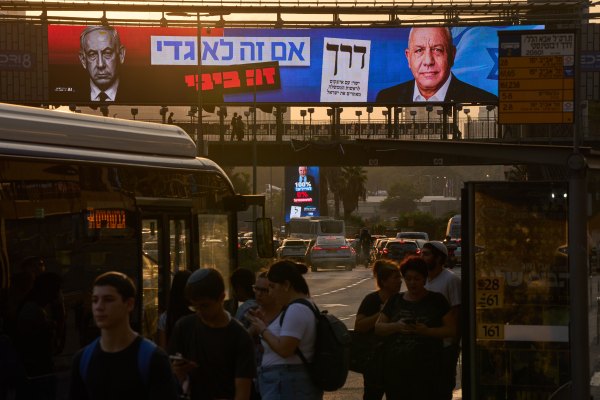 An billboard featuring Israeli Prime Minister Benjamin Netanyahu (L) and his main rival, opposition candidate Gadi Eisenkot. Both blocs have ruled out joining forces with the Arab-led parties. Photo: AP/Oded Balilty
The liberal centre is weak, he added. “Most European nations have actively supported Israel’s right-wing parties in Netanyahu’s Gaza war, and that has weakened Israel’s already shrinking liberal and centrist space. It might take time for Israel to revive liberal politics.”
For Arab voters, disillusionment lowers the incentive to vote, but staying home would weaken representation further. “They are realistic about their isolation within the system,” Anas said.
What does the data show?
Story continues below this ad
The arithmetic matters. Parties must win at least 3.25% of the vote to enter the Knesset, which amounts to about 165,000 to 170,000 votes this election. If a party fails to reach this minimum threshold, all votes cast for its slate are discarded, producing “wasted votes” that are reallocated among the parties that succeeded.
In 2022, a split in the Arab vote left Balad below the line, and its votes were wasted. The revived Joint List, which includes Balad, is meant to stop that from happening again. In the March 2021 Israeli election, the two main Arab-led electoral lists — the Joint List and Ra’am — together received 379,647 votes, or approximately 8.61% of all valid votes cast, winning 10 of the Knesset’s 120 seats.
Pointing to the “volatile” Arab voter turnout, Ningthoujam said, “It fell from 64.8% in 2020 to a low of 44.6% in 2021, then recovered to 53.2% in 2022, still well below the national rate of about 70%. Disillusionment, anger over unchecked crime in Arab towns and doubt that a vote can change policy all depress it.” Fragmentation of votes also matters, he added.
Political acceptance is a bigger obstacle. Most leaders of the Jewish-led opposition bloc have ruled out joining forces with the Arab-led parties. The election could hand Arab parties the numbers to shape the next government, but no formal way to use them.
Story continues below this ad
According to Ningthoujam, Arab parties may exercise influence even without joining a government. He cited how the Joint List offered the possibility of a parliamentary safety net — supporting a government in confidence votes without taking ministerial responsibility, in return for policy commitments.
The election will test more than whether Arab parties can become kingmakers, he said. “It will show whether parliamentary strength can become a real influence, even as their legitimacy as partners in government remains contested. Representation alone does not guarantee equal partnership.”
KioskNews shows a cleaned-up reading view extracted from the publisher’s page — the original always lives on their site, not ours.