MMDA assures motorists ‘no double penalties’ in NCAP
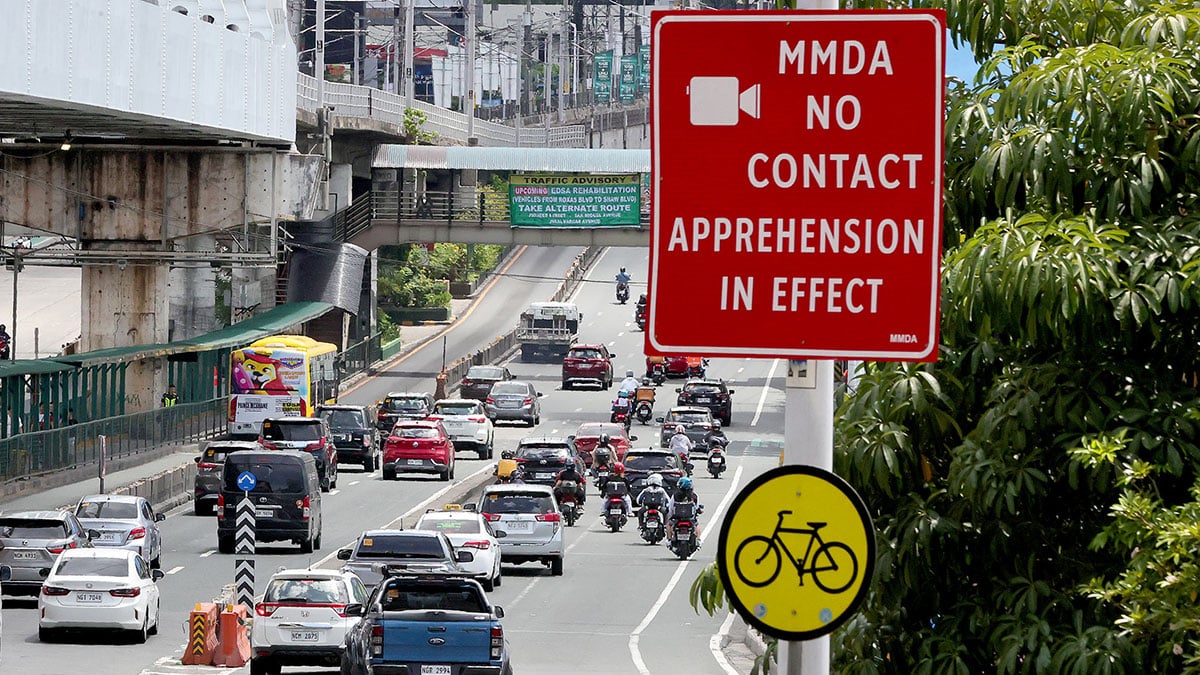
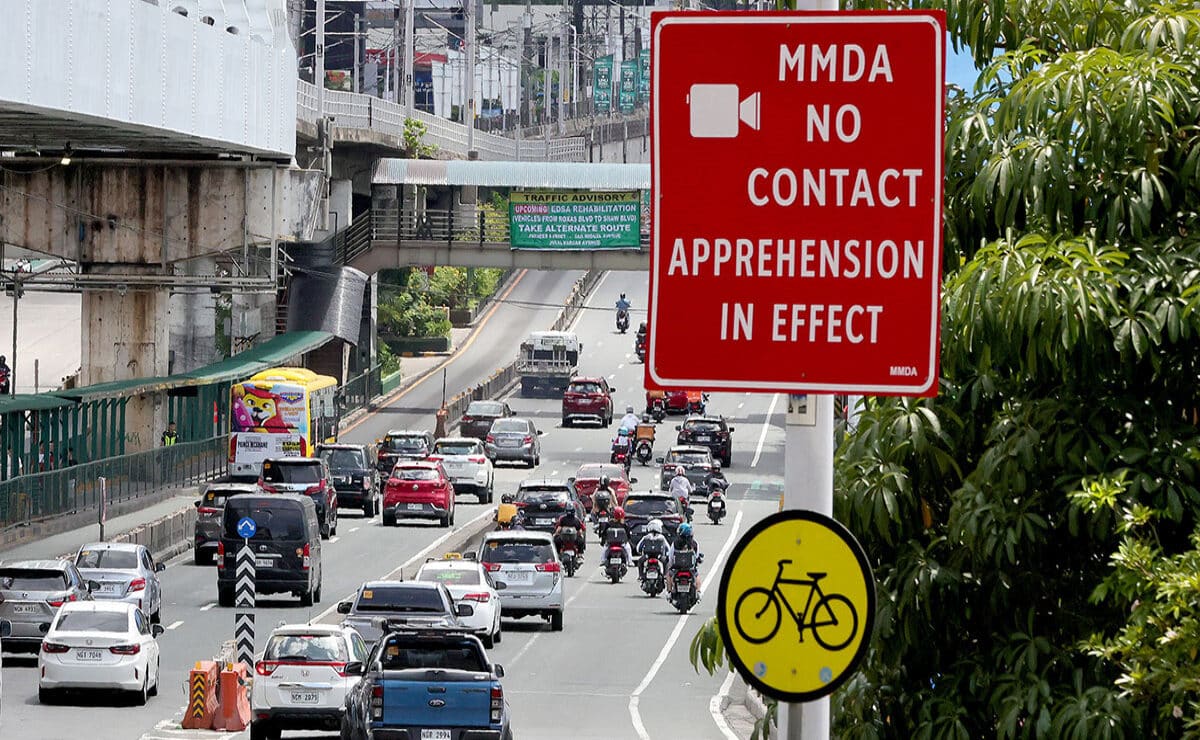
MANILA, Philippines – The Metropolitan Manila Development Authority (MMDA) on Tuesday assured the public that motorists would not face double penalties amid the reimplementation of the no-contact apprehension policy (NCAP) in select cities in Metro Manila.
MMDA chair Atty. Don Artes said there would be no duplication because MMDA and local government units (LGUs) do not have cameras installed at the same locations.
READ: NCAP reimplentation starts Monday in 5 Metro Manila cities
Article continues after this advertisement
“To confirm the duplication, we have coordinated with the LGUs. There are no cameras of LGUs and MMDA in exactly the same locations,” he said during a media briefing on Tuesday.
FEATURED STORIES
NEWSINFO
NEWSINFO
NEWSINFO
“So, we have established boundaries that LGU is here, and MMDA is here,” Artes added.
Manila Mayor Francisco “Isko Moreno” Domagoso likewise said the city government would follow the MMDA’s uniform traffic enforcement system and prioritize safety, security, and equal treatment in enforcing traffic rules.
“There will never be any duplication. Because I want discipline, certainty, and peace of mind. I want everyone to be treated equally when we enforce traffic laws,” Domagoso said.
READ: Groups ask LGUs to defer NCAP as SC motion remains pending
Article continues after this advertisement
He added that NCAP would ensure that motorists are treated equally regardless of their social status or vehicle.
“I would rather submit ourselves to uniformity to MMDA…in regards to universal ticketing, universal protests, and implementation,” he said.
Article continues after this advertisement
Despite Parañaque and Valenzuela deferring the implementation of NCAP, Manila will proceed with the policy, Domagoso said.
“I will push through. There’s a bigger chance of the government making a mistake, with our enforcers. With the technology existing, nobody is special nowadays. Everyone is equal,” he said.
During Monday’s NCAP dry run, 190 traffic violators were caught by two cameras in Manila, according to Domagoso.
Under NCAP, traffic violators are identified through closed-circuit television and digital cameras. The concerned LGUs then issue citation tickets and send them directly to vehicle owners.
Domagoso said NCAP would help minimize kotong or extortion and bribery by traffic enforcers, which he described as among the public’s usual complaints.
He said using technology to apprehend traffic violators would provide a more secure system because violations would be supported by photos and videos.
Artes and Domagoso, however, said authorities could consider cases involving emergencies or other valid circumstances.
“For example, a problem or an emergency, proven that it is an emergency, then you cross the red light. Then, we would reconsider why,” Domagoso said.
Artes likewise said motorists could contest their violations to determine whether the citation was valid.
He said the MMDA was working closely with LGUs to address motorists’ concerns.
“Whether physical apprehension or no-contact apprehension, traffic laws exist,” Artes said.
Earlier, Lawyers for Commuters Safety and Protection (LCSP) urged stakeholders to hold public consultations to clarify how traffic violations would be handled with both MMDA- and LGU-operated NCAP systems.
LCSP questioned how LGU-operated NCAP systems would fit into the uniform traffic enforcement framework under the Metro Manila Traffic Code of 2023, particularly with the MMDA already implementing NCAP.
“We will implement something without fixing the framework of the rules,” LCSP president Atty. Ariel Inton told the Inquirer.
Your subscription could not be saved. Please try again.
Your subscription has been successful.
Inton said the rules should first be clarified to ensure uniformity in traffic-law enforcement across Metro Manila. /jpv
KioskNews shows a cleaned-up reading view extracted from the publisher’s page — the original always lives on their site, not ours.