Marcos recalls ‘biggest earthquake’in his life: Hawaii exile
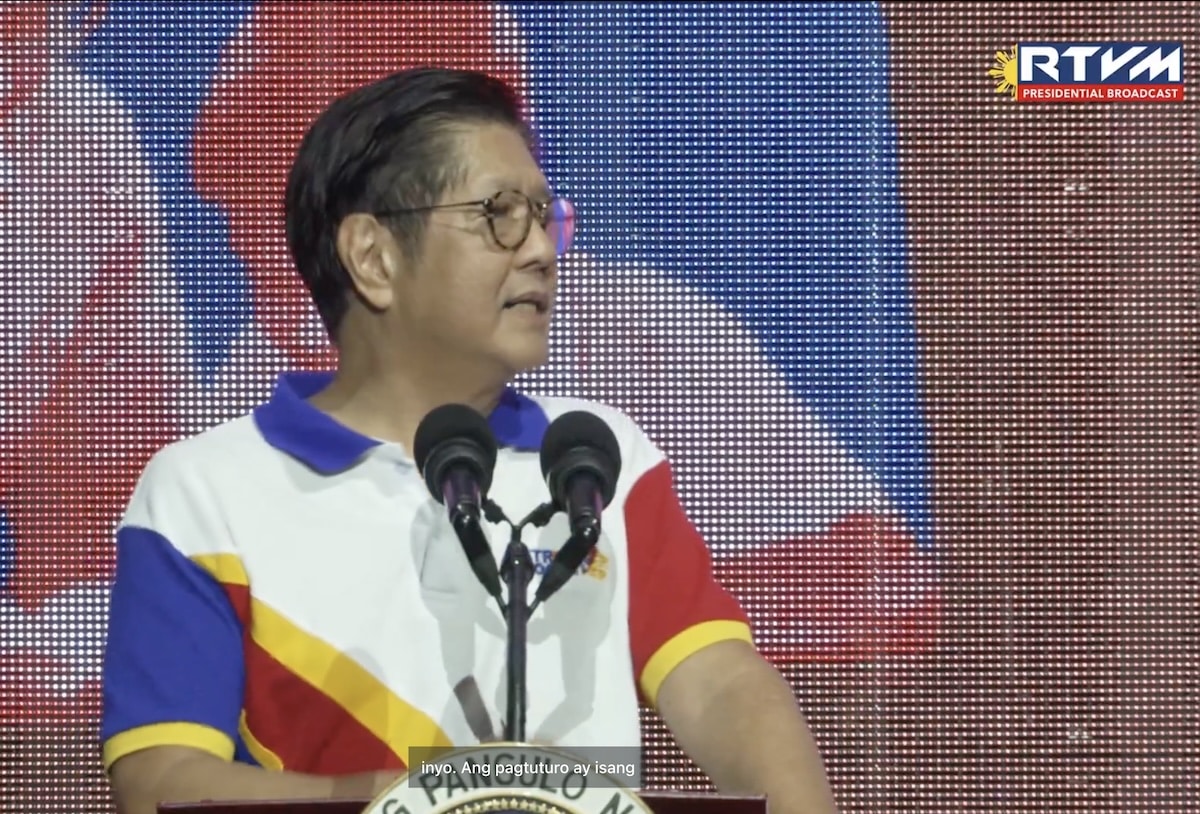

MANILA, Philippines — President Ferdinand Marcos Jr. has opened up about the “biggest earthquake” in his life: his family’s exile to Hawaii in 1986.
In a candid interview during the season finale of the “Unshaken With Gary V” podcast, uploaded on Monday, Marcos recounted one of the most significant events in Philippine history.
READ: Marcos’ martial law: Golden age for corruption, abuses
Article continues after this advertisement
During the podcast, Filipino music icon Gary Valenciano asked Marcos to walk him through a moment or season in his life when everything was shaken.
FEATURED STORIES
NEWSINFO
NEWSINFO
NEWSINFO
Marcos, without hesitation, said it was when his family fled the Philippines for Hawaii on February 25, 1986, after the People Power Revolution forced his father, former dictator Ferdinand Marcos Sr., from power.
“Everything completely changed. One day, you’re the son of the president, and you’re sitting in a palace and the next two days later, you’re in Hawaii. You don’t know what on earth has just happened. You’re not allowed to go back home, you cannot even get a job, you cannot even talk to people that you feel you have a need to talk to, because they isolated us,” he said.
“And so it is, put it this way: the reason it’s the biggest, shall we say, part, the biggest shaken moment of my life is that none of what we did after ‘86, when we got to Hawaii, our lives did not resemble our previous life in any way whatsoever,” he added.
Then 28-year-old Marcos said that in Hawaii, he felt as if he had to relearn how to live.
Article continues after this advertisement
“I must have been about 28 years old in ‘86, and suddenly that whole life has just disappeared. And now this is your life. And I said, no, I’m not sure I like this one as much as I like the old one. Well, sorry, but that’s it. And that’s why, for me, it was the biggest earthquake in my life,” he said.
“You have to go through that whole process, which is something that you do as a child, teenager, as you’re growing up. Now you have to do it all over again as an adult,” he added.
Article continues after this advertisement
Asked what anchored him after everything he went through, the president said it was his faith, which he said reminded him of what was right and wrong.
“That’s a big guide. The other thing is, I suppose, remembering what it is that you, in fact, want to achieve. Because you go through that, your whole life is totally changed and upended, and you don’t know what success is anymore, and it becomes smaller and smaller. You just live through the day,” he said.
“I had to do normal things. I had to clean the house. I had to wash the dishes. I had to go to the post office. I had to go grocery shopping. I had to put gas in the car. So, those little things bring you back to normalcy,” he added.
READ: Martial law victims find no justice in ‘moving on’
According to Marcos, these experiences made him tougher because he had already gone through a difficult period in his life.
They also made him more sympathetic, as he came to understand that everyone reaches a point in their lives when they are shaken by circumstances, he said.
Marcos said the experience proved that he is not a coward but is ready to face whatever challenges may come his way in the future.
The Marcos family remained in exile in Hawaii before Marcos Sr. died on Sept. 28, 1989.
Your subscription could not be saved. Please try again.
Your subscription has been successful.
In 1993, then President Fidel V. Ramos allowed Marcos’ body to be brought home but did not allow his burial at the Libingan ng mga Bayani. Twenty-three years later, behind shut gates and away from public view, his remains were laid to rest at the Libingan ng mga Bayani in Taguig City. /mcm
KioskNews shows a cleaned-up reading view extracted from the publisher’s page — the original always lives on their site, not ours.