A terrifying plunge, loud screams, blood everywhere: How flight FZ1073 unfolded, moment by moment
It was a routine daily flight from Dubai to Tel Aviv. But on Wednesday, two hours into the short journey, flight FZ1073 rapidly turned to chaos.
Screams filled the cabin as 174 passengers plunged 14,000 feet in less than 30 seconds. Crew members called for help. A distress signal was sent. Passengers stormed the cockpit – usually locked, if not for some quick thinking by a pilot close to losing consciousness after apparently being stabbed by his co-pilot – to find blood everywhere.
Here is what we know about how the flight unfolded.
September 30, 7.05am (Dubai time)
After a 20-minute delay, flydubai flight FZ1073 departs Dubai International Airport, bound for Tel Aviv, Israel.
The three-year-old Boeing 737 MAX 8 climbs to a cruising altitude of 34,000 feet.
9.21am: A terrifying rapid plunge
Two hours and 16 minutes into the flight, which typically takes about 3½ hours, FZ1073 plummets. According to data captured by flightradar24, it plunges more than 14,000 feet in less than 30 seconds.
“Suddenly, the aeroplane started to, like a rollercoaster, to drop down like a massive G-force,” passenger Almog Itali told BBC’s Newsnight.
A sharp ascent follows, but the plane abruptly drops again. It’s at this point that people rush to the cockpit, according to Itali.
About three or four passengers subdue the co-pilot, acquiring minor injuries in the process. An Israeli passenger said the crew asked passengers for help, and passengers helped tie down the co-pilot after tackling him.
“They are very brave. They literally saved our lives,” Itali said.
According to Yasmin Abukasis, whose daughter Miriam was on the flight, a man holding a knife had forced one of the pilots onto the floor. Blood was everywhere, and loud screams could be heard.
‘Thrown around the cabin’
In total, the aircraft falls 17,350 feet, going from 34,000 feet to 16,650 feet in two minutes.
The safest passengers during this erratic change in altitude would have been those seated with their seatbelts securely fastened, says Dr Salim Hijazeen, a lecturer in aviation at Swinburne University of Technology.
When Singapore Airlines flight SQ321 dropped 178 feet in 4.6 seconds and a total 6000 feet in three minutes, in May 2024, British passenger Geoff Kitchen, 73, suffered a cardiac arrest and died. His wife, Linda, sustained a head wound and spinal fractures in the incident.
“Those rapid changes in movement are what could cause passengers to be lifted from their seats or thrown around the cabin,” Hijazeen said.
“It would have been absolutely terrifying.”
9.28am: First emergency alert issued
The aircraft issues an emergency alert signal, known as a “squawk 7700”, as it flies along the Jordan-Saudi Arabia border.
A squawk 7700 is an internationally standardised code that indicates a “general emergency”, which could be anything from engine failure to a severe medical crisis.
It automatically highlights the aircraft on air traffic control’s radar, making it priority. If needed, air traffic control will clear surrounding airspace to get the aircraft to the nearest runway.
The code is discrete – no verbal radio call is necessary as it’s transmitted directly through the aircraft transponder when the pilot types in the four digits directly.
Passengers take control
After the altitude stabilises at about 15,000 feet, a second emergency alert – a squawk 7500, meaning “unlawful interference” – is sent, sparking fears of a hijacking.
The aircraft turns west and briefly enters Jordanian airspace, then turns 180 degrees back towards Saudi Arabia, flying south-west in the direction of Tabuk.
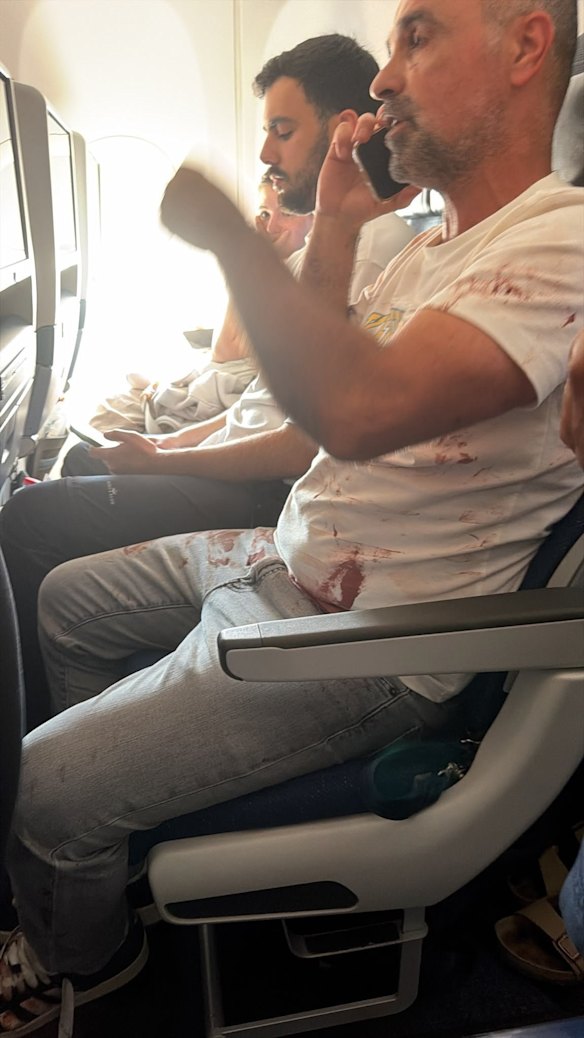
An unnamed passenger later tells the Jerusalem Post that two other passengers seated at the back of the plane were off-duty pilots.
“I shouted at them to run and take control of the plane,” the passenger said.
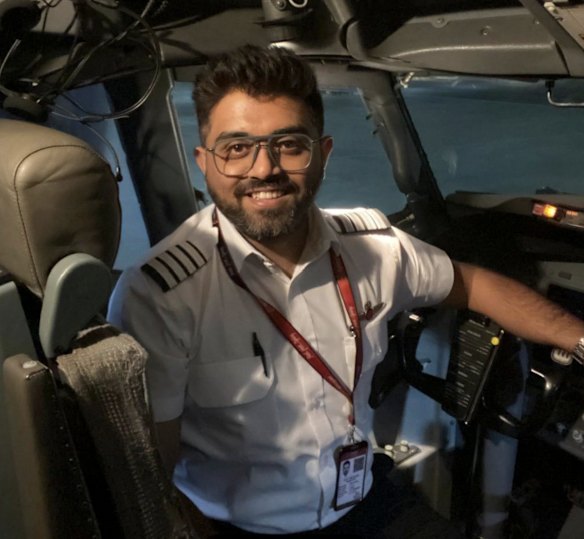
The injured pilot – identified as Indian national Captain Smit Machchhar – received life-saving care from a dentist on board, the passenger said.
9.44am: Plans for emergency landing
Tabuk air traffic controllers receive a distress call, requesting permission for an emergency landing.
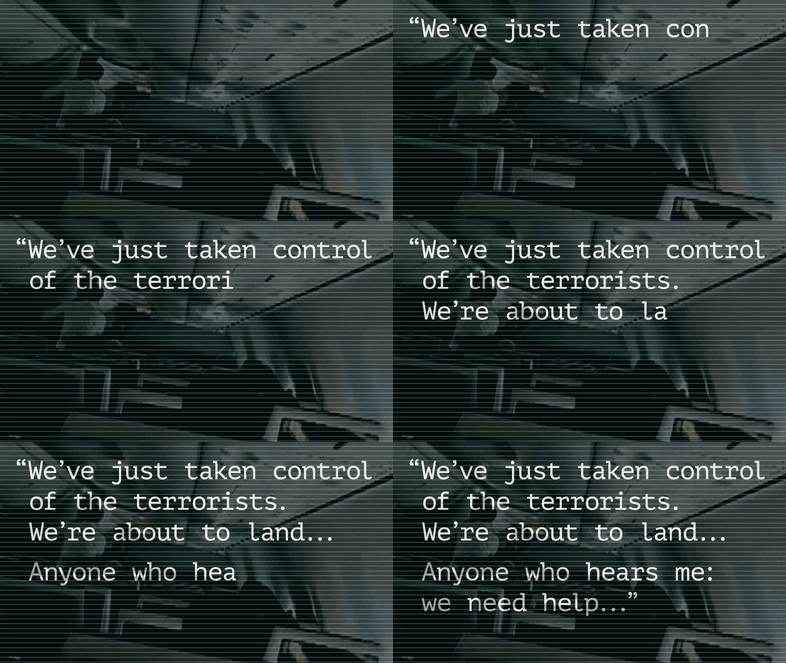
A video circulated by Israeli media appears to show a man on board the flight with blood on his face.
“We’re here – the plane – we’ve just taken control of the terrorists. We’re about to land,” he says. A motive for the attack has not yet been established.
The aircraft’s transponder switches back to squawk 7700, the code for “general emergency”.
“After the situation was brought under control, returning to 7700 would make sense because the aircraft was still dealing with a serious emergency, including injured flight crew and the condition of the aircraft,” Hijazeen said.
The Saudi Gazette reports the aircraft’s safe landing at Tabuk’s Prince Sultan bin Abdulaziz International Airport – 440 kilometres from its intended destination – and injuries to the captain and co-pilot.
A photo taken of the aircraft after its emergency landing showed it had sustained damage to its tail fin, and a part of its rudder was missing.
The rudder is used primarily for yaw – the side-to-side rotation of an aircraft’s nose around its vertical axis – and directional control. It is an important flight control surface, but not the only one built into the aircraft.
“Partial loss of the rudder does not necessarily make the aircraft uncontrollable, but it certainly adds another significant challenge,” said Hijazeen.
“What is remarkable is that the pilots taking control were dealing not only with an extraordinary situation onboard, but also an aircraft that had experienced extreme changes in altitude and apparent flight control damage.
“To then stabilise the aircraft, assess its condition, divert and land safely would have required a very high level of situational awareness and help from air traffic control.”
Flydubai releases a statement confirming an altercation had occurred. The airline then cancels its flights to and from Israel for the duration of the investigation.
7.34pm: Repatriation flights
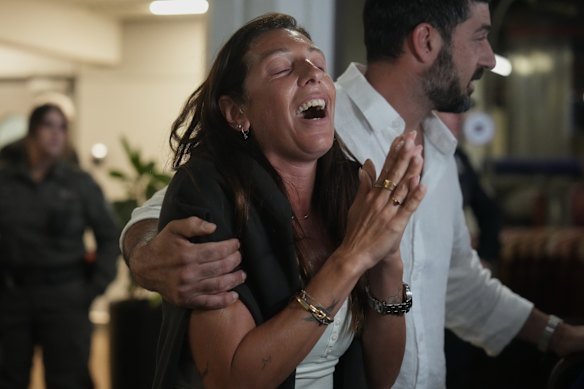
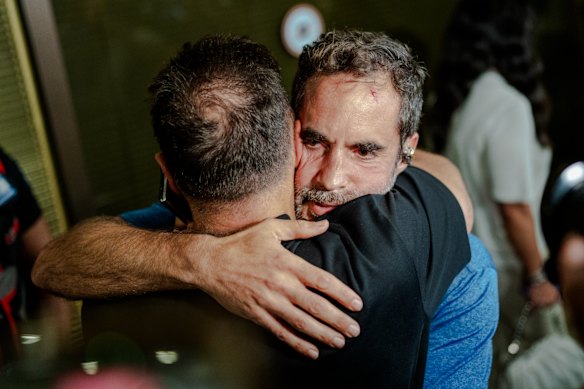
One of two flydubai repatriation flights carrying passengers from FZ1073 arrives at Ben Gurion International Airport, met by Israeli Prime Minister Benjamin Netanyahu, anxious families and waiting ambulances.
The captain is taken to hospital in Tabuk City. The Indian embassy in Riyadh, Saudi Arabia, say he is receiving “necessary medical attention” and is in a stable condition.
In a video message issued by his office before the repatriation flight landed, Netanyahu says the co-pilot stabbed the pilot and attempted to crash the plane.
“I salute these heroes who demonstrated extraordinary resourcefulness and courage. They saved many lives and prevented a major disaster,” Netanyahu said.
Photos shared to his office’s X account showed Netanyahu’s meeting with Yaniv Hayoun, the Israeli passenger since hailed as a hero for breaking into the cockpit.
“We are a nation of lions, aren’t we?” Hayoun, his white shirt covered in blood, tells Netanyahu when asked how he did it.
Hayoun said the attacker was trying to disable the plane, and he called out to “the Israeli guys with us on the plane”, who helped him pin down and secure the attacker with his own zip ties and headphones.
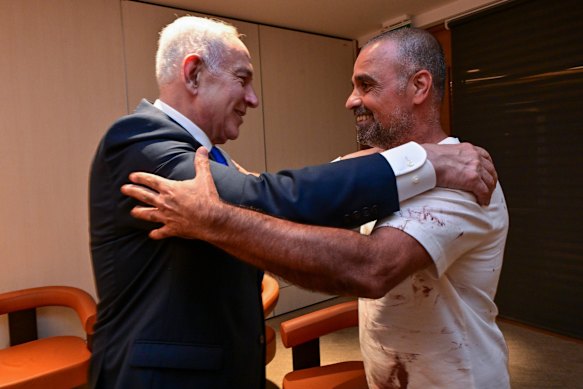
Hayoun also said he pulled the aircraft’s controls.
“You pulled the controls?” Netanyahu asked.
To that, Hayoun replied: “I watch Air Crash Investigation, Mr Prime Minister.”
What happens now?
The pilot who carried out the attack is being investigated in Saudi Arabia. Netanyahu said he would likely be taken to the United Arab Emirates and Israel would “likely” participate in the probe.
Though Israeli Minister of Defence Israel Katz called the incident an “attempted jihadist terror attack”, and US President Donald Trump said it seemed “the co-pilot was perhaps a terrorist or perhaps a whack job”, the attacker’s precise motive is not yet known.
Days ago, Netanyahu warned of indications of an attack during Israel’s upcoming elections. Opposition figure Yair Lapid, who is running against Netanyahu, cast doubt on this and has declared Netanyahu’s warning as fearmongering.
A spokesperson for the Israeli prime minister’s office told Reuters that security checks on pilots flying into the country would be increased.
Credits
- Words: Bronte Gossling
- Graphics: Jamie Brown, Matt Willis and Nathan Perri
- Video: Margaret Gordon
- Presentation: Matthew Absalom-Wong
- Editors: Chris Paine, Jacqueline Lunn
- Sub-editor and producer: Lia Timson
Get a note directly from our foreign correspondents on what’s making headlines around the world. Sign up for our weekly What in the World newsletter.
KioskNews shows a cleaned-up reading view extracted from the publisher’s page — the original always lives on their site, not ours.