Two elections, one relationship: What the votes mean for US-Israel ties- opinion
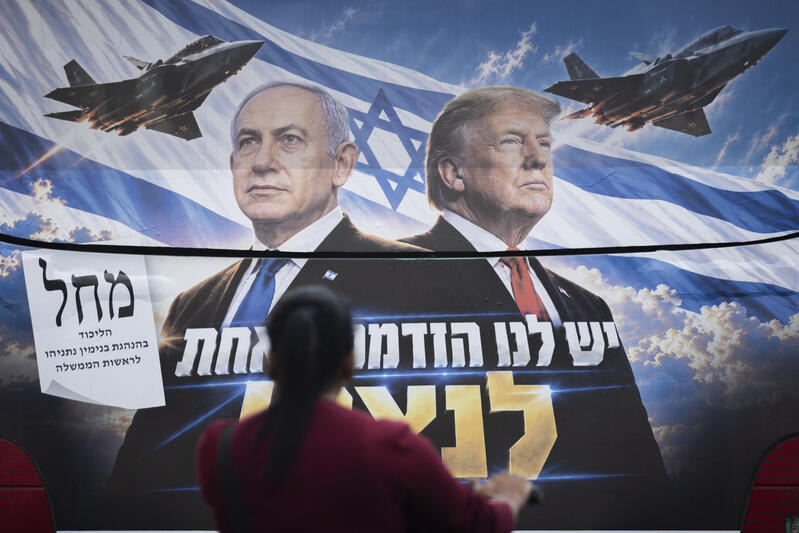
This is a unique moment. Within the span of a week, Israelis and Americans have gone to the polls. Israelis voted for a new Knesset, which will determine who serves as Prime Minister, while Americans are voting for Congress, not the presidency.
The new reality shaped by the American and Israeli votes will affect the relationship along three central dimensions.
The first dimension is institutional: American scrutiny of Israel. A Democratic victory, currently anticipated in the House and possibly in the Senate as well, could turn Congress into a daily arena of confrontation for Israel.
The composition of Congress determines who controls the committees, and if Democrats win a majority, public hearings on Israel can be expected on a range of issues, such as how American weapons are used in the Gaza Strip, settler violence, and alleged Israeli violations of international humanitarian law.

One clear example came in July, when 103 House Democrats, nearly half the caucus, voted for an amendment to eliminate $3.3 billion in annual US military aid to Israel.
Would such measures be enacted into law? Not in the very short term, since they would require Senate approval and could be vetoed by the president. But that is not the whole story.
A House majority controls appropriations, which can be used to condition aid, add reporting requirements, and force recurring votes on issues crucial to Israel’s security.
Such conduct may set perilous precedents, eroding the traditional consensus around US-Israel relations and, in turn, contribute to turning the debate over limits on aid into a routine part of the discourse ahead of the 2028 Presidential elections.
Hence, what was once unthinkable in Washington, a real debate about conditioning aid to Israel, may become a regular part of the agenda.
The second dimension is the institutional anchoring of US-Israel relations in a new MOU. The current agreement provides Israel with ~$3.8 billion in military aid per year over 10 years. It expires in 2028, and negotiations on a new agreement are already underway. The next Israeli government will need to carry it over the finish line.
The stated direction shifts from American assistance to a partnership model for three reasons: changing attitudes toward Israel in American society; Israel’s need to be more self-reliant after October 7; and changing international norms in a world where interests rather than values take center stage.
Accordingly, in the next memorandum of understanding, Israel’s leadership should aim to phase out aid gradually while building a partnership of equals. That means joint ventures and co-production across R&D, technology, and academic cooperation, alongside continued cooperation in traditional fields such as military affairs and the defense industries.
In this respect, it is worth noting that the relationship benefits both sides. While discourse on the aid model often emphasizes a dynamic in which the US gives and Israel receives, America benefits from the relationship economically, strategically, and in matters relating to Great Power Competition.
The third dimension is the ability to bridge expectation gaps. The Israeli public has moved to the Right. The shift did not begin on October 7, 2023, but it was accelerated by the events of that day.
While the election results show a deadlock between the pro-Netanyahu and anti-Netanyahu blocs, boxing the Israeli public into two neat categories ignores the variance within each bloc. Naturally, the rightward shift is most evident on security: Israelis see Iran as an imminent threat, and an overwhelming majority of Jewish Israelis supported what they regarded as a war of no choice with Iran.

In the US, however, the public is moving in a different direction, with only minority support for what is widely perceived there as a war of choice. The same holds for Israeli policies on Lebanon, Syria, and the Palestinian front. The gaps are even wider between Israelis and Democratic-leaning American voters.
A new Israeli government, regardless of who is at the helm, will be constrained by two factors: the aforementioned rightward shift of the Israeli public, and its coalition partners. If expectations in Washington exceed what is achievable here in Israel, the disappointment will be harsh.
Worth remembering, however, is that Democrats are not a monolith, and not every lawmaker who criticizes Israel’s policies supports ending aid or undermining security cooperation. That is why both sides need to sharpen their diplomatic tools, cultivate lines of communication, and opt for direct dialogue, at both the leadership and societal levels.
Finally, worth noting at this unique point in time is that regardless of the results in the US, midterm elections two years into the incumbent president's term are often perceived as a launching pad for the next presidential campaign. As such, President Donald Trump is likely to redirect much of his remaining presidential energy toward building his legacy in the international arena.
This may lead to efforts to advance a comprehensive arrangement with Iran, order further military action against it, accelerate Trump's plan for the Gaza Strip, or revive the regional normalization process.
Efforts in any of these directions will naturally impact Israel substantially and present its new leadership with an opportunity and a threat. The opportunity is in moving toward a new Middle East architecture that will be strategically favorable to Israel's security and long-term prosperity, backed by an ambitious president seeking to leave a historic mark.
The threat of American pressure to accept political compromises or join military campaigns is designed according to the timetable and priorities of the United States.
These are turbulent times for both democracies, at home, regionally, internationally, and in their dealings with one another. The US-Israel relationship has weathered such turbulence before, and it can do so again, if leaders and publics on both sides choose candor over comfort.
The goal should be a partnership resting not on dependence, but on shared strength and purpose.
Dr. Michal Hatuel-Radoshitzky is a senior advisor and director of the International Program at MIND Israel; an adjunct lecturer at Tel Aviv University and Reichman University; and a member of Forum Dvorah: Women in Foreign Policy and National Security.
KioskNews shows a cleaned-up reading view extracted from the publisher’s page — the original always lives on their site, not ours.