The US-China tech war has evolved since the last Xi-Trump summit. Who has the edge now?
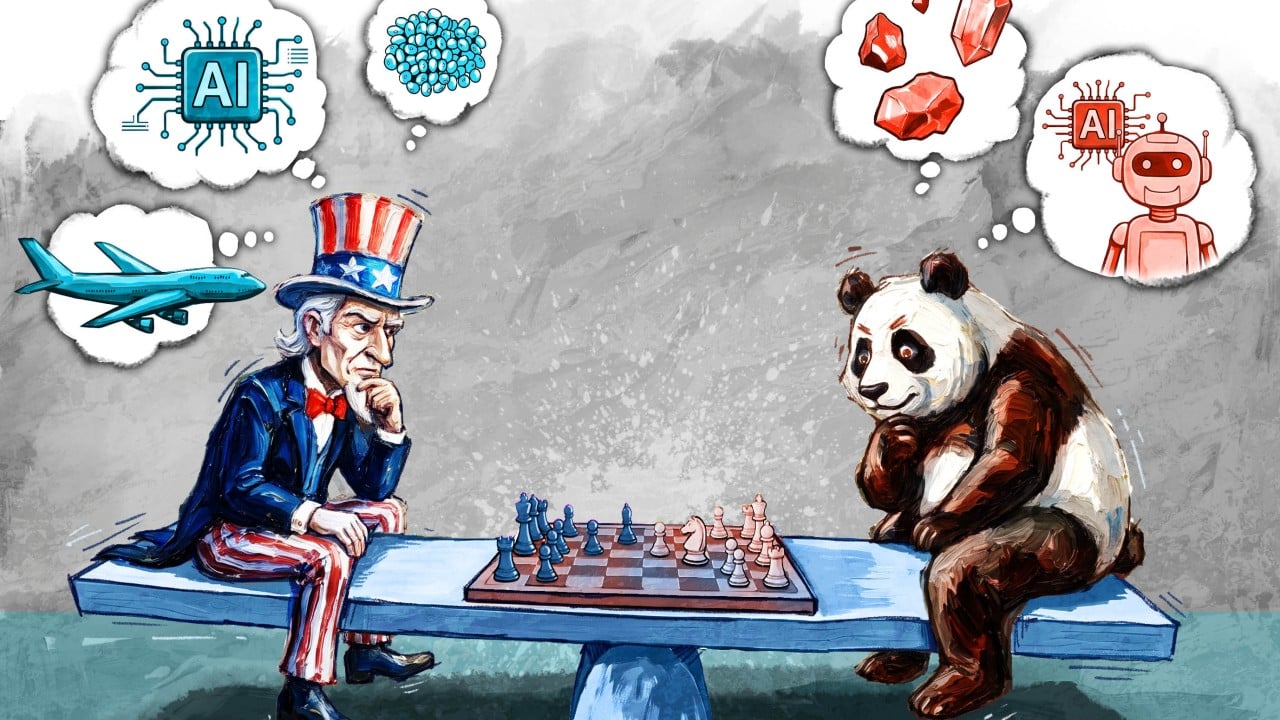
When the presidents of the United States and China meet in Washington, the world will be watching to see whether their two countries can make good on their agreement to work towards “constructive strategic stability”. In the fourth part of this series, Sylvia Ma looks at the economic and technological levers available to both in their protracted rivalry.
For years, Huawei Technologies has served as a central battleground in the contest between the world’s two largest economies. As Washington tightens restrictions, the Chinese tech giant continues to find new ways forward – to the point that “becoming Nvidia” is now an internal goal.
Days before President Xi Jinping’s trip to the United States for a high-stakes meeting with his American counterpart Donald Trump, Huawei announced a major technological breakthrough: a system that it said was capable of enabling up to 1 million processors to operate as a single, unified computer.
The announcement followed earlier semiconductor advances, namely the Tau Scaling Law and LogicFolding architecture, which aim to deliver high-performance chips without relying on the most advanced lithography tools, whose sale to China remains restricted.
KioskNews shows a cleaned-up reading view extracted from the publisher’s page — the original always lives on their site, not ours.