"Agreement Of Necessity": German Envoy On India-EU Free Trade Deal
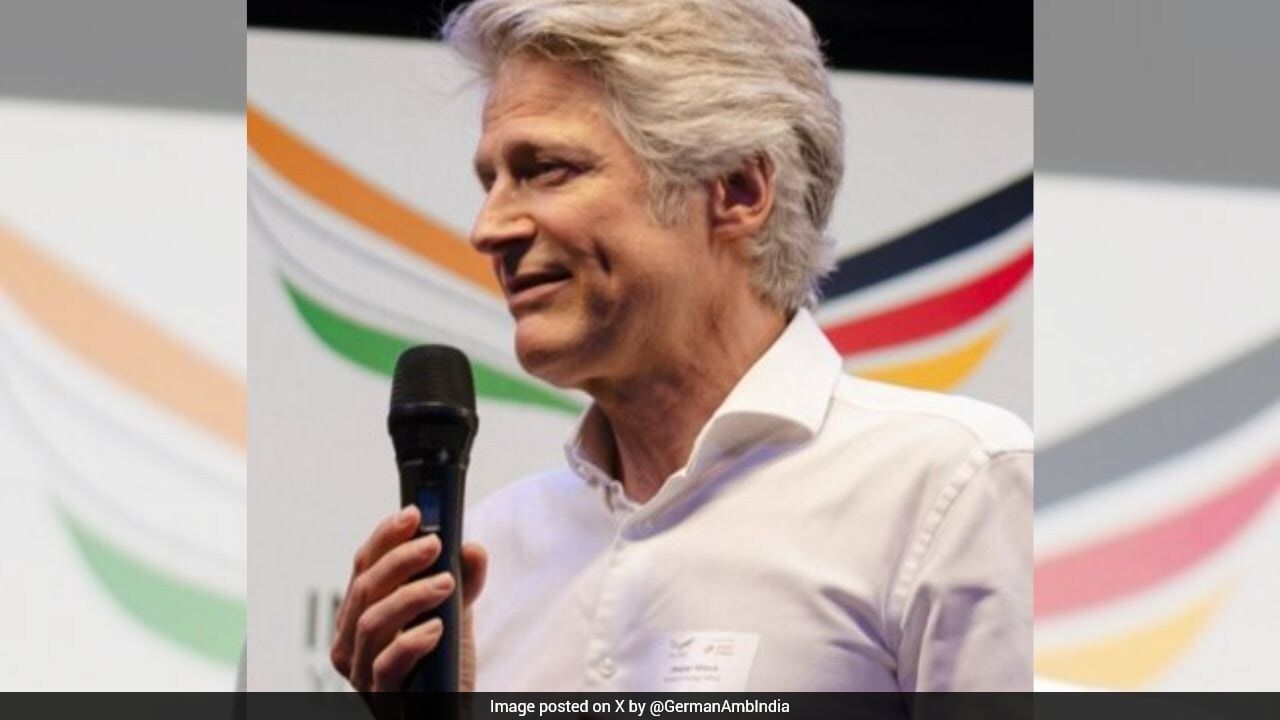
In his first exclusive interview since returning to India as Germany's Ambassador, Dr Jasper Wieck laid out an ambitious three-pronged roadmap for the Berlin-New Delhi partnership, anchored by a landmark free trade agreement, deepening defence industrial cooperation, and a sharp call for pressure on Russia to end the war in Ukraine.
Speaking to NDTV's Foreign Affairs Editor Aditya Raj Kaul, Wieck, no stranger to India, having previously served as Deputy Chief of Mission here, said he was struck by the pace of change on his return. "It's amazing to see the development of this country," he said, citing his recent trip to Mumbai as proof of the economy's vibrancy.
"An Agreement Of Necessity"
The centrepiece of Wieck's agenda is the EU-India Free Trade Agreement, concluded after nineteen years of on-and-off negotiations. Asked why the deal finally came together now, Wieck offered a candid geopolitical explanation: for years the agreement was seen as a matter of choice, but the shifting global order has made it one of necessity. "In order to be successful in this more and more multipolar world, you have to have a very strong economy, you have to have strong armed forces, but you also have to have partners around the world," he said.
Signing is expected by the end of this year, with the agreement likely to come into force sometime next year. Wieck said experts believe bilateral trade turnover could double within five years once it is enacted, and revealed his embassy is already actively "matchmaking" companies from both sides, noting that within six weeks of the deal's conclusion, several strong German business delegations had already travelled to Delhi to position themselves ahead of implementation.
Migration And The Student Boom
Wieck flagged migration and student mobility as his second priority, pointing to the Migration and Mobility Pact and Germany's increasingly open universities. The numbers, he said, tell their own story: Indian student enrolment in Germany jumped from 60,000 to 70,000 in a year. But he was careful to add that scaling the programme responsibly is now the embassy's job, ensuring "both sides... are satisfied, so that it really becomes a success," with mechanisms adjusted as needed.
Defence: Interoperability, FDI And A "Same Boat" Moment
On defence, Wieck detailed a partnership that has moved well beyond symbolism. He pointed to growing port visits, German Navy and Air Force participation in India-hosted exercises, including the upcoming Tarang Shakti and a newly stationed German liaison officer at the Indo-Pacific Information Fusion Centre in Delhi, aimed at strengthening maritime domain awareness.
The most consequential development, he said, is the Defence Industrial Roadmap, signed by both countries' defence ministers in April this year, which opens the door to technology transfer and 100 per cent foreign direct investment from Germany into India's defence ecosystem. Framing it in stark terms, Wieck said both nations are being forced to build up their militaries "very vigorously" because of a deteriorating strategic environment, which, he argued, makes India and Germany natural partners. "We are somehow sitting in the same boat," he said, pointing to potential joint production for both countries' armed forces and for export to third countries.
On Russia-Ukraine: "One Person Who Can End This War Tomorrow"
Pressed on India's role in the Russia-Ukraine conflict, Wieck praised Prime Minister Narendra Modi's consistent line that "this is not an era of war," and his outreach to both Kyiv and Moscow. Germany, he said, wants the war ended "the sooner the better," citing the staggering human cost, hundreds of thousands of Russian and Ukrainian soldiers and civilians killed, as well as its strategic and economic fallout, including Russia being pushed closer to China and global spikes in grain and fertiliser prices.
His sharpest line of the interview was reserved for Moscow: "We believe there's one person who can end this war tomorrow, and that's the Russian president." Since Putin is "for the time being, apparently, not ready," Wieck argued the answer is to raise the cost of continuing the war, through EU sanctions, halting Russian oil imports, and broader international alignment, while simultaneously sustaining support for Ukraine.
Bottom Line - Indo-German Partnership
From a mega trade deal to defence co-production and a pointed message to the Kremlin, Wieck's interview signals that Germany sees India not as a peripheral partner but as a central player in navigating what he repeatedly called an era of "unpredictability" and "great power competition."
KioskNews shows a cleaned-up reading view extracted from the publisher’s page — the original always lives on their site, not ours.