More young Singaporeans seeking recovery treatment at longevity-related wellness centres and clinics
SINGAPORE – Once every two weeks, 24-year-old Garrison Lim spends an hour going for a sauna, cold plunge, magnesium salt bath and red light therapy session.
These sessions – marketed as ways to promote longevity – help speed up his physical and mental recovery, as well as support his overall well-being, said the occupational therapy assistant.
The sessions at House Longevity and Sauna Bath House at Singapore Land Tower have become part of his routine since June. He has spent $400 so far.
House Longevity, which opened mid-2026, is among at least eight longevity-centred wellness centres and clinics that have cropped up here in the past four years. It markets itself as an urban recovery house for busy professionals and wellness enthusiasts, along with its sister brand, Sauna Bath House.
Some of these establishments that The Straits Times spoke to noted a growing trend of young customers, many of whom are keen to prioritise muscle recovery and cognitive well-being in pursuit of ‘longevity’.
House Longevity co-founder Chew Zhi Wei, 36, said he began the brand with his wife, Stephanie Ong, after experiencing burnout.
Through saunas and other wellness treatments, the medical doctor, who trained in Singapore and previously worked at a public hospital here, discovered the importance of psychological recovery.
The centre’s brand manager Lukas Kok, 26, said there is a growing trend of younger people like him wanting to prioritise their wellness and being willing to commit time and money to it.
The majority of House Longevity’s 50-odd clients are in their early 30s, he said.
Kok said affordability and the non-invasive nature of House Longevity’s services are factors that attract clients. “We do not want people to just follow the trends and end up causing more harm than good,” he added.
When asked how House Longevity’s treatments relate to longevity, Chew said they aim to target the root cause of the problems people experience such as poor sleeping habits or anxiety.
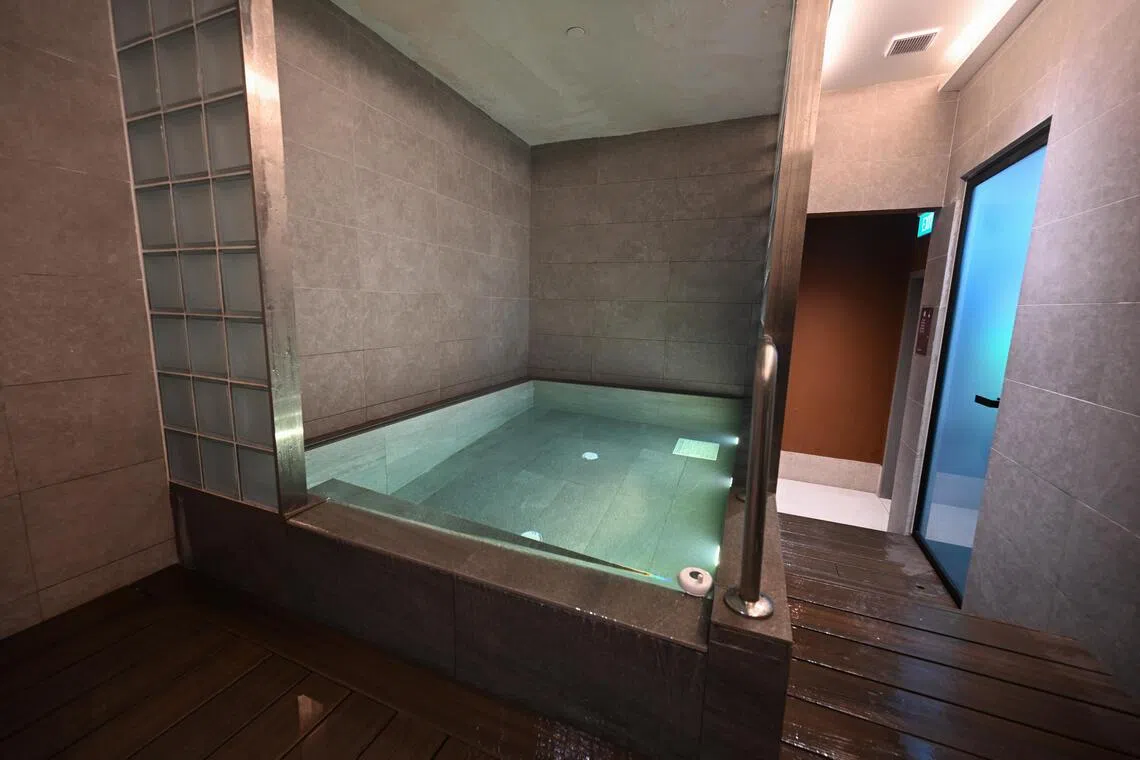
The cold pool at House Longevity studio. For some youth, the sessions are about more than just physical and mental recovery.
ST PHOTO: AZMI ATHNI
Some young people like Lim hope that by prioritising their well-being, they can continue doing what they enjoy for longer.
Content creator Michelle Layanto, 28, said she has been interested in nutrition and wellness since she was 20, with the aim of prolonging her healthspan.
“I believe deeply that everything you do for your body compounds. The small, consistent choices you make in your 20s and 30s - nutrition, movement, recovery - show up decades later in your skin, your joints, your bones, your energy.”
Layanto said some might see it as being afraid about ageing, but they should instead see it as ageing well.
“I think younger people are waking up to that, and centres like House of Longevity are making it accessible and approachable with their affordability and by not being clinical or intimidating,” she added.
Chen Lou, an associate professor at Nanyang Technological University who studies consumer psychology, said young people are increasingly exposed to the idea of “healthy longevity”, particularly through social media.
It fits into a broader culture of younger consumers hustling, seeking self-improvement and self-optimisation, she added.
“These treatments are also quite experiential and ‘shareable’ so they can become not only a wellness activity, but also part of someone’s lifestyle and social identity that is sharable online and on social media,” said Lou.
Chi Longevity’s chief medical operations officer Shamandree Govender, also a doctor by training, said more young clients have been visiting the longevity clinic since its founding in 2023.
This might be because they are now more informed and in touch with their health, she added.
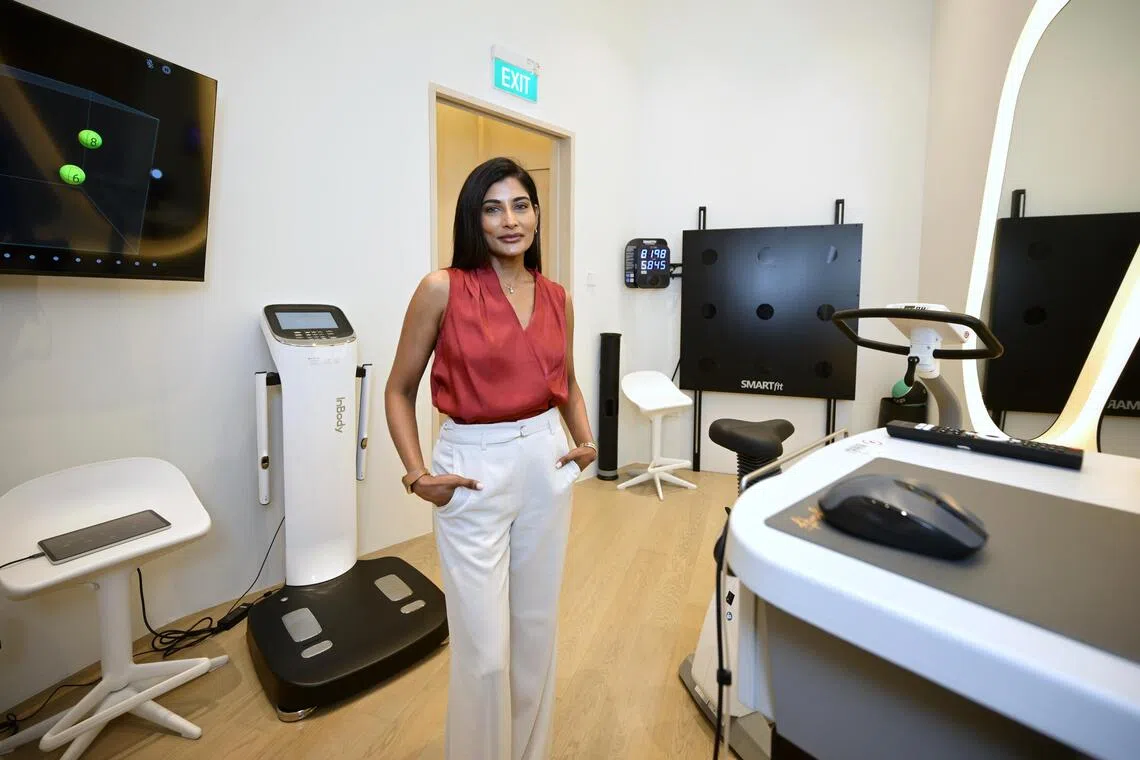
Chi Longevity’s chief medical operations officer Shamandree Govender said young people are now more informed and in touch with their health.
ST PHOTO: NG SOR LUAN
“They have access to a wide range of data from their wearable technologies, from their sleep, diet, movement and nutrition,” she said, adding that young people also tend to ask better questions about the needs of their mind and body.
Starting such programmes earlier in life gives young people more time and greater opportunity to intervene in their health trajectories, she added.
They also often want to understand their health trajectory in relation to their family’s medical history, she said, adding that her clients range from people in their early 20s to older people. She declined to provide specifics on the number of younger clients.
Yulise Wang, general manager at local wellness facility REKOOP, said the centre has about 300 clients, 90 per cent of whom are aged between 30 and 40.
“With social media, (young people) have more exposure to the services that we offer, so we have many curious young people who come to us to try the sessions,” she said.
Branded as a biohacking studio, REKOOP, a technology-driven wellness studio founded in 2024, offers services such as oxygen and red light therapy, cryotherapy, and lymphatic drainage.
Clients who come for sessions with longevity in mind usually go for the oxygen and red light therapies, said Wang.
Singapore University of Social Sciences associate professor Kelvin Tan, who studies gerontology, said it is never too young to start focusing on wellness for longevity.
Foundational cellular changes related to ageing begin in one’s 20s and 30s, he added.
Treatments also need to work in tandem with proper sleep, diet, exercise and also social connectedness, Tan said.
While sleep is an underpinning factor for all sorts of restoration, including brain and tissue repair, such treatments can be appealing as complementary wellness measures at an affordable cost, he added.
Recent digital innovations such as artificial intelligence and personalised health care stimulate curiosity and interest in aspiration for longevity, he said, noting that the Republic is one of the world’s blue zones, with an increasing number of centenarians.
Pre- and postnatal coach and personal trainer Alyaa Rauff, 32, said she feels more alive and refreshed after recovery sessions such as red light therapy.
She tried it for the first time after a 6km run in July, with a session at O2 Light Bar. She did not experience the usual fatigue she usually does after a workout, she said.
Though not a fan of cold plunges, which she said leaves her with lingering headaches, Rauff said she enjoys saunas and red light therapies.
She said: “There are constantly new recovery and wellness treatments coming up, so I’m always curious to see what is out there and what might be worth exploring.”
KioskNews shows a cleaned-up reading view extracted from the publisher’s page — the original always lives on their site, not ours.