‘VisionQuest’s Most Misunderstood Character Finally Gets Redemption in Episode 6

Taylor Gates is an Indiana native who earned her BFA in Creative Writing from the University of Evansville. She fell in love with entertainment by watching shows about chaotic families like Full House, The Nanny, Gilmore Girls, and The Fosters.
After college, she moved to Los Angeles to pursue a career as a writer, editor, and filmmaker. Today, she’s a sucker for dramedies — especially coming-of-age stories centering around complex female and LGBTQ+ characters. She has been with Collider since May 2022.
Sign in to your Collider account
This interview contains spoilers for VisionQuest Episode 6.
Summary
- In an interview with Collider, Todd Stashwick breaks down how Paladin’s tragic past influences his motivations.
- The actor unpacks Paladin’s complex, changing dynamics with Tommy and Vision throughout Episode 6.
- Stashwick also discusses the show’s coolest gadgets and stunt scenes.
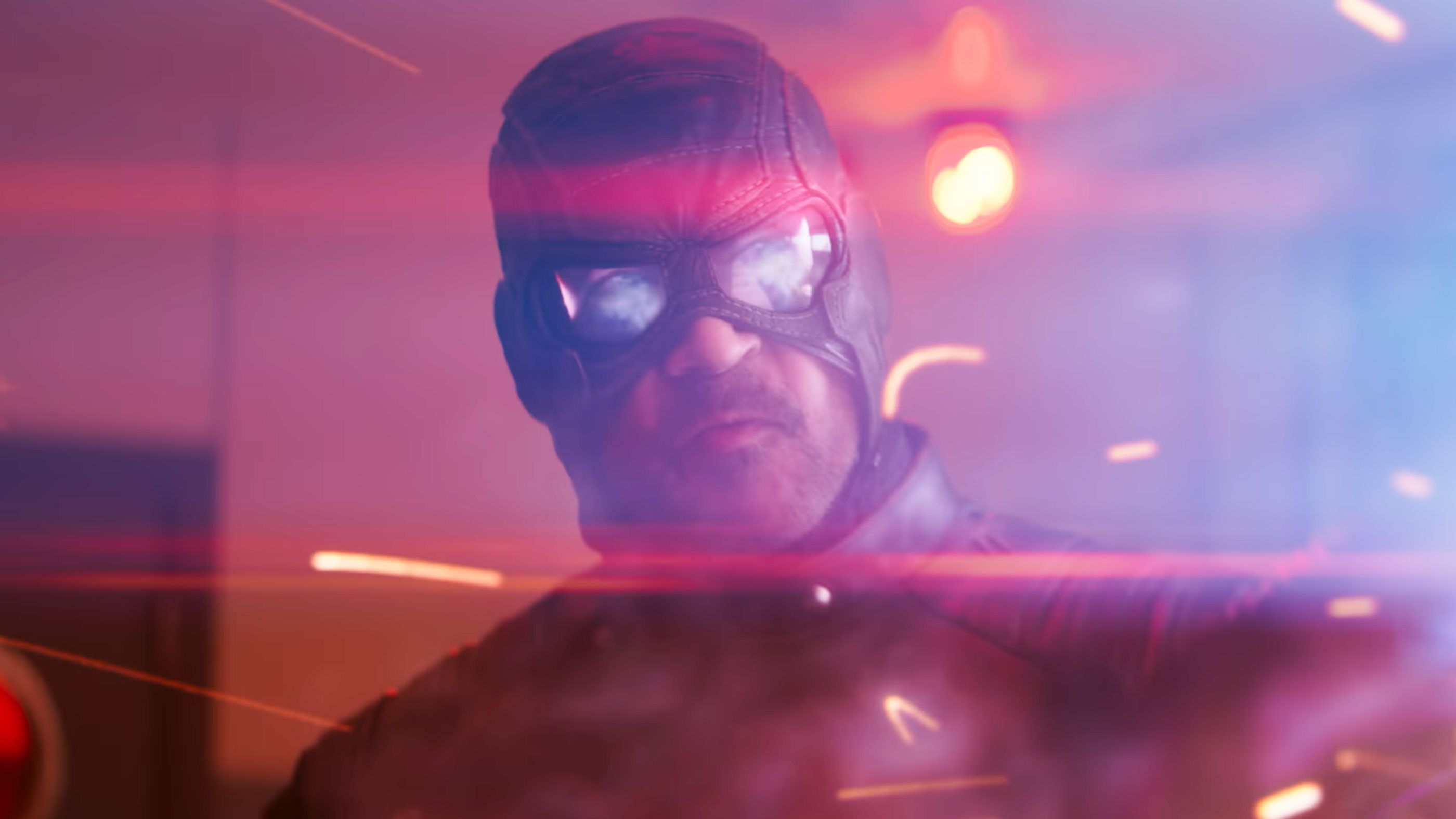
Todd Stashwick has become a staple of both the sci-fi genre and Terry Matalas’ work, appearing in 12 Monkeys and Star Trek: Picard, so it came as no surprise when it was announced that he would be involved in VisionQuest. Even those familiar with Stashwick’s talent, however, were likely taken with just how phenomenal he is as ruthless bounty hunter Paladin. Sure, he kicks some serious butt and has cool gadgets and gizmos galore, but he also has a complicated, deeply tragic backstory that echoes both Vision (Paul Bettany) and Tommy’s (Ruaridh Mollica) stories in the most genius, heartbreaking ways.
While a sliver of Paladin’s past was revealed earlier in the season, Episode 6 allows his complex character to take center stage. He must grapple with guilt over kidnapping Tommy to Madripoor, Vision threatening his daughter (and bringing up painful memories in the process), and even the appearance of Raza Hamidmi Al-Wazar (Faran Tahir). And that’s not even mentioning the fact that his handler (Diane Morgan) has just quit on him after Edith (Emily Hampshire) made her realize she deserved better working conditions. He may not be having a good time, but viewers sure are as they get to know him better.
Collider got the chance to talk to Stashwick about his work on the show. During the conversation, he discussed how Paladin’s traumatic childhood impacted the man he is today, his character’s layered and ever-shifting relationship with Vision, the show’s coolest gadgets and stunts, and much more.
‘VisionQuest’s Todd Stashwick Breaks Down Paladin’s Tragic Past
“Paladin is very much a cracked mirror of Vision in many ways.”
COLLIDER: In Episode 3, we see a flashback to Paladin's childhood and learn that he had a very strained relationship with his father, who told him that he was weak. How did knowing that inform how you approached this character?
TODD STASHWICK: It's interesting because there's Todd, the actor, who's crafting a role, and then there's Todd, the guy who's trying to get a big, broad view of the story as a whole. We see how Paladin is very much a cracked mirror of Vision in many ways, and understand that he had a father who didn't want him, and then his new father was forged out of violence. Whatever my “real” dad did wrong to be on the previous Paladin's hit list probably clearly bled over into how he treated me. So Paladin really didn't have a childhood — he had training — but he had somebody who wanted him and somebody who chose him, so he felt a sense of belonging. And then he felt a sense of allegiance to the code that he was raised with, but he uses that code to keep himself apart from people, as opposed to Vision. That's why I say cracked mirror because Vision uses his code — his coding — to try to connect to people.
The writers did such a beautiful job of showing two different sides of a coin. I was programmed by my father in the same way that Ultron somewhat programmed onto Vision. From a narrative standpoint, it's gorgeous. From an actor standpoint, Paladin's code saved his life. Who knows what sort of abuse he would have continued to suffer with his real dad? It's quite heartbreaking, and I think that's what's fascinating about this character who comes out of the gate as this sort of steely, brutal detective. Then you start peeling away the layers and going inside his mind. Literally, we go into his mind space. The writers did such a beautiful job of going, “There’s power in the mind space, and here are the things that walk around in there.” The foundation for Paladin is that the code will save your life.
Yeah, those parallels are so interesting. There’s also another layer of Paladins being this bloodline, but he was adopted into it. How do you think that aspect informs how he operates?
STASHWICK: What he realizes is that blood isn't everything. Because the person who showed him the most compassion and kindness wasn't blood-related to him. It's found family, right? That being said, as we go further, we find out that he took a stab at having a normal life, which ended tragically. His allegiance to his code puts people he loves in danger. Look at what I did to Tommy. It puts Tommy in danger because of who Vision is. There are so many reflections on who he is.
But I think the biggest thing for Paladin is the fact that found family is important, especially because he is firmly resolved in staying as far away from his child — his adult daughter now — to keep her safe. But he still has some relationships. The closest thing he has to a friend is Diane Morgan’s character. It’s fascinating. He keeps himself isolated as a lone wolf because he thinks it keeps people safe. He knows what he does for a living, and he knows how dangerous the world is.
Todd Stashwick Talks Working With Diane Morgan on ‘VisionQuest’
“It’s the closest thing he has to a friend.”

You mentioned the dynamic with his handler. You and Diane play off each other so well. It’s so much fun to watch. How did you develop that relationship? Because you don't really get to be in the same room very often in the show.
STASHWICK: It's funny because when I was on set talking to her in my first introduction, she had been cast, but she wasn't able to be there on set that day. So we improvised a little bit, knowing her strengths as a comedian and knowing her style and her vibe. That's why the first thing he says to her is, “Oh, you're awake.” Because she always has that wonderful laconic, sleepy delivery that’s kind of half-bored by everything she's doing. That's why we kind of set the stage for their almost brother-and-sister bickering. When he says, “The purple space sack,” she says, “Did you just compare Thanos to a scrotum?” and he goes, “I mean…” They have this lovely rapport and this lovely relationship. Again, it's the closest thing he has to a friend.
When Diane was doing a lot of her stuff, I was able to go into the room with her and read opposite her to try to recreate versions of what I did when I was on set and give her stuff to play off of, so that’s how we did it. That's what happens in the magic of television — you're in two different locations, but knowing that this is kind of the closest thing he's got to family and a sister, so how would these two relate to each other as a family? Again, it’s also a cracked-mirror version of Vision and Edith.
It's interesting, too, because we see that her accommodations are terrible compared to Vision's AIs because Paladin doesn't trust updates. Why do you think that is?
STASHWICK: My wife caught a bullet that was meant for me. His life is one of threat and danger, and he's pissed off a lot of people. I think, in terms of her accommodations, it still goes back to keeping his daughter safe. The less traceable he is — the less findable — the more mobile he is. He's a moving target, and if updates provide windows to access and find him, it comes back to that subconscious motivation.
Todd Stashwick Unpacks Paladin and Tommy’s Dynamic in ‘VisionQuest’ Episode 6
“He has to try to play this four-dimensional chess.”
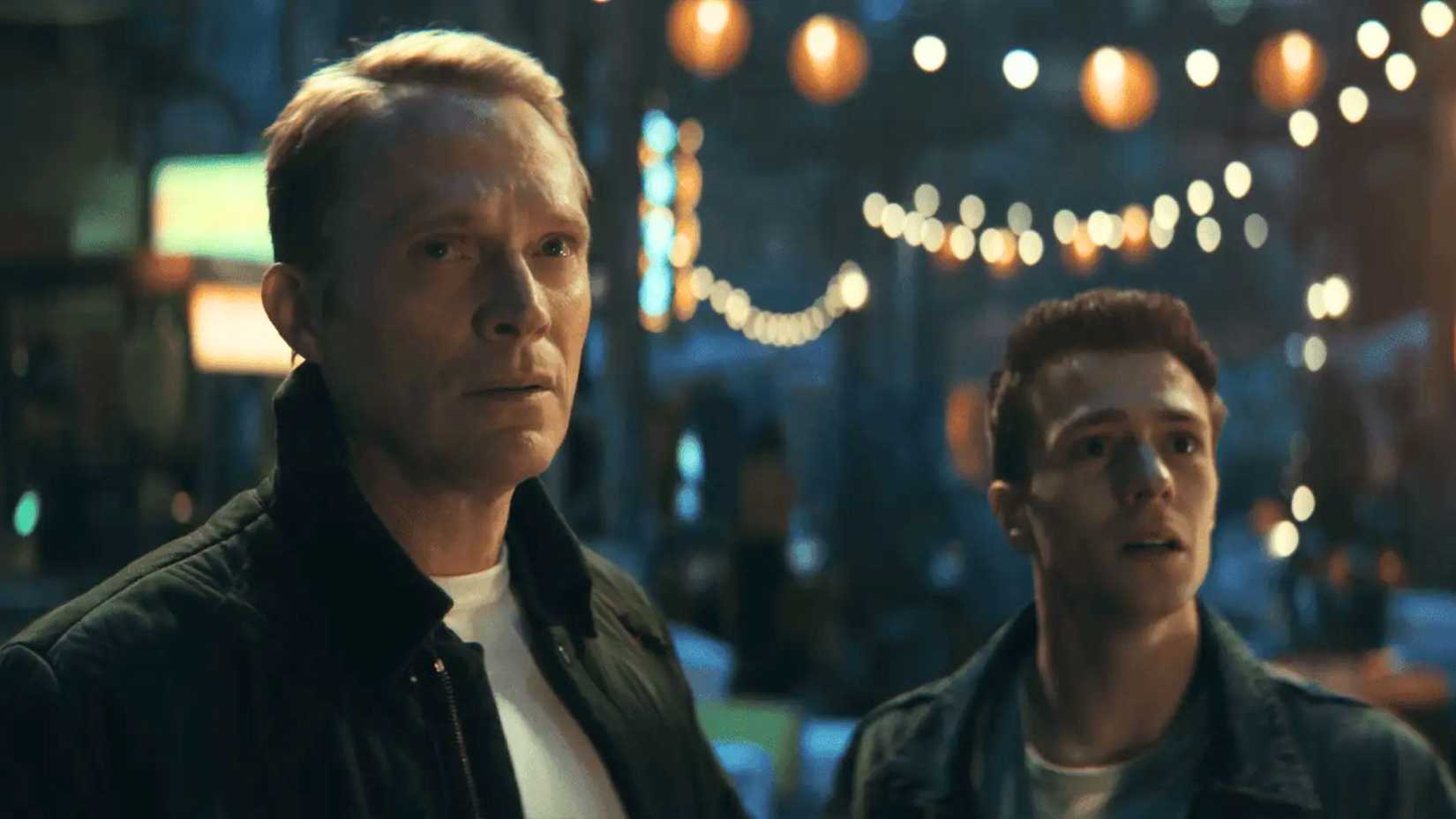
There’s such an interesting dynamic with Tommy, especially in Episode 6, when he puts what we think is an explosive in his arm. We find out it's not actually an explosive. Why do you think he made that choice?
STASHWICK: He's an asshole — he's not a monster. If you watch, he has such regret. You see him dampening his feelings and throwing back the whiskey while Tommy is coming out of anesthesia and whatnot from what he did to him. We are so ruled by our programming and so ruled by our subconscious that I think him being rejected by his father, then being rejected by the client… the code that his stepfather or found father gave him makes this mission vital. Because if Paladin doesn't achieve this — if he doesn't keep his code — what is he? By that point, there's a desperation of validity. There's a desperation of, “This code keeps me safe. It keeps my daughter safe. It keeps me whole. I have to fulfill this mission.” And unfortunately, Tommy gets dragged through that, but it's not a real problem. He feels terrible doing it, but he knows it's not going to blow the kid up. It's awful, but it's also not. He knows that it's all cosmetic — it's all trying to fulfill his contract, and his contract is his oath, his blood, his everything. I think he feels terrible about it. He feels terrible when he's sitting there waiting for Tommy to wake up. He's cycling through all of that regret. He’s a horrible guy, but he's not a bad guy, which is fascinating.
Paladin is the one to tell Tommy the truth about how White Vision was created to kill Wanda. That's such a massively important reveal. I'm curious how you approached being the one to deliver that plotline.
STASHWICK: It’s similar to [my character] Captain Shaw in Star Trek — the audience has a privileged opinion of Vision. Paladin knows the White Vision as a murderbot, so going at him full bore violently is like, “This thing is also a weapon. It was designed as a weapon.” Whether it grew a conscience or not, he's kind of hoping for it because he's using that as leverage to use Tommy to get at Vision, but he knows from the S.W.O.R.D. specs that this is a murderbot, and this is a violent being. He’s a mortal man who's constantly been over his skis going after an Avenger, right? So he has to be smart. He has to try to play this four-dimensional chess.
What's interesting about the bar scene is it flips — the status shifts at the end with Vision, and the last card I play is, “Poor Tommy” when he's choking me. The fact that he didn't kill me means my plan is working. He runs all these simulations, but what he doesn't quite understand is how my brain works. I think there's a wonderful complement when he plays the, “Oh, by the way, your dad is a murderbot sent to kill your mom.” He's trying to push him off his center, and he's trying to work another angle because this is, no pun intended, their endgame. This moment — putting the “bomb” in Tommy's arm — is his Hail Mary, so he's hoping this works. He’s feeling guilty about Tommy, and he’s probably got a little whiskey in his blood, which we saw before. Welcome to Madripoor. He's pounding the Swaford, so he's a man on his heels at this point, trying to fulfill this oath in this code because he's shaken. He's pulling out whatever, like you do. It's emotional manipulation — you're pulling out all the stuff that you think is gonna push the buttons to push somebody off center.
‘VisionQuest’ Episode 6 Sees Vision and Paladin’s Relationship Have a “Paradigm Shift”
“They finally hit a place of mutual respect.”

It's so interesting because Vision and Paladin’s dynamic is not strictly an antagonist-protagonist one, especially when Raza Hamidmi Al-Wazar shows up. They’re kind of on the same side, in a way. What was it like to play that shift in their dynamic?
STASHWICK: I think once we hit that breaking point where he's got me by the throat, and I have the gun underneath his chin, and he kind of holds a mirror up to me and says, “I will do to your daughter everything that you've been doing to my son,” it causes self-reflection on Paladin's part. They both chose not to kill the other in that moment. Everything's happening so fast, and they chose not to kill each other. He knows it's not a real bomb in Tommy. His humanity and world got shaken after the client fired him, and his world got shaken when he realizes, in many ways, he's been using this innocent kid as a pawn. So when I get shot, and I know that the client has now hired somebody else, I think his paradigm shifts. And then, not knowing the full reasons why Vision chooses to save Paladin, it’s “the enemy of my enemy” at this point. Raza and Vision clearly have history. That guy wants Vision, and the client has certainly made himself known, and things go FUBAR.
We always referred to it as the Butch and Sundance scene when we're huddled up, and we're outnumbered out there, and we're gonna go out guns blazing. They finally hit a place of mutual respect. I can't speak for Paul's process, but when Vision went down the rabbit hole and found out all this stuff about Paladin, it humanized him. He wasn't just this Terminator anymore — he was a man protecting his kid — so I think that gave them both pause, and I think they needed each other to get out of that situation, and that's where the tide shifts for both of them.
We get to see Paladin's car, which is one of my favorite set pieces in the whole thing.
STASHWICK: The Palavan. We call it the Palavan.
Oh my god. I love it. That's incredible. I will only refer to it as that from now on. Do you think he has any other gadgets besides the van?
STASHWICK: This is a guy who has had a lot of discretionary money and sway. I mean, he’s been able to hire minions. Doesn't he say he has one in every port? “How many of these vans do you have?” And he says, “One in every port.” There's a bit of Tony Stark there. He has access to Tony Stark-looking drones. They’re similar to what Mysterio used in design. He's got access to drones, he's got access to the van — he's got toys. Especially with the foes he goes up against. He's just a dude. So if he's just a dude, he's gotta be a good fighter. He's got to be a good detective, and he's gotta have gadgets, which is why I love him. I love the fact that he doesn't have superpowers. There's a little bit of Batman there. Both Batman and my parents have been killed, except I went in a different direction. He's got a lot of tricks up his sleeve that you just haven't seen yet.
He is going up against these robots and superheroes. What is it like to film those stunt scenes?
STASHWICK: I was brought to London three weeks early for fight choreography. John MacDonald, an amazing actor and stunt guy, and his team were phenomenal in teaching me how to fight like Paladin. It’s a very raw sort of street fighting, and then all the gun work is very John Wick and a little Terminator. I love it. If I can do something plausibly and realize that I won't get hurt, I will do it. If it's the really cool-looking stuff, that's the trained professionals. In the same way that I don't actually bleed on screen, and it's not real blood, I am more than happy to let people who are far more trained than me do that. But in the scene where Vision kind of punches me across the room, the first part of that, they trusted me. They put down mats, and they yanked me into the air, and I did some of that. I'm always happy to go to the ground and get hit. Terry Matalas loves beating me up in all of the projects that I do with him. There's always some blood on me somewhere. And that whole scene in Episode 6 is a combination of the stunt guy and me, but I learned the whole fight so that I could do it. That’s half the fun of getting to do shows like this, 12 Monkeys, and Star Trek.
VisionQuest is streaming on Disney+.
- Release Date
- 2026 - 2026-00-00
- Network
- Disney+
- Showrunner
- Terry Matalas
- Directors
- Vincenzo Natali, Christopher J. Byrne, Gandja Monteiro, Terry Matalas
- Writers
- Terry Matalas, Cindy Appel, Nicole Falsetti, Christopher Monfette, Matthew Okumura, Michael Taylor
-

The Vision
-

Ultron
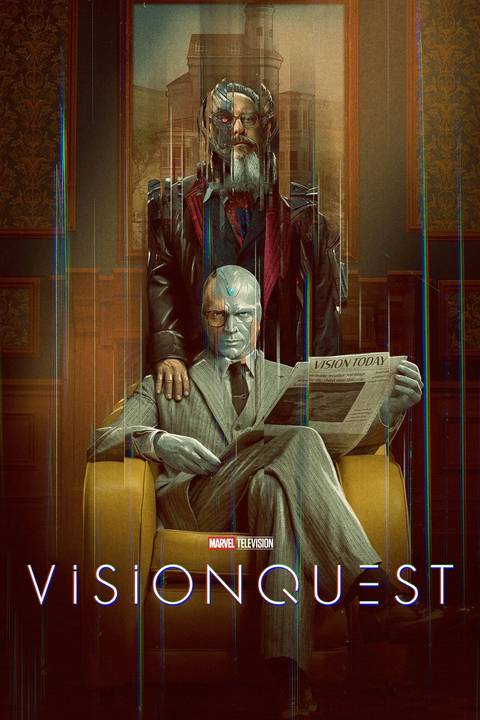
Rebooted after the events that restored his body, Vision has gone into hiding from the people who want to weaponize him. Now searching for purpose, he consults the artificial intelligence personalities embedded in his programming, but a bounty on his head forces him to go on the run with Thomas Shepherd, a mysterious boy who may be the reincarnation of his son.
- Franchise(s)
- Marvel Cinematic Universe
- Main Genre
- Sci-Fi
- Seasons
- 1
- Producers
- Roopesh Parekh
- Franchise
- Marvel Cinematic Universe
- Creator(s)
- Terry Matalas
- Prequel
- WandaVision
- Production Company
- Marvel Television
- Story By
- jac schaffer
- Streaming Service(s)
- Disney+
- Release Window
- 2026
- Executive Producer(s)
- Brad Winderbaum, Kevin Feige, Louis D'Esposito, Mary Livanos, Terry Matalas, Paul Bettany, Christopher J. Byrne, Jac Schaeffer
KioskNews shows a cleaned-up reading view extracted from the publisher’s page — the original always lives on their site, not ours.