K-pop back in China? Summit talks spark ‘hope and apprehension’
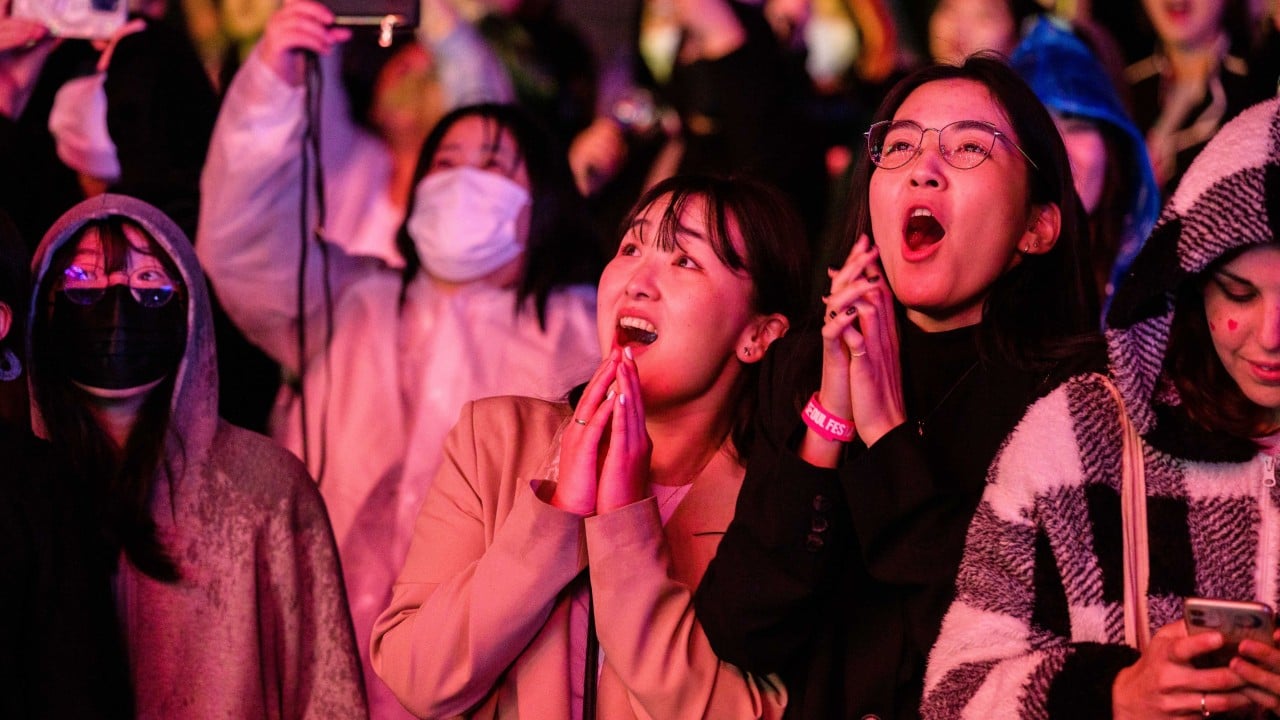
A recent trade breakthrough between Beijing and Seoul has raised hopes that China’s decade-old unofficial restrictions on South Korean pop culture may finally be easing.
It could pave the way for more South Korean films, television dramas and video games to re-enter the Chinese market, but industry observers say the live performances that many K-pop fans have been waiting for could prove much harder to bring back.
“The latest news has certainly caught the industry’s attention, but I don’t think companies are convinced yet that the market will actually reopen,” said Kwon Joon-won, a professor of entertainment management at Dong-ah Institute of Media and Arts.
“Given how long the Hallyu ban has been in place, there is a mixture of hope and apprehension. We will need to wait and see whether these expectations actually translate into concrete developments.”
China’s unofficial restrictions on South Korean entertainment, often called the Hallyu ban, followed Seoul’s 2016 decision to deploy the US-made Terminal High Altitude Area Defence (THAAD) anti-missile system on its territory, a move Beijing strongly opposed.
While Beijing has denied imposing a ban, Chinese regulators reportedly withheld approvals for South Korean concerts, films and television dramas and issued verbal instructions to domestic media companies restricting their use of Korean content.
Large-scale performances by South Korean artists in mainland China effectively stopped afterwards. Only occasional smaller fan meetings and signing events, without musical performances, have taken place in recent years.
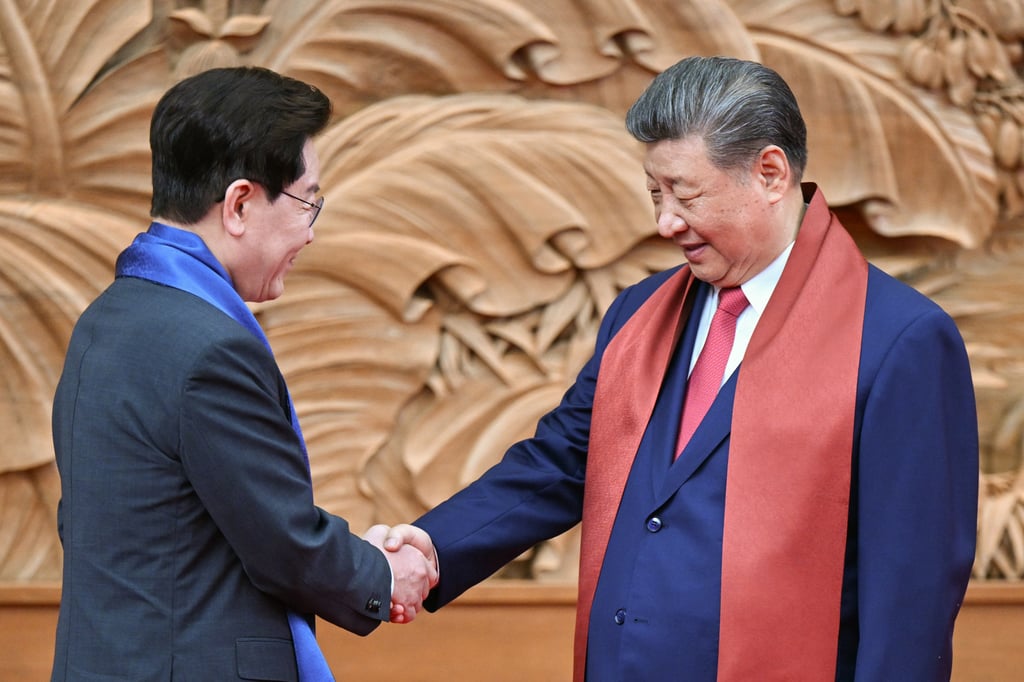
At the Apec summit in Shenzhen on November 18, Chinese President Xi Jinping and his South Korean counterpart Lee Jae Myung announced the substantive conclusion of negotiations to expand their countries’ free-trade agreement to cover services and investment, more than eight years after the talks began.
The agreement, which must still undergo technical and legal reviews before it can be formally signed, includes commitments from Beijing to ease barriers to South Korean cultural exports – a step Seoul’s presidential office described as progress towards lifting the unofficial restrictions.
A door half open
Under the agreement, China would give most-favoured-nation treatment to South Korean companies in content sectors such as films and online games, meaning they would not be treated less favourably than their counterparts from other countries.
Beijing also agreed to apply non-discrimination principles to its preliminary screening procedures for South Korean online games and films, marking the first time it had incorporated such provisions into a trade agreement.
The deal expands the scope of bilateral audiovisual co-productions to include television dramas, animation, entertainment programmes and documentaries, potentially creating new opportunities for joint productions.
However, there is no provision requiring China to approve performances by South Korean artists, and permission from local cultural authorities is needed to stage commercial shows in the country.

A senior South Korean presidential official, speaking on condition of anonymity after the summit, said “the performance sector is something China is sensitive about”, adding that “singer performances involve gatherings of fandoms in specific spaces, which reflects cultural differences between our countries”.
Nevertheless, the official said Seoul was now in a better position to push for such performances to be approved.
“Given China’s existing practices, rather than expecting concerts by K-pop singers to become freely accessible in China immediately, we can say that the channels for negotiations have widened, allowing us to continue pressing for actual approvals,” the official said.
Kwon predicts that television dramas and films have a better chance of returning because “the content can be reviewed in advance so China can choose selectively which works to allow into its market”.
Still, he said he doubted that Korean cultural content would be allowed back in “without conditions”, given China’s media regulations, adding: “I think some form of screening or restrictions would be likely.”
How the agreement is implemented across China will also be crucial, according to Hwang Jae-won, an adjunct professor of global cultural commerce at Hanyang University. He described Beijing’s inclusion of non-discrimination provisions for cultural content in a trade agreement as meaningful progress.
“But follow-up monitoring will be necessary to ensure that the agreement is implemented even at the local government level after it enters into force,” Hwang said.
A market that never disappeared
Despite a decade of restrictions, Chinese fans’ appetite for South Korean popular culture appears undiminished.
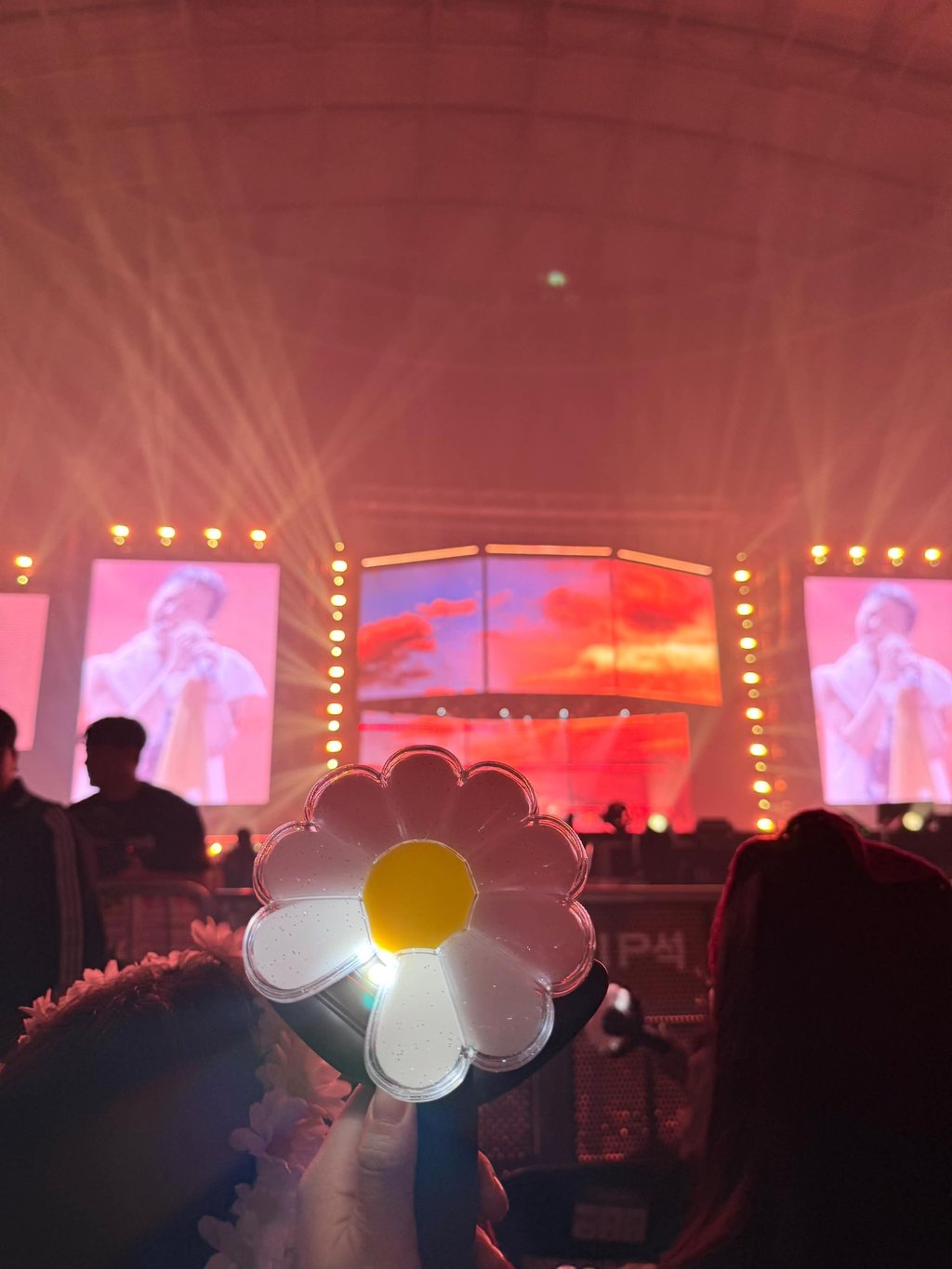
Elaine Lu, 25, has attended eight K-pop concerts, travelling from her home in Guangzhou to Hong Kong, Australia and Japan. She has also made several trips to South Korea to attend fan events for her favourite boy band, Big Bang.
“Many of my friends have not been able to afford the costs for flights, visas and other travel expenses that come with going on an international trip to attend a concert,” she said.
South Korea’s Ministry of Foreign Affairs and the Korea Foundation’s 2023 Global Hallyu Status report put the number of Hallyu fan-club members in China at about 100.8 million at the end of 2023, representing 45 per cent of the 225 million members worldwide.
The figure included Hong Kong and covered fan clubs spanning Korean popular culture, including K-pop and television dramas.
Even with the unofficial ban in place, events outside the concert arena have drawn large crowds. About 600,000 people attended pop-up events for boy band EXO across 13 Chinese cities early this year, the group’s management company said.
South Korean companies have also continued expanding their presence in China through album and merchandise distribution and fan platforms.
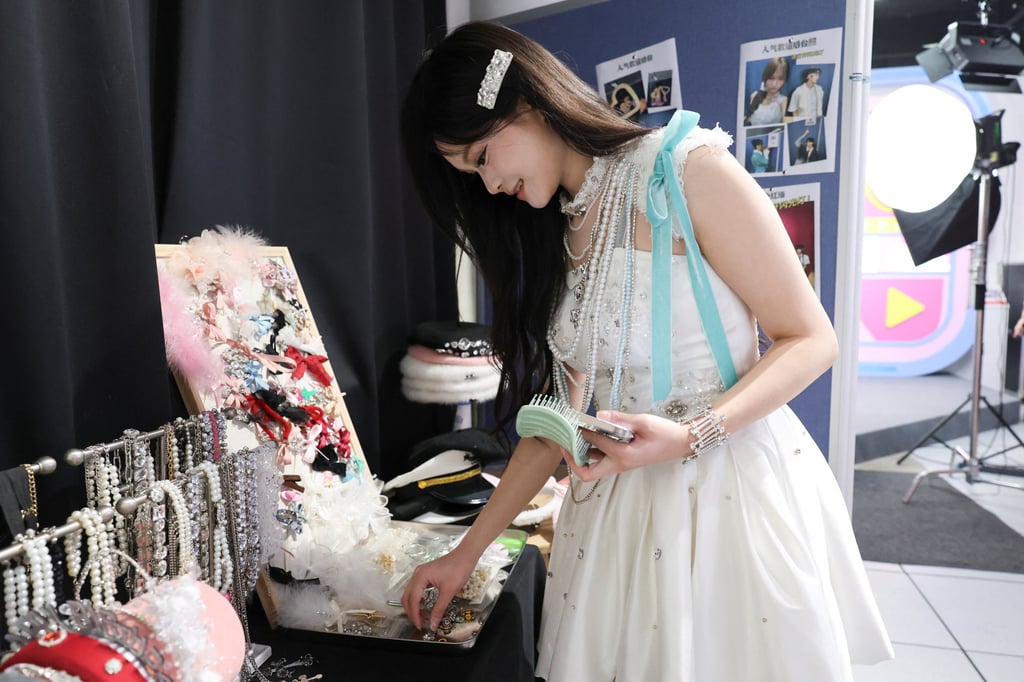
A K-pop idol experience centre in Shanghai, where customers learn choreography and take part in mock fan-signing events, has gone viral in the country.
The four biggest South Korean entertainment agencies have maintained a local business presence in case the market reopens. Hybe established Hybe China in Beijing in April 2025, while SM Entertainment, YG Entertainment and JYP Entertainment also operate subsidiaries in the country.
Counting on a comeback
Hope of renewed access to the Chinese market has lifted investor sentiment. During regular trading on November 18, SM Entertainment shares rose 14.30 per cent from the previous trading session, while Hybe’s climbed 7.62 per cent.
Hana Securities has predicted that YG Entertainment’s operating profit could be 99 per cent higher than previously forecast if performances in China were to resume next year.
Film and television production companies could also benefit from improved access to the Chinese market. Lee Ki-hoon, a researcher at Hana Securities, told the South Korean daily Maeil Business Newspaper last week that popular dramas could generate an additional 3 billion to 4 billion won (US$2.2 million to US$3 million) in sales per title if aired in China.
He added that South Korean production company Studio Dragon’s operating profit could rise by as much as 100 billion won if major new productions were allowed to air simultaneously in both countries.
Kim Gi-hyun, head of the Beijing Business Centre of the Korea Creative Content Agency, said the trade agreement could provide a legal framework for wider cultural exchange, particularly through joint productions.
“Although immediate results should not be expected, the expansion of the co-production agreement into other sectors is expected to encourage greater bilateral cooperation in the future,” Kim said. “Its actual impact can only be assessed once concrete projects and joint ventures begin to emerge.”
03:11
Chinese K-pop fans live out their idols’ lives in ‘idol experience centre’
For smaller South Korean entertainment companies such as Five Stones Entertainment, a reopening of the Chinese market would present opportunities to learn from their Chinese counterparts and reach new audiences.
Five Stones chief executive Jay Han said he hoped to work with Chinese platforms and entertainment companies on joint content, brand partnerships and global influencer marketing.
“In areas such as short-form content, live-streaming commerce and digital platforms, there is actually quite a lot we can learn from our Chinese counterparts,” he said.
But Lee Eun, chief executive of Myung Films and president of the Korean Film Producers Association, urged caution when interpreting the latest developments.
“The Chinese government’s so-called Hallyu ban was never officially acknowledged in the first place,” he said. “So, I think our response will depend on what signals the Chinese government sends to its domestic industry, and how that industry reacts to those signals. We will adjust our approach accordingly.”
This Week in Asia contacted more than 10 agencies managing K-pop acts for comment. None had responded by press time.
For Chinese fans such as Lu, the prospect of an end to the restrictions is about far more than the commercial fortunes of South Korean entertainment companies.
“The end of the Hallyu ban would mean the door reopening for a whole generation of Chinese fans who never got to experience that live connection with their favourite artist,” she said.
“Many of us yearn to have the same experiences like the rest of K-pop fans around the world.”
KioskNews shows a cleaned-up reading view extracted from the publisher’s page — the original always lives on their site, not ours.