Culture can unite Kenya beyond politics
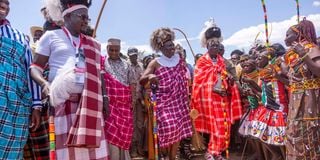
President William Ruto and Turkana East MP Nicholas Ngikolong Ngikor (right) join traditional dancers in a jig during the Turkana Tourism and Cultural Festival the Tobong'u Lore, in Lodwar town, Turkana County.
Photo credit: Photo/PCS

By Ummi Bashir
Principal Secretary
State Department for Culture, the Arts and Heritage
Kenya is blessed with abundant natural resources, a favourable climate, beautiful landscapes, fertile soil, a vibrant youthful population and a rich cultural heritage.
These assets provide the country with a unique foundation for prosperity and global influence. Culture has long been marginalised in national development despite its role in shaping identities and social cohesion. Though celebrated at festivals and international events, it has remained underutilised in promoting unity, economic opportunity and sustainable development.
Under President William Ruto, however, culture is gaining recognition as a driver of national development, cohesion and economic opportunity beyond heritage preservation and festivals.
By placing culture within the broader development agenda, the government is recognising its power to bring communities together, unlock creative potential and strengthen the shared sense of identity that binds Kenyans as one nation.
At a time when political divisions risk deepening social polarisation, investing in culture offers Kenya an important opportunity to strengthen the foundations of national unity, foster a stronger sense of belonging and renew our shared commitment to patriotism. Culture reminds us that beyond our political differences, ethnic identities and regional affiliations, we remain one people bound by a common history, a shared identity and a collective national destiny.
Culture creates opportunities for young people
Nearly three-quarters of Kenya’s population is below the age of 35. This demographic reality presents both an opportunity and a responsibility.
Culture is not merely a source of identity but also a viable avenue for innovation, entrepreneurship and employment. The creative economy continues to pave the way for young people in the film, fashion, music, publishing, digital content, heritage conservation, visual arts, performing arts and cultural tourism sectors.
By providing platforms for young people to express their creativity and tell authentic Kenyan stories, the cultural sector unlocks both talent and economic potential. Every investment in cultural centres, museums, art programmes, libraries and creative spaces strengthens the country’s human capital while expanding opportunities for sustainable livelihoods.
When young people tell Kenyan stories through digital content creation, film, dance, poetry and music, they not only generate income and build meaningful careers but also become champions of unity and ambassadors of Kenya’s identity to the world.
Preserving heritage while embracing the future
Investing in culture does not imply going backwards or resisting modernisation. It involves ensuring that development takes place without erasing our values, traditions and shared heritage as a nation. This is even more important now that Kenya has embarked on a national conversation on life beyond Vision 2030.
As Kenyans chart the next chapter of our national development, culture should be part of the agenda, not as a relic of the past, but as a vibrant and dynamic resource that can enhance our national identity, stimulate creativity, open up opportunities and contribute to shaping the Kenya we all aspire to build.
Today, technology has enabled the digitisation of archives, the documentation of oral history and the preservation of endangered languages, strengthening Kenya’s national identity.
These advancements show that innovation and culture are not competing forces; innovation can reinforce culture and ensure that Kenya’s development does not come at the expense of its heritage. In an ever-changing world, Kenya needs to remain deeply rooted in its cultural diversity, values and traditions that make the country unique.
Kenya’s rich cultural heritage gives it a strong foundation on which to build a prosperous and globally competitive country.
This is an important step in the journey towards inclusive growth and sustainable development. When we invest in culture, we preserve our past, strengthen our present, empower our future and remind every Kenyan that we are one nation with a shared destiny, despite our many languages and traditions. Ultimately, investing in culture is investing in the Kenya we want to build and in the unity that will sustain national development for future generations.
Follow our WhatsApp channel for breaking news updates and more stories like this.
The writer is the Principal Secretary for the State Department for Culture, the Arts and Heritage.
KioskNews shows a cleaned-up reading view extracted from the publisher’s page — the original always lives on their site, not ours.