The 15 Best '90s Shows, Ranked

Updated
Christine is a freelance writer for Collider with two decades of experience covering all types of TV shows and movies spanning every genre. With a particular affinity for dramas, true crime, sitcoms, and thrillers, if it's a top TV show, Christine has likely watched it and is eager to share her thoughts. When she's not furiously writing away, you can find her enjoying the next binge obsession with a glass of wine in front of the TV.
Sign in to your Collider account
Anyone who grew up in the 1990s knows that the decade was all about pagers (before cell phones!), grunge music, and the rise of computers and the internet. While streaming wasn’t yet a thing for TV lovers at home, some great TV shows premiered during that decade.
Some of these shows, in fact, are still streaming with new seasons today. Some have returned with spin-offs, sequels, and revivals. But all of these iconic '90s shows had a massive cultural impact on television as viewers know it and inspired shows that have come since. These are the best '90s shows ever, ranked.
15 'Married…With Children' (1987–1997)

If you explained Married…With Children to someone today who had never watched it, they would likely scrunch up their nose at the very concept and wonder how it was ever allowed on network television. Despite being a sitcom that aged like milk, the show was hugely popular at the time. And it was brilliant. The sitcom centers around the Bundys, a lower-middle-class family led by patriarch Al (Ed O'Neill). He's the breadwinner, bringing in a meager salary as a shoe salesman, and often regaling tales of what could have been given his incredible run as a football star player in high school.
The family is unconventional; Mom Peggy (Katey Sagal) is more interested in watching TV, eating "bonbons," and gossiping with neighbor Marcy (Amanda Bearse) than actually doing anything meaningful. Daughter Kelly (Christina Applegate) is popular and promiscuous, and son Bud (David Faustino) is a social outcast whose father spares no expense in insulting him. Yet somehow, the dynamic works, and it's totally endearing. It's the anti-family when you compare them to any conventional family in a traditional '70s and '80s sitcom. The show is such a hilariously embellished parody that it's too absurd to even be offended by.
14 'Full House' (1987–1995)
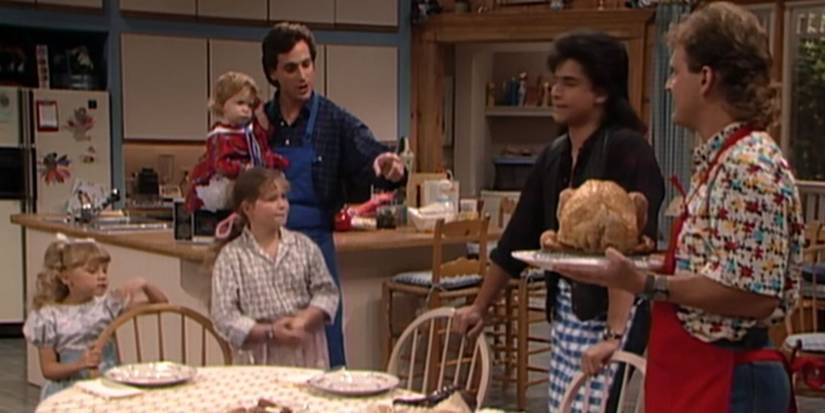
Good, wholesome family fun with a healthy dose of moral lessons and those "very special episodes." That's what defines Full House, one of the shows parents loved to sit down and watch with their kids every week after dinner when a new episode was on. The original premise is sad: Danny Tanner (Bob Saget), a newly widowed father raising three girls on his own. But it's a story of perseverance and family (and friends who are like family) coming together. Danny's brother-in-law Jesse (John Stamos) and best friend Joey (Dave Coulier) move in to help.
These three men know little about raising kids, much less girls. But it's such a sweet story as they figure it out while the girls grow into precocious, sometimes rebellious, well-adjusted kids who help them along the way. With comic relief from neighbor Kimmy (Andrea Barber), best friend to eldest daughter D.J. (Candace Cameron), and family dynamics changing and growing through the eight seasons and the best Full House episodes, it's one of the sweetest sitcoms of the decade.
13 'Sex and the City' (1998–2004)

Sex and the City defined a generation of single, older women who felt underrepresented on television and put HBO on the map as a serious network for original TV content before it was considered as such. The romantic comedy-drama centers around four mature female friends navigating life, dating, and careers in the Big Apple.
Popularizing everything from high fashion for weekend brunch to the Cosmopolitan drink and promoting female empowerment, Sex and the City is one of the most influential shows of the decade, with plenty of rewatchable seasons. The story lives on through the sequel series And Just Like That… and the characters, not to mention their bold fashion sense, have become icons in the TV world.
12 'NYPD Blue' (1993–2005)

As far as procedurals go, NYPD Blue set the stage for all the ones we see today. The New York City-set series follows the professional and personal lives of those working in the local Manhattan police department. Praised for its realism, NYPD Blue also pushed the envelope for the time, covering topics that, at the time, were considered taboo for network television, like nudity and alcoholism.
NYPD Blue, one of the greatest American crime series of all time, wasn't afraid to go where it needed to go to make you believe, and it worked. The show endured for 12 seasons, well into the 2000s. With an A-list cast including names like David Caruso, Jimmy Smits, Rick Schroder, and Mark-Paul Gosselaar, it's like a time capsule into crime and punishment in the '90s. Watch a few episodes, and you'll instantly see how this series inspired all the procedurals that have come since.
11 'Twin Peaks' (1990–1991)

Many believe that Twin Peaks was prematurely canceled, but the mystery-horror drama had an incredible impact when it aired. The show set the tone for The X-Files that came after and proved that TV could be “weird” and unique versus following a cookie-cutter formula like so many other shows had at the time.
Set in a fictional town, the innovative TV series initially centered around the investigation of the murder of a local teenager. It incorporates supernatural elements, eccentric characters, and a campy feel while also drawing on soap opera and horror tropes. Twin Peaks had such an enduring presence that it was brought back for a third season in 2017.
10 'ER' (1994–2009)

Famously known for starring George Clooney before he became the A-list movie star he is today, ER remains one of the best medical dramas that paved the way for all that came after it. The ensemble cast includes plenty of other big names, too, including Noah Wyle, who currently stars in the medical drama The Pitt, Anthony Edwards, Julianna Margulies, and Mario Bello.
Set in the emergency room of a Chicago hospital, ER follows the doctors and other hospital staff as they deal with intense, literal life-or-death moments with patients. Like many other medical dramas, it also chronicles the personal lives of the staff and the personal and ethical dilemmas they face as they work to save lives.
9 'The Fresh Prince of Bel-Air' (1990–1996)
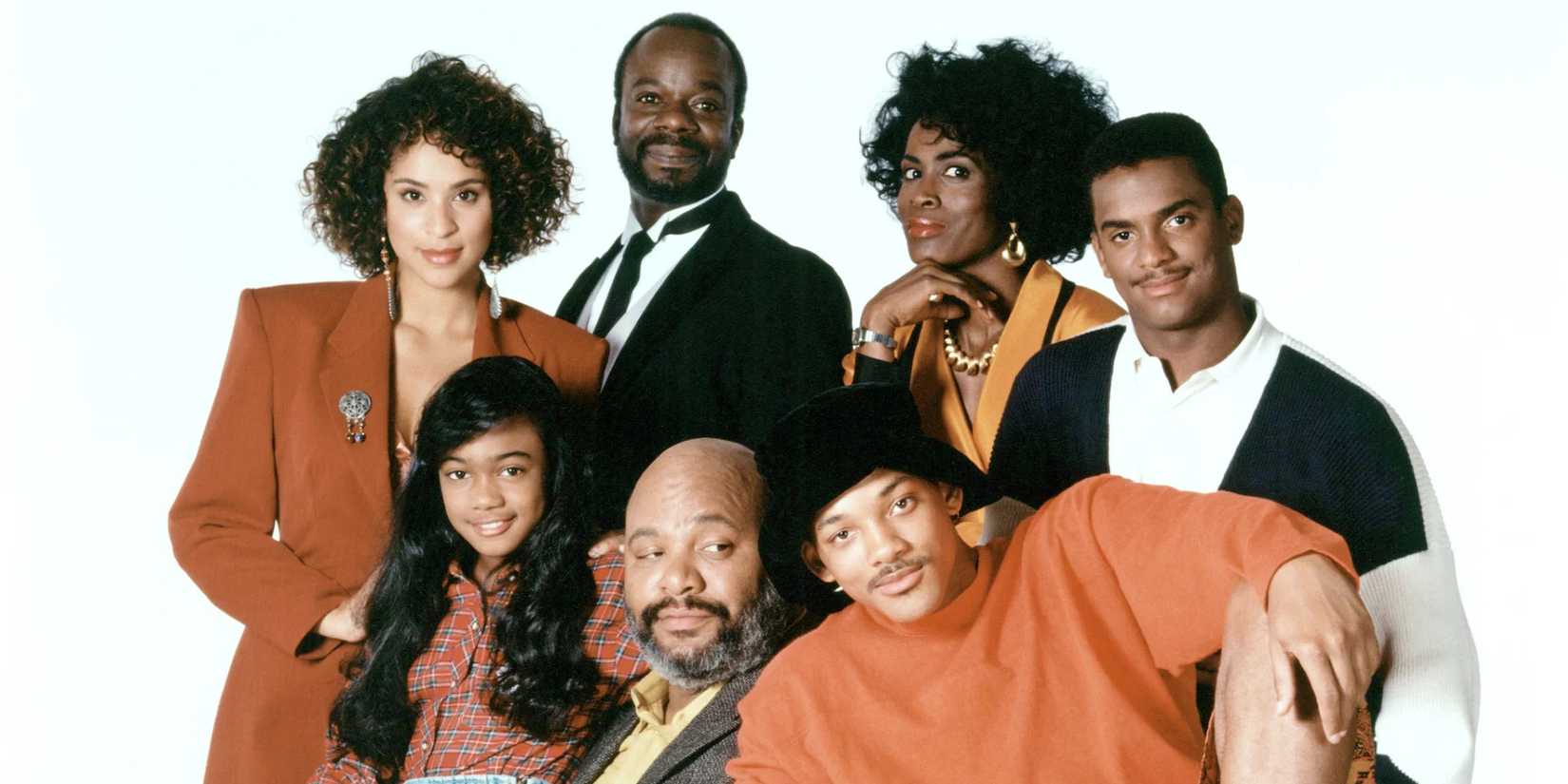
The Fresh Prince of Bel-Air had a rich cultural impact on viewers and set a precedent for the sitcom in the early '90s. Rather than focusing on either a middle-class or a wealthy Black family, the series touched on the dichotomy of these two worlds. Will (Will Smith) is a young man from Philadelphia who is sent to live with his wealthy aunt and uncle and their kids in Bel-Air to give him a better life. The culture shock he feels is at the heart of the show, along with how he acclimates to another class of people, and they to him.
But what The Fresh Prince of Bel-Air does is show that both sides have something to learn from one another. The family dynamics are at the heart of the show, but as the sitcom progresses, it starts to touch on more serious topics, from race to familial tensions and the class divide. The show was progressive for a time, not to mention made Smith a bona fide star.
Collider Exclusive · 8 Questions · 2 Minutes Which Iconic Fandom Should You Join? Harry Potter · Lord of the Rings · Star Wars · Star Trek
Eight honest questions about how you actually are: what you put on when you need cheering up, how deep you go into the things you love, what you argue about, what you keep on your shelf. Answer them and we will tell you where you belong. Four of the biggest fandoms on earth are taking new members, and they could not be more different from one another.
⚡Harry Potter(Wizarding World)
💍Lord of the Rings(Middle-earth)
⚔️Star Wars(A Galaxy Far Away)
🖖Star Trek(The Final Frontier)
01
What do you put on when you need cheering up? Nobody is brave about this one.
02
How deep do you go into something you love? There is no shallow end here, only different deep ends.
03
What do you and your friends actually argue about? Every fandom has one argument it has been having for years.
04
How do you feel about a room full of strangers? Every one of these comes with a very big room.
05
Where would you rather spend a week? Pick on instinct rather than on budget.
06
What do you believe about people, mostly? All four of these stories have an answer, and they disagree.
07
What is actually on your shelf? Look over at it before you answer.
08
What do you actually want from a story? Eight questions in, this is the one that picks your fandom.
Membership Confirmed Your Fandom Is…
Four of the largest communities on the planet, and four completely different reasons to belong to one. Here is yours, what it would give you, and the argument you would be having within a week.
Harry Potter
You belong to the fandom that is really about comfort. Hogwarts works on people because it is a place rather than a plot, and the pull is not the wizard war so much as the corridors, the food, the weather and the sense that somebody is expecting you.
- You are drawn to belonging, which is why this fandom sorted itself into houses within about five minutes and has never stopped.
- This is the most social of the four, and the one most likely to know which type every single person in your life would be.
- The books are built to be reread rather than analysed, and rereading is exactly what you do with things you love.
- The new HBO series is bringing the whole thing back one book at a time, which means the arguments are about to start all over again.
Lord of the Rings
You belong to the deepest fandom on this list, the one where somebody has always read further than you and is quietly delighted to say so. Middle-earth rewards patience more than any other world in popular culture.
- You like the sense that the story you are reading is only the visible part of something enormous, which is precisely how Tolkien built it.
- This fandom takes adaptation seriously to a degree that other fandoms find slightly alarming, and it has good reasons for that.
- Your favourite thing about the books is probably the bit that is not action at all, which is the walking, the songs and the long goodbyes.
- Nobody here thinks heroism belongs to the powerful, and the whole story exists to make that argument.
Star Wars
You belong to the loudest and largest tent of the four, the one where three generations are all watching the same thing and none of them agree about any of it. That disagreement is not a flaw in this fandom, it is the main activity.
- You want something you can share with absolutely everybody, from a six year old to a grandparent, and this is the only one on the list that really does that.
- Nobody argues like Star Wars fans argue, and the argument has been running since roughly 1980 with no sign of resolution.
- The pull here is sensory before it is narrative, since it is the sound design, the score and the look of a used and dented galaxy.
- You would be first in the queue, in costume, with strong opinions and a genuinely good time.
Star Trek
You belong to the thinking fandom, the one that turns up for the argument rather than the explosion. Trek has always been a series of ethical problems in space, and the people who love it love being asked what they would have done.
- You are an optimist in a way that is currently unfashionable, and this is the only major franchise still willing to say the future might be better.
- The best episodes are the ones where nobody fires anything, which is a sentence that makes perfect sense to this fandom and to nobody else.
- Starfleet Academy brought the franchise back to a classroom in 2026, which is appropriate, because Trek has always been a bit of a seminar.
- You would want the conversation afterwards more than the episode itself, and here you will always find somebody willing to have it.
8 'Homicide: Life on the Street' (1993–1999)

Another groundbreaking procedural of the decade, Homicide: Life on the Street proved that you didn't need flashy scenes and massive drama. Much of the show took place in dark, dank interrogation rooms, giving a sense of realism to every episode and situation. That's no surprise since the series was adapted from the non-fiction book Homicide: A Year on the Killing Streets by reporter David Simon, who spent time riding along with the Baltimore Police Department. He later went on to create The Wire.
Starring the incomparable late Andrew Braugher, Homicide: Life on the Street is widely considered to be not only one of the best procedurals, but one of the best shows ever on television. It proved that simple, honest stories with impeccable acting are all a great TV show needs to resonate with viewers. Police work often isn't glamorous, as is often depicted on television, and Homicide: Life on the Street is a jarring examination of that. Rather than turning people away because it lacked flashy theatrics, the gritty texture drew viewers in, and they are still watching to this day.
7 'Roseanne' (1988–1997)

To this day, I remember a university film class I took where we analyzed Roseanne. The reason? The show was groundbreaking for its time and had massive cultural impact. For the first time, we saw a more realistic lower-to-middle-class family just getting by in their modest home with dated furniture and bare cupboards. They lived paycheck to paycheck and dealt with real problems, like being able to pay bills, handle their brooding kids, and fighting with extended family.
Roseanne Barr brilliantly delivered a sitcom with biting and hilarious dialogue that had a deeper purpose of addressing important issues affecting Americans at the time, like health care, the cost of living, and other basic but relatable problems. It wasn't about overdramatic stories, nor were there instant solutions. The show wasn't afraid to get raw and real, and people appreciated it. Interestingly, the issues Roseanne presented are sadly still prevalent today, which is why the decades-later continuation, The Conners, became successful, too.
6 'The X-Files' (1993–2002)

An intriguing look at the collision of the worlds of science and the supernatural, Special Agent Fox Mulder (David Duchovny) and medical doctor Dana Scully (Gillian Anderson) are a formidable pair whose differing beliefs are at the crux of the show. While Mulder believes in paranormal phenomena, supernatural events, and even sometimes conspiracies, Scully believes there’s a practical and scientific explanation for everything. But as they investigate cases and Scully recognizes there are things she can’t quite explain, she begins to believe.
The X-Files was so popular that it was brought back 14 years after it ended for two additional seasons, with both main actors reprising their roles. From the first notes of the opening theme song, fans are instantly hooked, and the show is immediately recognizable.
KioskNews shows a cleaned-up reading view extracted from the publisher’s page — the original always lives on their site, not ours.