Ancient Canaanite fortress from time of biblical Book of Judges reopens in southern Israel
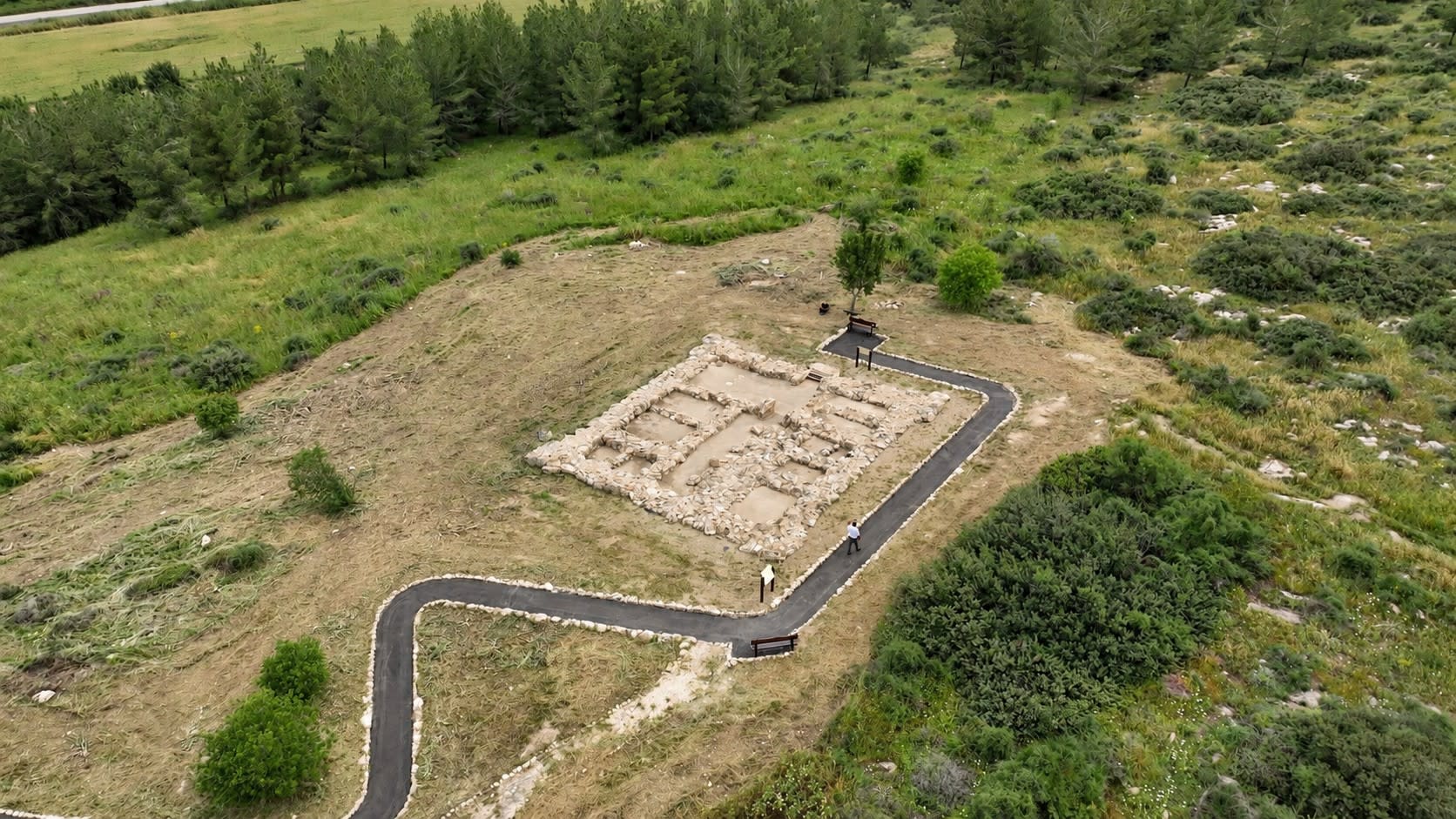
The 12th century Canaanite Gal'on Fortress was re-inaugurated by Keren Kayemeth LeIsrael-Jewish National Fund (KKL-JNF) on Thursday morning, following extensive conservation and renovation work completed alongside the Israel Antiquities Authority (IAA).
The fortress is located in the heart of the Guvrin Forest in the Judean Lowlands, surrounded by conifers, broad-leaved trees, and Mediterranean shrub.
Discovered during 2018-2019 excavations by IAA archaeologists Dr. Saar Ganor and Dr. Itamar Weissbein near Kibbutz Gal On in southern Israel, it is believed to have likely been built to protect the local Canaanite inhabitants from foreign incursions, possibly from the Philistines.
“The Gal’on Fortress provides a glimpse into the geopolitical reality described in the Book of Judges, in which the Canaanites, Israelites, and Philistines fought each other,” said Ganor and Weissbein. “At the onset of the 12th century BCE, the Land of Canaan was still ruled by the Egyptians, and its inhabitants were their subjects.”
“At this juncture two additional major players appeared in the region: the Israelites and the Philistines, which led to a series of bloody territorial struggles. It seems that the Gal’on Fortress was built in a strategic location, overlooking the main road connecting the coastal plain to the Judean Lowlands; part of either a Canaanite or Egyptian attempt to deal with the new geopolitical situation.”
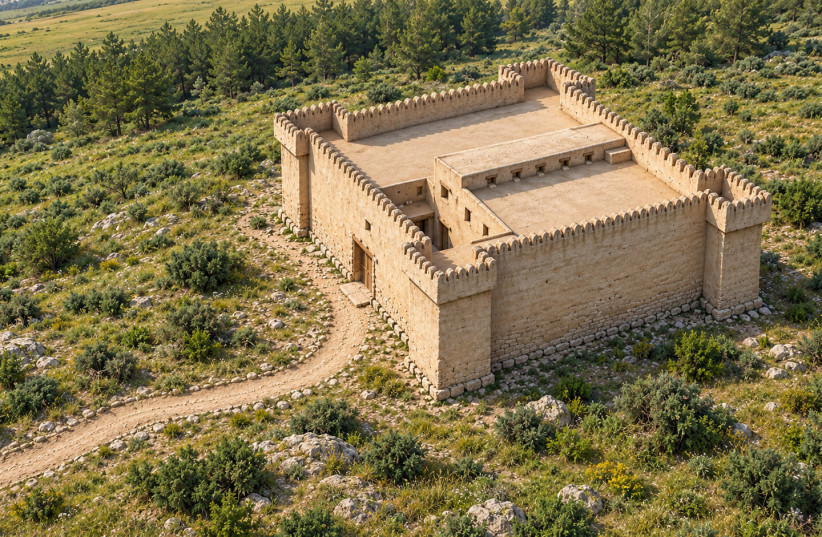
Resembling a square of roughly the size of 18 by 18 meters, the fortress stands with watch tower at each corner and a threshold carved of solid rock, weighing some 3 tons.
Its inner court was covered by stone plates with columns placed at the centers. Rooms, which served as living quarters and storehouses, were situated on both sides of the court.
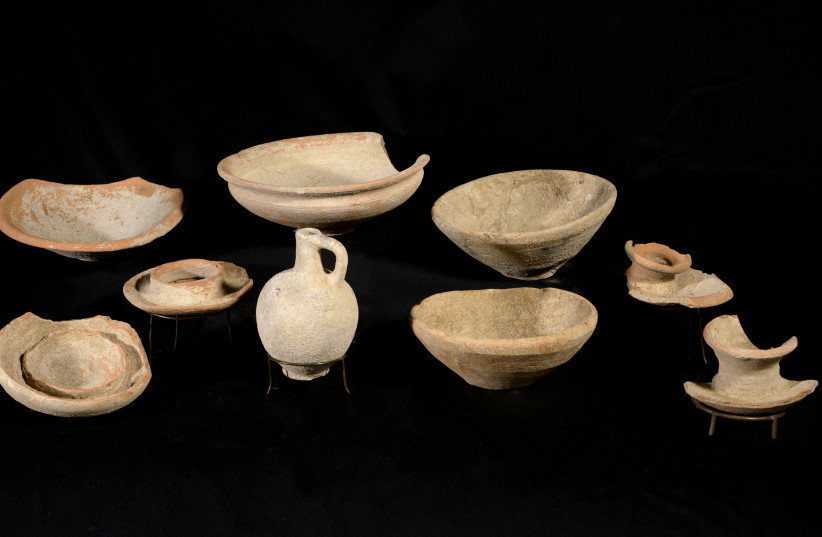
In these inner chambers, thousands of pieces of earthenware were discovered. Some of them, however, were remarkably left intact. Archaeologists believe that they were used for worshiping local gods.
Thousands of shekels invested into renovations
KKL-JNF invested approximately 400,000 NIS into renovating the site, including preserving the citadel itself, coating the buildings with a preservative that blends in with the landscape and the site’s character, highlighting the citadel rooms and showcasing the entire structure.
Additionally, KKL-JNF installed new visitor infrastructure with parking, a new access road, a picnic area and a new signage system, with handicapped-accessible parking and an accessible path to the citadel.
The site was renovated as part of a collaboration between KKL-JNF and the IAA to excavate, preserve, and develop the site, while maintaining its historical values and making it accessible to the general public.
KKL-JNF Chairman Eyal Ostrinsky noted the importance of the organization’s work, especially at the site of the Gal’on Fortress.
“Preserving the heritage sites of the Land of Israel is part of our connection to our roots and our responsibility to pass on the story of this land to future generations,” said Ostrinsky. “Gal'on Fortress offers the public an opportunity to experience a fascinating chapter in the country's history firsthand, amid the landscapes of the Guvrin Forest.”
“At KKL-JNF, we work to preserve our historical heritage while developing our forests and making them accessible to the public, so that everyone can enjoy the unique combination of history, nature and outdoor recreation. Our collaboration with the Israel Antiquities Authority enables us to transform sites of historical significance into vibrant, accessible and meaningful places for the entire public.”
Archaeology is more than just excavations
According to Ami Shahar, conservation deputy director-general at the IAA, archaeology does not end with the excavation of ancient remains, but continues forth into the preservation and safeguarding of the discovered sites.
“For us, archaeology does not end with uncovering ancient remains; it is equally important to ensure that the sites excavated by the Israel Antiquities Authority are preserved for years to come, so that the public can continue to enjoy them in the future,” stated Shahar.
“Gal'on Fortress is a fine example of our collaboration with KKL-JNF, which begins at the archaeological excavation stage, continues through conservation work, and culminates in opening the site to visitors,” Shahar said. “We invite everyone to come, explore the remains of the ancient fortress, and enjoy a unique combination of history, nature and accessibility in the heart of the Guvrin Forest.”
“In these days when the State of Israel is required to be on vigilant guard for its security, the Gal’on Fortress reminds us that the struggle for the land is not a new story,” added Heritage Minister Amichai Eliyahu. “Already in the days of the Judges, the communities of ancient Israel faced the reality of conflicts with neighboring peoples, and just like today, out of a complex reality, Israel’s strong grasp on the land of our heritage was gradually established in this region.”
“Visiting the site connects us to our roots, and sharpens our responsibility to continue to watchfully protect our land, from every direction.”
KioskNews shows a cleaned-up reading view extracted from the publisher’s page — the original always lives on their site, not ours.