Thailand develops 20-minute urine test for arsenic exposure
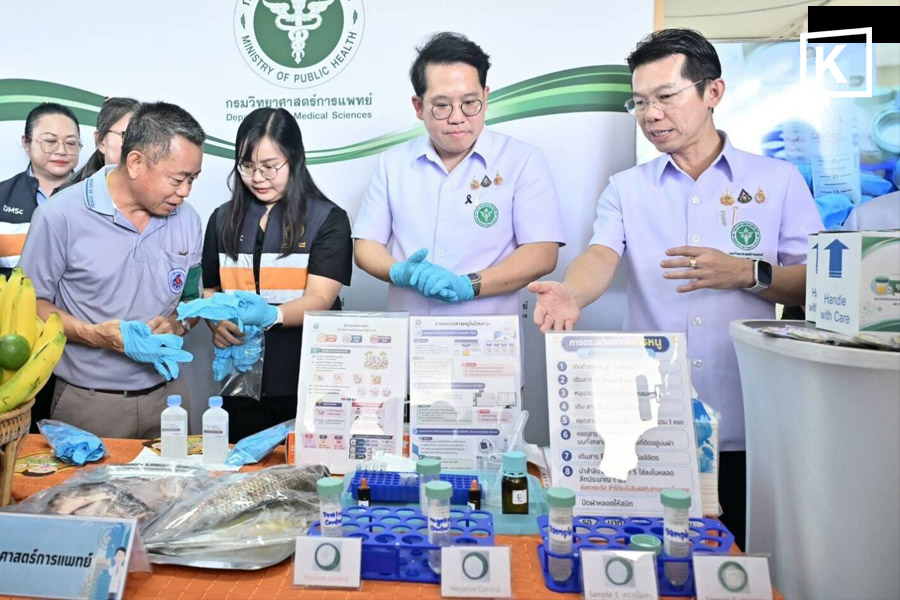
Thailand’s Department of Medical Sciences has developed a urine test kit that can screen people for arsenic exposure in 20 minutes, with an initial batch of 2,000 kits due to be delivered from December.
The department plans to gradually supply a total of 10,000 kits to public health agencies and subdistrict health-promoting hospitals in at-risk areas to support screening and risk assessments.
Department Director-General Dr Adisorn Watthanasak said Public Health Minister Pattana Promphat and the ministry’s permanent secretary, Dr Somruek Chungsaman, had tasked the department with developing a urine test to help local health agencies screen at-risk residents more quickly.
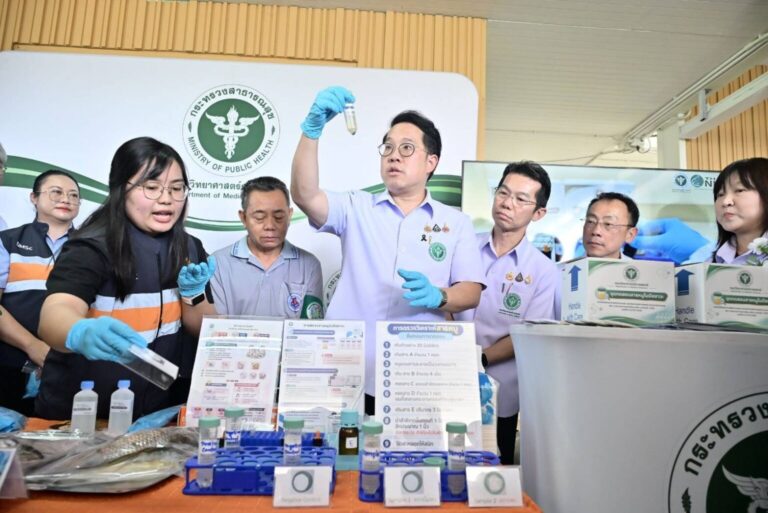
The kits are undergoing trials. The department will work with the Department of Disease Control to test them in the field and assess their performance.
The test is intended only as a preliminary screening tool. Where results require follow-up, more specific and appropriate laboratory tests will be considered to confirm the findings and guide care.
Adisorn said the kit uses a simple chemical reaction known as the Gutzeit test. Arsenic is converted into arsine gas, which reacts with a detecting substance, such as a silver compound, producing a colour change visible to the naked eye.
The method is relatively straightforward and can be adapted for screening in the field, he said.
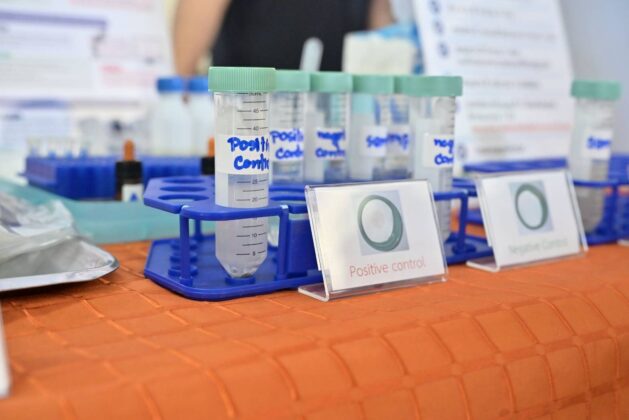
However, certain substances in urine may interfere with the results. The test also involves toxic arsine gas, so appropriate safety controls are needed. Personnel must be trained and follow the instructions strictly.
The department plans to make the kit easier and safer to use so that trained village health volunteers can eventually carry out screening.
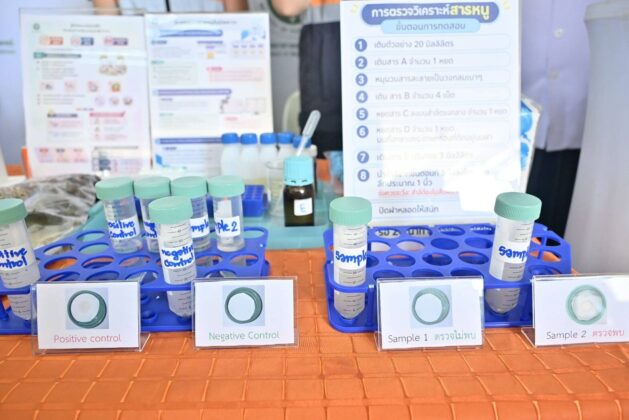
Adisorn said the department also plans to develop a urine test using an electrochemical technique that requires only a small sample. Further work is needed to address substances in urine that could interfere with the results.
Once developed, the technology would be transferred to the private sector for production, allowing local agencies, including subdistrict health-promoting hospitals and local administrative organisations, to use it for field screening.
KioskNews shows a cleaned-up reading view extracted from the publisher’s page — the original always lives on their site, not ours.