Impeachment court admonishes prosecutor Tolosa over public statements
Make this your preferred source to get more updates from this publisher on Google.
The Senate impeachment court has admonished private prosecutor Benjamin Tolosa Jr. over his previous public comments on the impeachment case against Vice President Sara Duterte.
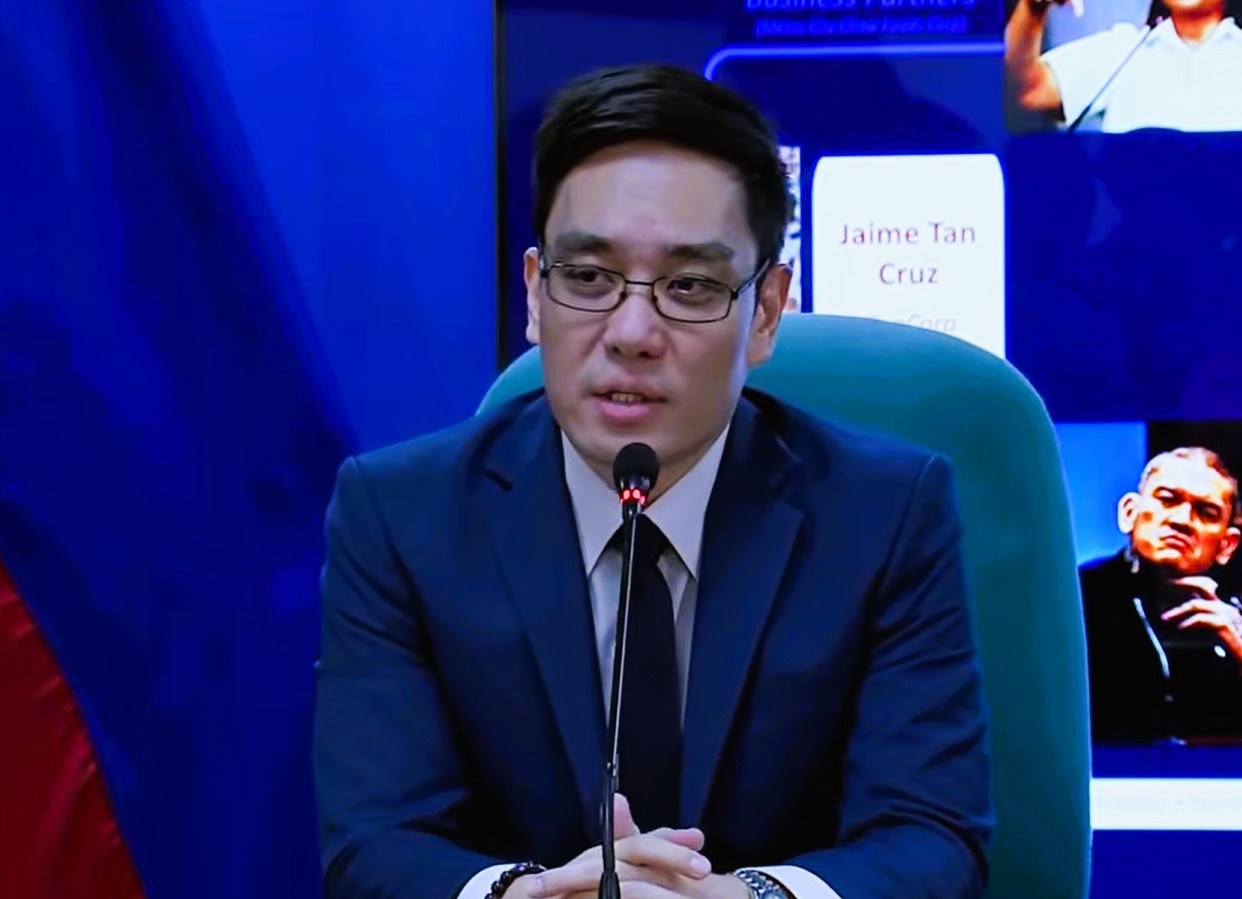
Tolosa confirmed this on Tuesday, saying the court urged him to exercise greater restraint in speaking about the impeachment case, although it did not impose a fine on him.
“I’ve received the order of the court and based on my reading, there’s no express finding there that I violated Rule 18 [prohibiting discussion on the merits of the case]," Tolosa said in a press conference.
"I will assume that the reason for this is that the court listened and considered the explanation that we gave in our answer,” he added.
Tolosa said the court order did not address his defense that his statements were protected under the doctrine allowing fair, true and accurate reporting of court proceedings.
“There’s also no statement there that contradicts my other defense that they [the topics I spoke about] are procedural matters that are outside the scope of Rule 18,” Tolosa said.
“Nonetheless, even if there’s no express statement that I violated the rule, there’s at the end an admonition to exercise greater restraint in giving public statements that may affect the merits of the case,” he added.
The sub judice rule is provided under Article 18 of the Rules on Impeachment. It states that the presiding officer and members of the Senate “shall refrain from making any comments and disclosures in public pertaining to the merits of a pending impeachment trial.”
The rule also states that “the same [prohibition] shall likewise apply to the prosecutors, the person impeached, and their respective counsel and witnesses.”
One of the statements cited by the court involved Tolosa’s summary of an argument raised by his fellow private prosecutor Mae Divinagracia. The argument concerned the defense’s claim that the unusual names of confidential fund recipients were aliases, which the defense raised only after three weeks of the impeachment trial.
The prosecution had pointed out that the defense did not identify the names as aliases in its verified answer to the impeachment complaint.
Another statement cited by the court involved Tolosa’s remark that the prosecution would not present additional evidence that would merely be cumulative, particularly if the prosecutors believed they had already presented sufficient evidence.
Tolosa said he respectfully disagreed with the court’s admonition but recognized its authority.
“With all due respect, I respectfully disagree with respect to that admonition because, as I’ve stated, there is no finding that I violated the rule. While I respectfully disagree, of course, I respect the authority of the impeachment court as an institution,” he said.
Tolosa said he would comply with the court’s admonition and avoid allowing the issue to distract from the ongoing impeachment proceedings.
“I will not belabor the point and I will, of course, respect that admonition and hence be even more careful in giving statements moving forward. I just don’t want this matter to cause any distraction since our focus should really be on what’s important that we’re currently hearing,” he added.
Tolosa earlier maintained that his challenged statements did not fall under the prohibition in Rule 18 because they concerned procedural matters and did not evaluate the merits of the case.
“The others merely recounted matters already placed on the public record during the proceedings, fairly and accurately, in good faith, and without editorial comment. Accordingly, there is no basis for citing the undersigned counsel for violation of Rule 18,” Tolosa said in his answer.
Tolosa maintained that his statements, when viewed in context, did not assess disputed facts, witness credibility, evidence, the validity of the impeachment charges or defenses, or how the case should be decided.— MCG, GMA News
KioskNews shows a cleaned-up reading view extracted from the publisher’s page — the original always lives on their site, not ours.