South Korea’s offender tracking under scrutiny after stabbing spree exposes ‘serious gaps’
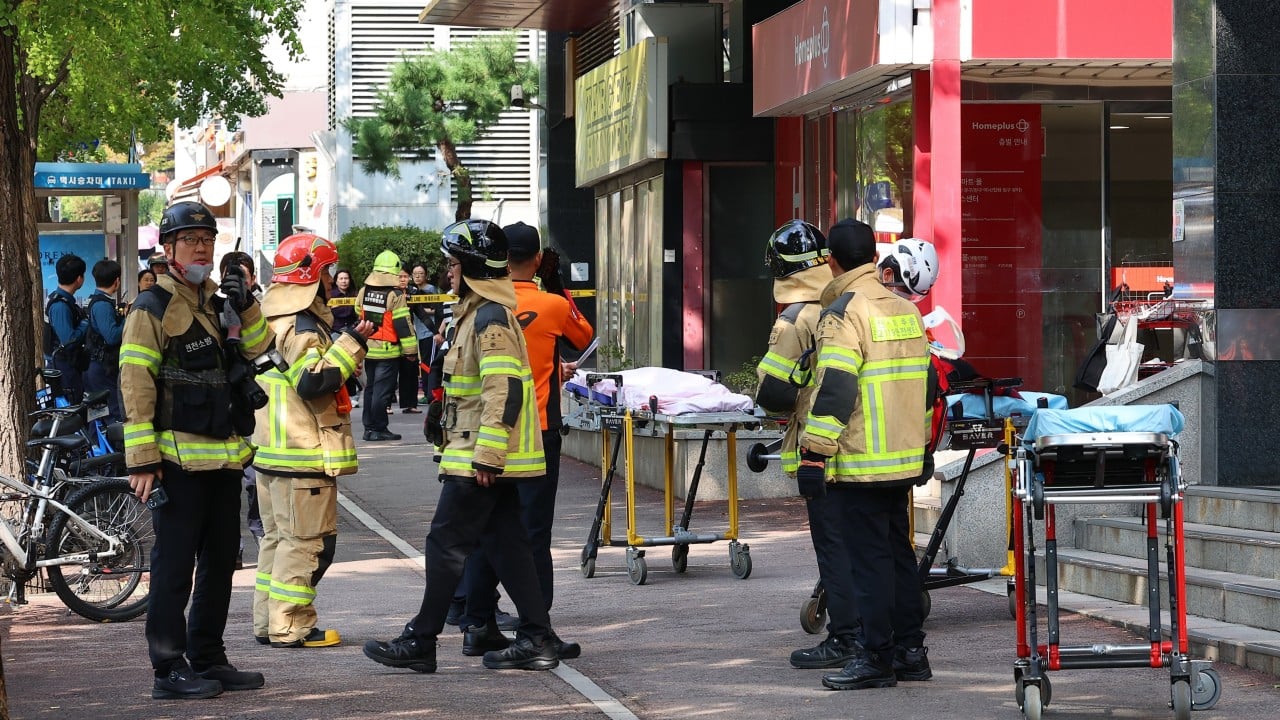
A stabbing rampage by a repeat violent offender wearing an electronic ankle monitor has raised questions about whether South Korea’s system can adequately supervise those deemed high-risk and prevent attacks before they happen.
The 59-year-old suspect told investigators he had become frustrated over what he perceived as mistreatment at a hospital, police said on Wednesday.
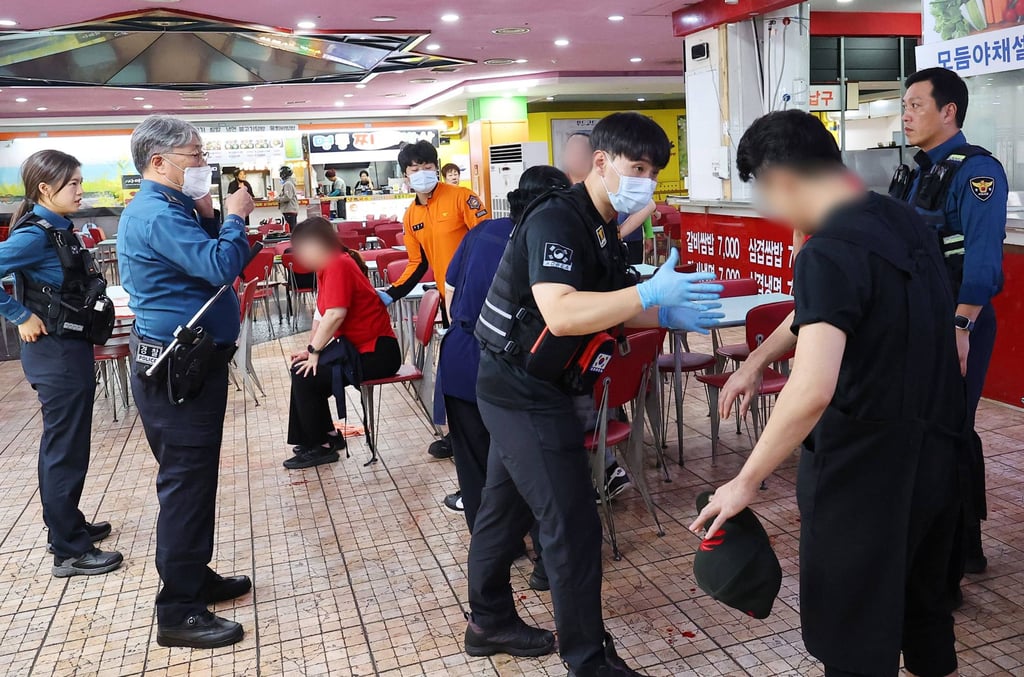
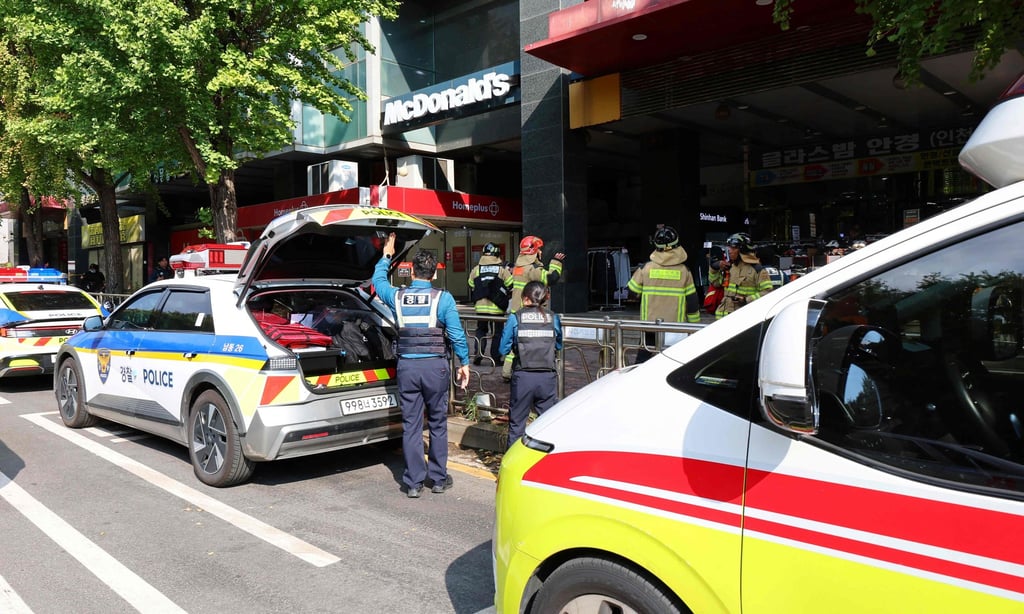
Three criminal profilers were helping investigators establish the motive for Tuesday’s attack at a shopping centre in Incheon, which left 10 people injured, including a woman in her 20s who remained in a coma.
“I did not target any specific person, and I chose people who looked weaker than me, but I had no intention to kill,” the suspect was quoted as saying during questioning at Namdong Police Station in Incheon.
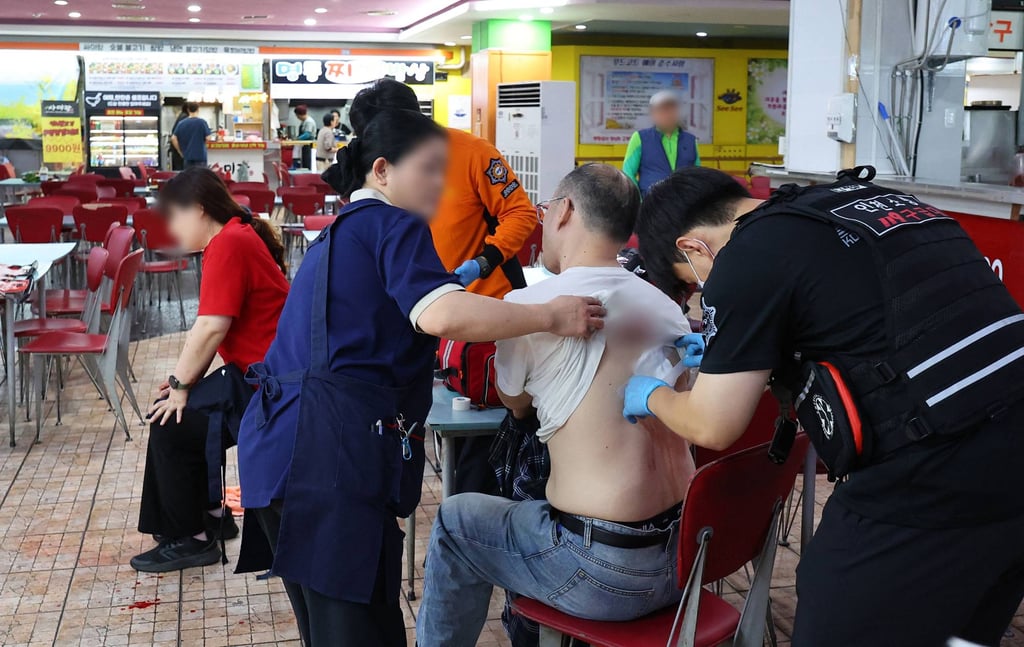
He wielded knives tied to both hands as he moved between floors via an escalator before shoppers managed to subdue him by throwing chairs at him.
“He swung the knives at everyone he saw. People fled in panic. Most people were stabbed in their backs,” said an employee who was working on the shopping centre’s first floor.
Another witness said: “He went after anyone he encountered. He just kept swinging his knives without saying a word.”
Police said the suspect was carrying what appeared to be prescription psychiatric medication in his backpack but tested negative in a preliminary drug screening.
According to police, he had been receiving treatment for athlete’s foot at a local hospital but was dissatisfied that his symptoms had not improved.
In August, he began staging a one-man protest outside the hospital while holding a knife, prompting the facility to report him to police. He was subsequently indicted last month.
“I was unhappy because I was investigated by police after the hospital reported me,” he was quoted as telling investigators.
President Lee Jae Myung visited the Incheon Metropolitan Police Agency and called for effective measures to prevent similar incidents from recurring.
The justice ministry apologised and pledged a thorough investigation and a review of the country’s electronic monitoring system after the suspect was identified as a repeat violent offender wearing an electronic anklet.
“We will conduct a comprehensive review of the electronic monitoring framework and the system for supervising and guiding offenders, and promptly prepare measures to address any gaps,” the ministry said in a statement.
“We will focus all our capabilities on preventing similar incidents from recurring, placing the lives and safety of the public as our top priority.”
Safety shortcomings
Lee Dong-gyu, a professor in the department of disaster and emergency management at Dong-A University, said the attack had exposed serious shortcomings in the surveillance and management of dangerous offenders.
“This incident has laid bare the serious gaps in monitoring and controlling high-risk offenders,” he said.
00:50
South Korean police investigate mass stabbing at Incheon mall
At the centre of the system is an electronic ankle tag that certain high-risk offenders are required to wear under court orders.
The device continuously transmits location data through cellular networks to monitoring centres, allowing authorities to track an offender’s movements around the clock.
If the wearer enters a restricted area or leaves a designated zone, the system alerts monitoring authorities at the justice ministry.
However, Lee Dong-gyu said the ministry lacked sufficient personnel to monitor offenders’ movements and coordinate with police officers on the ground to intervene when necessary.
He also suggested that the government upgrade the electronic monitoring devices so they could detect changes in physiological signals, such as an elevated heart rate potentially associated with alcohol consumption, and alert authorities to possible risks.
The system’s limitations have been highlighted in previous cases.
In 2025, police remained unaware for six days that a convicted sex offender, Cho Doo-soon, had tampered with electronic monitoring equipment installed at his residence.
Cho repeatedly violated restrictions on leaving his home despite being under close supervision after his release in 2020.
He had served a 12-year prison sentence for raping an eight-year-old girl and inflicting injuries that required prolonged medical treatment.
“The government should have learned from the Cho Doo-soon case and bolstered its manpower and equipment to prevent similar incidents,” Lee Dong-gyu said.
Justice ministry statistics show that repeat sexual offences by people wearing electronic monitoring anklets continue to occur, averaging about two cases a month.
According to data the ministry submitted on Wednesday to Park Jie-won, a lawmaker from the ruling Democratic Party of Korea, 106 repeat sexual offences were committed by individuals under electronic monitoring between January 2022 and August 2026, an average of 1.9 cases a month.
During the same period, there were two repeat murder offences and two repeat robbery offences under electronic monitoring, the data showed.
Violations of court-imposed restrictions have also increased. The number of breaches of restrictions on leaving home rose by 26 per cent, from 759 in 2024 to 956 in 2025.
Between January 2022 and August 2026, authorities recorded 4,552 violations of restrictions on leaving offenders’ residences, equivalent to roughly two to three incidents a day.
The same period also saw 41 violations of no-contact orders protecting victims and 31 cases of tampering with electronic monitoring devices.
Analysts attribute the trend in part to a decline in field supervision personnel despite an increase in the number of offenders subject to electronic monitoring.
The number of people under electronic monitoring rose by 23 per cent, from 4,316 in 2022 to 5,301 in August this year.
By contrast, the number of staff directly responsible for supervising and managing these individuals in the field fell by 21 per cent, from 255 to 234.
As a result, the average caseload per supervisor increased from 17.1 offenders to 20.3.
Lee Do-sun, a professor of police science at Hannam University, said the government needed to urgently increase staffing for efforts to prevent repeat offending.
“There are manpower shortages both at the ministry tasked with monitoring dangerous repeat offenders and among police officers on the ground who should act quickly to bring offenders under control,” he said.
He called for an integrated system through which government agencies and police could share real-time information about high-risk offenders, citing the United Kingdom as a potential model.
“Electronic tags only reveal where the wearers are, but through these devices, you never know how dangerous they are or what their propensity for violence is,” he said.
South Korea also needed more specialists capable of assessing the risk of reoffending, including factors such as alcohol dependence, impaired impulse control, obsessive behaviour and other psychological problems, he said.
“With the current manpower, these tasks are almost impossible to carry out,” he said.
KioskNews shows a cleaned-up reading view extracted from the publisher’s page — the original always lives on their site, not ours.