POWER POLITICS OP-ED: Eleven years, thousands of megawatts, zero delivery — SA’s gas-to-power procurement failure
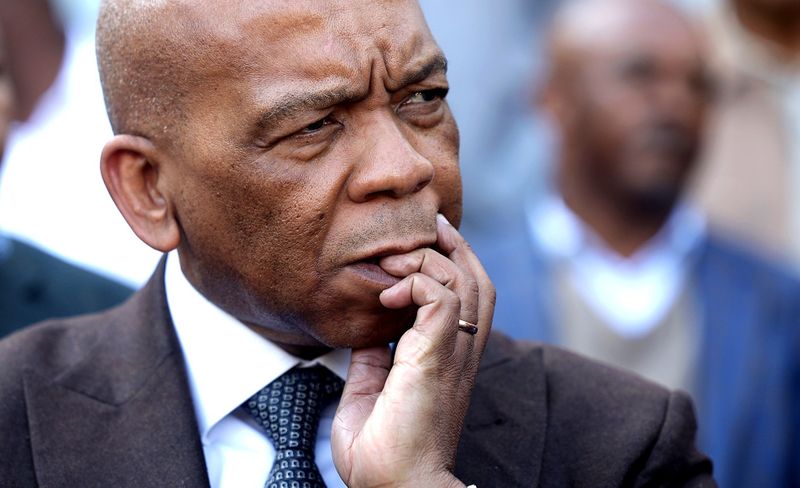
South Africa’s latest gas-to-power procurement has ended without a single preferred bidder or megawatt awarded.
The outcome marks another setback in more than a decade of government efforts to procure gas-fired electricity generation from independent power producers, raising questions about the planning, coordination and implementation of the country’s gas-to-power ambitions.
The announcement on 28 October 2026 by Electricity and Energy Minister Kgosientsho Ramokgopa that no preferred bidders have been appointed under the first bid window of South Africa’s Gas Independent Power Producer Procurement Programme (GASIPPPP) represents another setback for the country’s energy plans.
The programme sought to procure 2,000 MW of gas-fired electricity generation. Four bids offering 2,830 MW were received by the closing date of 29 May 2026, demonstrating substantial interest from independent power producers (IPPs).
However, after evaluation, none satisfied the mandatory functional criteria, principally because bidders could not provide the required assurances of long-term gas supply.
The result is stark. After more than 11 years of government-led procurement initiatives, South Africa has yet to deliver any new gas-fired IPP generating capacity through its major dedicated gas-to-power procurement programmes.
The question is no longer simply when South Africa will procure new gas-fired generation, but whether the country’s procurement approach is fundamentally suited to the infrastructure, fuel-supply and commercial realities confronting prospective investors.
The first attempt: 2015 to 2017
South Africa’s modern gas-to-power procurement programme began in May 2015, when the then Department of Energy issued a Request for Information (RFI) for about 3,000 MW of gas-fired generation.
In October 2016, then Energy Minister Tina Joemat-Pettersson released a Preliminary Information Memorandum (PIM), outlining plans to procure about 3,000 MW of liquefied natural gas (LNG) generation capacity.
The proposed programme envisaged about 2,000 MW at Richards Bay in KwaZulu-Natal and 1,000 MW at Coega in the Eastern Cape.
Crucially, it recognised that gas-fired power stations could provide the anchor demand needed to justify investment in LNG import terminals, floating storage and regasification units, pipelines and associated infrastructure.
However, despite extensive preliminary work, consultations and market interest, the programme never progressed to a formal Request for Proposals (RFPs).
No preferred bidders were appointed, no Power Purchase Agreements (PPAs) were signed, and no generating capacity was delivered.
Emergency procurement and Karpowership controversy
Government’s next significant attempt to introduce gas-fired IPP generation emerged through the Risk Mitigation Independent Power Producer Procurement Programme (RMIPPPP), launched in August 2020.
In March 2021, the Department of Mineral Resources & Energy announced eight initial preferred bidders, including three controversial Karpowership projects proposing floating LNG-fired power stations.
These comprised 450 MW at Richards Bay, 450 MW at Coega and 320 MW at Saldanha Bay – a combined 1,220 MW.
Altogether, RMIPPPP represented about 1,418 MW of gas-fired capacity, accounting for more than 70% of the programme’s intended 2,000 MW procurement.
However, the Karpowership projects encountered serious difficulties involving environmental authorisations, port infrastructure, regulatory approvals and commercial arrangements.
Despite repeated extensions of the financial-close deadlines, the projects failed to reach the required legal and commercial milestones.
On 31 December 2023, the final extended deadline expired. Eskom subsequently confirmed that the relevant grid access budget quotes would not be extended further.
The gas-fired projects therefore failed to deliver any electricity under the emergency procurement programme.
The experience highlighted the difficulties of attempting to fast-track large gas-fired generation projects without first securing the necessary infrastructure, environmental approvals and bankable commercial arrangements.
A new dedicated gas-to-power programme
Meanwhile, the 2019 Integrated Resource Plan for Electricity, IRP 2019, provided for 3,000 MW of new gas-fired generation, with a corresponding ministerial determination published in September 2020.
However, it was only on 14 December 2023 that the IPP Office released the RFP for GASIPPPP Bid Window 1 (BW1), targeting 2,000 MW of land-based gas-fired generation.
A further 1,000 MW was envisaged under a separate bid window associated with the Coega industrial development zone.
However, repeated extensions followed as prospective bidders raised concerns about fuel-supply arrangements, gas pricing, minimum operating requirements, infrastructure dependencies and commercial risk allocation.
A substantially revised RFP was eventually issued on 20 October 2025, with the final bid submission deadline extended to 29 May 2026.
Four bids were received: Khanyazwe Flexpower, 440 MW in Mpumalanga; Pictor GTP Consortium, 990 MW in KwaZulu-Natal; Kelvin Redevelopment, 600 MW in Gauteng; and Komatipoort Power, 800 MW in Mpumalanga.
Nevertheless, almost three years after the original RFP was issued, and following extensive amendments and consultations, the procurement process has ended without any capacity being awarded.
The fundamental problem: No assured gas supply
In announcing the outcome on 28 October 2026, the Department of Electricity & Energy acknowledged that bidders were unable to provide gas-supply assurances at the level required by the RFP.
The department noted that South Africa imports most of its natural gas from Mozambique and does not have an operational LNG import terminal.
The department stated unequivocally: “Consequently, no Preferred Bidders were appointed, and no generation capacity was awarded for the GASIPPPP BW1.”
Developers are expected to demonstrate bankable, long-term gas-supply arrangements before South Africa has established the LNG import, storage, regasification and pipeline infrastructure necessary to support such commitments.
Yet investment in this infrastructure requires confidence that substantial, dependable gas demand will materialise through commercially viable electricity generation projects and other customers.
The result is a circular dependency. Power projects cannot reach financial close without assured gas supplies, while gas infrastructure developers cannot commit billions of rands without assured long-term demand.
This was precisely the interdependency recognised in the original 2015-2016 programme, which envisaged coordinated development of LNG import infrastructure and anchor gas-fired power generation.
What happens next?
Minister Ramokgopa has emphasised that the government is not abandoning its gas-to-power objectives.
The announcement refers to a possible revised procurement process, provisionally described as GASIPPPP BW1.5.
However, no definitive structure, revised procurement requirements or timetable has been announced. Government says further information will be provided before the end of 2026.
Meanwhile, the proposed second bid window for 1,000 MW of gas-fired generation at Coega has yet to reach formal competitive procurement.
The IRP 2025 envisages substantial new gas-fired generating capacity to provide flexible and dispatchable electricity, complementing increasing contributions from variable wind and solar PV generation.
However, additional capacity allocations in an electricity plan are of little practical value unless they can be translated into bankable projects, affordable electricity and operational generating capacity.
The need for a different approach
The repeated difficulties suggest that incremental amendments to procurement documentation and further deadline extensions are unlikely, on their own, to resolve the underlying problems.
A more coordinated approach may be required, addressing electricity generation, LNG import infrastructure, gas aggregation, transportation and industrial demand as an integrated programme.
This raises important questions about the respective roles and responsibilities of the Department of Electricity & Energy, the Department of Mineral & Petroleum Resources, the Department of Forestry, Fisheries & Environment, National Treasury, the IPP Office, Transnet, the Central Energy Fund, Eskom, the National Transmission Company of South Africa and private sector investors.
Equally important is the allocation of commercial risks relating to gas availability, international LNG prices, exchange rates, minimum electricity offtake, infrastructure utilisation and long-term contractual commitments.
These issues must ultimately be resolved without imposing unacceptable costs and risks on electricity consumers, taxpayers or government.
Furthermore, the economic case for gas-fired generation needs to be evaluated against alternative technologies, including battery energy storage, pumped storage, demand response and other sources of flexible electricity supply.
Gas-fired generation may have a useful role in providing flexibility and system adequacy. However, the extent of this role, its cost and its emissions implications require transparent evaluation within South Africa’s evolving electricity market.
Eleven years and still no delivery
The original 2015-2016 procurement initiative targeted about 3,000 MW, but never proceeded to competitive bidding.
The 2020-2021 emergency procurement programme selected about 1,418 MW of gas-fired projects that failed to reach financial close and deliver electricity.
The dedicated GASIPPPP launched in December 2023 sought 2,000 MW under its first bid window, but has now concluded without a single preferred bidder.
This does not mean that South Africa has no gas-fired generating capacity. Existing facilities, including Eskom’s Ankerlig and Gourikwa open-cycle gas turbine (OCGT) plants, and the Avon and Dedisa IPP OCGTs, were procured under earlier programmes and operate primarily using diesel.
Rather, it demonstrates that successive attempts over the past decade to establish new natural-gas-fired IPP generation have failed to deliver operational capacity.
It calls for a fundamental reassessment of the institutional coordination, infrastructure development, risk allocation and procurement model underlying South Africa’s gas-to-power strategy.
After 11 years of announcements, procurement initiatives and missed opportunities, South Africa needs more than another gas-to-power bid window. It needs a credible, coordinated and commercially viable implementation strategy that can finally translate policy ambitions into electricity delivered to the grid. DM
Chris Yelland is managing director at EE Business Intelligence.
© Copyright 2026 – EE Business Intelligence (Pty) Ltd. All rights reserved. This article may not be published without the written permission of EE Business Intelligence.
KioskNews shows a cleaned-up reading view extracted from the publisher’s page — the original always lives on their site, not ours.